Forest Areas
Almaty, Kazakhstan
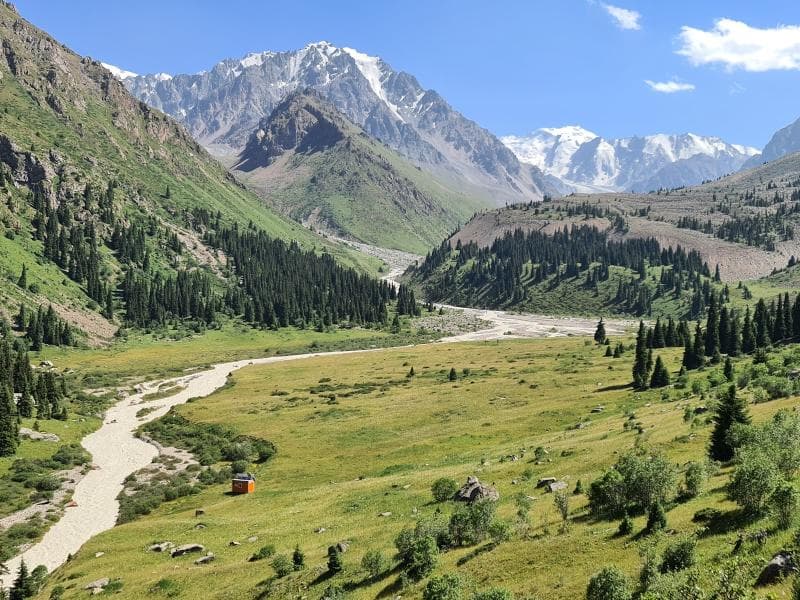
Explore the serene forest areas surrounding Big Almaty Lake in Almaty, Kazakhstan, teeming with diverse flora, wildlife, and breathtaking mountain views.
Overview
Nestled within the majestic Ile-Alatau National Park, the forest areas surrounding Big Almaty Lake in Almaty, Kazakhstan, present a vibrant tapestry of alpine ecosystems. These forests primarily consist of towering Tien Shan firs, complemented by birch groves and a diverse undergrowth, clinging to the mountain slopes of the Trans-Ili Alatau range. Situated at elevations leading up to the lake's surface at approximately 2,511 meters (8,235 feet) above sea level, these woodlands form a crucial part of the region's natural beauty and ecological health. The forest areas act as a vital buffer, contributing to the purity of the glacial meltwater that feeds Big Almaty Lake, which in turn serves as a primary drinking water source for the city of Almaty. The fresh, crisp mountain air within these woods offers a stark contrast to urban life, inviting a sense of tranquility and immersion in nature.
History & Cultural Background
The geological narrative of the Big Almaty Lake region, and consequently its surrounding forests, is one shaped by millennia of seismic activity and glacial movements. The lake itself is believed to have formed roughly 2,000 to 10,000 years ago, following earthquakes that triggered landslides, creating natural dams that collected meltwater from glaciers. As the glaciers receded and the climate stabilized, these fertile mountain slopes became home to resilient forest ecosystems. The Ile-Alatau National Park, established in 1996, plays a pivotal role in conserving this unique natural heritage, including its woodlands, alpine meadows, and diverse flora and fauna. While specific ancient cultural narratives directly about these particular forest areas are less documented than those surrounding the lake's mystical allure, the entire mountain range holds significance for the Kazakh people, representing a timeless connection to the land and its resources.
What Makes It Special
The forest areas of Big Almaty Lake are distinguished by several remarkable features. Foremost are the magnificent Tien Shan firs, ancient and impressive, which dominate the landscape with their dark green hues, especially in contrast with seasonal changes. In autumn, flashes of golden birch foliage add splashes of brilliant color, making the scenery particularly captivating. These forests are not merely a collection of trees; they are a biodiverse habitat supporting a wide array of life. The flora includes not only the dominant firs and birches but also alpine wildflowers and aromatic herbs that add to the sensory experience of exploring the area. Beyond their visual appeal, these forests are integral to the region's hydrological cycle, playing a role in filtering and maintaining the quality of the water that flows into Big Almaty Lake. The high-altitude environment contributes to a unique climate, keeping the air cool and invigorating year-round.
Stories, Fun Facts & Local Details
The forest areas are teeming with elusive wildlife, making every venture into them a potential encounter with nature's hidden gems. While a sighting is rare, the Ile-Alatau National Park is home to the majestic snow leopard, a symbol of the wild, high mountains. More commonly, visitors might spot marmots, various species of ibex, and a rich diversity of birdlife, including eagles. Birdwatching here, amidst the rustling leaves of the firs, offers a peaceful pursuit for nature enthusiasts. The interplay of the high-altitude climate and the rich soil means that unique plant species thrive here, some with medicinal and ecological roles, making an 'Alpine Botany Tour' a truly educational experience. The very air carries the scent of pine and earth, a refreshing detail that often escapes notice in more urban settings. These forests silently witness the changing colors of Big Almaty Lake, reflecting the vibrant turquoise or milky blue waters, depending on the season and light.
Visitor Perspective
Exploring the forest areas around Big Almaty Lake is an experience best savored through hiking. Numerous trails wind through these lush woodlands, offering varying degrees of difficulty and spectacular views. Hikers can traverse through dense pine forests, particularly the 'Pine Forest Transition Zone' found lower down near the lake, where the forest floor is covered with pine needles and seasonal wildflowers. These trails provide panoramic vistas of the lake and the surrounding peaks, such as Sovetov Peak, Ozyorny Peak, and Tourist Peak, which frame the alpine reservoir. The serene atmosphere, broken only by the sounds of nature, encourages quiet contemplation and offers a refreshing escape from the city's hustle. However, visitors are reminded that this is a protected area within a national park, and certain restrictions apply. Due to the lake being a drinking water source for Almaty, swimming is strictly prohibited, and access to the immediate shoreline is controlled. Respecting these rules ensures the preservation of this pristine environment for future generations. It is an ideal destination for nature lovers, photographers, and those seeking a peaceful, restorative connection with Kazakhstan's stunning mountain wilderness.
Coordinates: 76.9853931, 43.0510347
View on Google Maps💬 How Travelers Describe This Place
Based on community votes
Interesting
799Must See
639Beautiful
526Unique
181Photogenic
30
Traveler Stories
Discover memorable experiences shared by travelers who have visited this place.
No traveler stories yet.
Be the first traveler to share what made this place memorable.

Tour
By
Spot
Discover amazing places around the world. Your journey starts here.
Explore
© 2026 TourBySpot. All rights reserved.