Folly Fountains
Salzburg, Austria
Discover the whimsical Folly Fountains at Hellbrunn Palace in Salzburg, Austria. Uncover centuries of playful water features, hidden jets, and Baroque surprises.
Overview
Deep within the picturesque grounds of Hellbrunn Palace in Salzburg, Austria, lie the enchanting and famously mischievous Folly Fountains. Known locally as the 'Wasserspiele' or 'water games,' these unique aquatic installations have been delighting and drenching visitors for over 400 years. Conceived by the visionary Prince-Archbishop Markus Sittikus von Hohenems, the Folly Fountains are a testament to Baroque ingenuity and a playful spirit, offering a one-of-a-kind experience that blends art, engineering, and humor. This captivating sub-spot of Hellbrunn Palace is not just a collection of water features; it is an immersive journey into a historical world designed purely for entertainment and surprise.
History & Cultural Background
The story of the Folly Fountains begins with Prince-Archbishop Markus Sittikus von Hohenems, who ruled Salzburg in the early 17th century. A man of immense wealth and a keen sense of humor, Sittikus commissioned Italian architect Santino Solari to build a 'villa suburbana' or pleasure palace, Hellbrunn, between 1612 and 1615. Unlike traditional residences, Hellbrunn was intended purely as a summer day retreat for enjoyment and relaxation, famously containing no bedrooms, as the Archbishop would return to the city by evening. The abundant natural springs flowing from Hellbrunn Mountain provided the perfect foundation for Sittikus's grand aquatic vision, making water the central theme of the entire estate.
The Folly Fountains are considered among the best-preserved trick fountains from the Late Renaissance and Mannerism periods. They showcase the era's fascination with art, illusion, and the taming of nature for human amusement. Sittikus sought to create a never-before-seen oasis of leisure, and the Wasserspiele were his ultimate expression of this goal, designed to amaze and, crucially, to surprise his guests with unexpected sprays and elaborate water-powered mechanisms.
What Makes It Special
What truly sets the Folly Fountains apart is their element of surprise. Designed as a series of elaborate practical jokes, guests on a guided tour can expect to be unexpectedly sprayed by hidden jets of water. These aren't merely decorative fountains; they are interactive installations, controlled manually by guides, with water emerging from seats, tables, grottos, and even the antlers of deer statues. The ingenuity lies in the sophisticated hydraulic system, which has operated without pumps for centuries, utilizing natural water pressure.
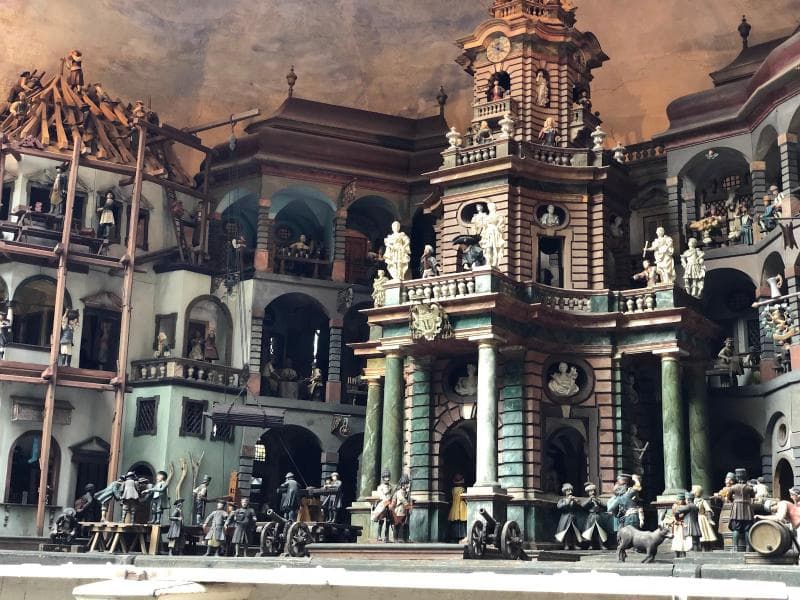
Among the most iconic features is the Prince's Table, a stone dining table with benches where water suddenly shoots up from the guests' seats, soaking everyone except the Archbishop, who occupied a specially designed dry spot. Another marvel is the Mechanical Theater, added between 1749 and 1752. This technical masterpiece features approximately 138 to 200 wooden figures, animated entirely by hydraulic force, depicting a bustling Baroque town scene, accompanied by music from a water organ. The various grottos, such as the Neptune Grotto, Crown Grotto, and Venus Grotto, each present their own unique water-powered illusions and mythological narratives.
Stories, Fun Facts & Local Details
The Folly Fountains are steeped in stories of princely amusement and playful deception. Prince-Archbishop Markus Sittikus was known for his wicked sense of humor, and the trick fountains were his primary tool for entertaining and, at times, playfully embarrassing his distinguished guests. Imagine the surprised gasps and laughter as unsuspecting visitors, adorned in their finest attire, suddenly found themselves drenched by hidden jets. It is said that even back in 1670, a chronicler noted that 'one does not allow oneself to be insulted without joy and pleasure, and must nevertheless laugh despite the lack of politeness,' perfectly capturing the spirit of the experience.
The meticulous design included features like a curtain of water created by 87 lead pipes, which would hinder those attempting to escape the watery pranks. Beyond the practical jokes, the fountains incorporate Greek and Roman mythology, with figures like Neptune, Eurydice, and Diana appearing throughout the various water installations and grottos. The artistry is in the detail; for example, in the Venus Grotto, tin tortoises appear to spit water into each other's mouths, creating an optical illusion of a solid glass staff of water. This blend of mythological storytelling and engineering prowess truly makes Hellbrunn's Folly Fountains a unique cultural jewel.
Visitor Perspective
A visit to the Folly Fountains is a highly engaging and memorable experience, often cited as one of Salzburg's top attractions. Guided tours, lasting approximately 50 minutes, lead visitors through the garden, revealing each surprising water installation. It is highly recommended to assume you will get moderately wet, so dressing appropriately or bringing a light waterproof layer is a good idea. Despite the potential for a soaking, the experience is overwhelmingly positive, particularly for families with children who find immense delight in the unexpected splashes.
The Folly Fountains offer a rare glimpse into Baroque courtly entertainment, combining historical context with genuine fun. The blend of art, architecture, and clever engineering from centuries past continues to charm and amuse modern audiences, proving that the Archbishop's vision of an oasis of enjoyment endures to this day.
Coordinates: 13.060766, 47.762257
View on Google Maps💬 How Travelers Describe This Place
Based on community votes
Beautiful
703Photogenic
646Interesting
380Unique
291Must See
28
Traveler Stories
Discover memorable experiences shared by travelers who have visited this place.
No traveler stories yet.
Be the first traveler to share what made this place memorable.

Tour
By
Spot
Discover amazing places around the world. Your journey starts here.
Explore
© 2026 TourBySpot. All rights reserved.