Festival Grounds
Vientiane, Laos
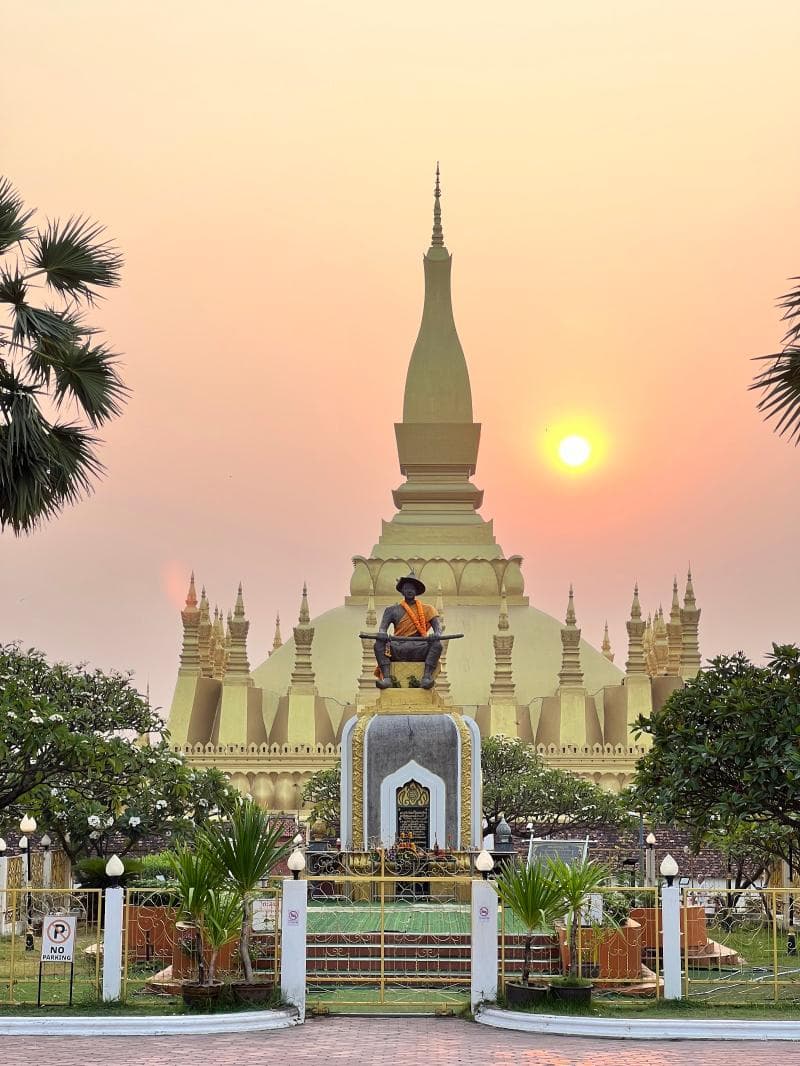
Discover the Festival Grounds of Pha That Luang in Vientiane, Laos, the vibrant heart of the Boun That Luang festival, steeped in history and culture.
Overview
The Festival Grounds surrounding Pha That Luang in Vientiane, Laos, form the vibrant heart of the nation's most significant annual celebration: Boun That Luang. More than just a location, these grounds transform into a bustling hub of spiritual devotion, cultural immersion, and communal joy, particularly during the full moon of the twelfth lunar month. Pha That Luang itself, meaning 'Great Stupa,' stands as the preeminent national symbol of Laos, a magnificent gold-covered Buddhist monument representing the country's profound spiritual heritage and national identity.
Throughout the year, the serene complex of Pha That Luang invites contemplation and reverence. However, it is during Boun That Luang that the surrounding grounds truly come alive, drawing thousands of monks, pilgrims, and visitors from across Laos and beyond. This sub-spot is where centuries-old traditions unfold, from solemn religious ceremonies to lively cultural performances and bustling markets, offering an unparalleled glimpse into the soul of Lao culture and spirituality.
History & Cultural Background
The history of Pha That Luang and its integral festival grounds is deeply intertwined with the very fabric of Laos. Legend suggests that the site's spiritual significance dates back to the 3rd century BC when Buddhist missionaries, believed to be sent by Emperor Ashoka, enshrined a sacred relic of the Buddha – possibly a breastbone – there.
The present golden stupa was commissioned in 1566 by King Setthathirath after he moved the capital of the Lan Xang Kingdom to Vientiane. Built upon the ruins of earlier Khmer and perhaps Hindu structures, Pha That Luang was designed not only as a grand Buddhist monument but also as a powerful emblem of the nascent Lao nation. Over the centuries, the stupa suffered damage from various invasions but was meticulously restored, notably in the 1930s, to preserve its original design and spiritual essence. Its distinctive architecture, with its three levels symbolizing the Buddhist path from the material world to enlightenment, reflects deep spiritual meaning and Lao identity.
What Makes It Special
The Festival Grounds of Pha That Luang are special because they are the epicenter of Boun That Luang, Laos' grandest and most sacred religious and cultural festival. This multi-day event, typically held in November, transforms the entire area into a vibrant tapestry of faith and festivity.
One of the most captivating aspects is the 'wax castle' procession, known as 'Phasat Pheung.' Devotees craft intricate miniature castles made of beeswax, adorned with flowers and banknotes, carrying them in a colorful parade that often starts from Wat Si Muang before converging at Pha That Luang. This procession, accompanied by traditional music and chants, culminates in worshippers circling the stupa three times, making offerings and accumulating merit. Beyond these spiritual rites, the grounds host lively cultural performances, traditional Lao music and dance, and a bustling market selling local crafts, food, and religious items, creating an atmosphere of shared national pride and joyous celebration.
Stories, Fun Facts & Local Details
The 'wax castles' are not castles in the literal sense but rather tall, decorative creations fashioned from bamboo or wooden frames, embellished with yellow wax petals, gold paper, and kip notes. They symbolize devotion and the desire to gain merit. The procession's starting point, Wat Si Muang, is itself an important spiritual center, believed to be home to Vientiane's city pillar and protected by the spirit of Nang Si, a pregnant woman who, according to legend, sacrificed herself when the pillar was laid.
Another unique tradition observed on the Festival Grounds during Boun That Luang is the traditional game of 'tikhy,' resembling a form of hockey played with a ball and curved sticks. Historically, this game held symbolic significance, pitting two opposing teams, one representing the people and the other the establishment. While now a more light-hearted sporting event, it adds a distinctive cultural flavor to the festivities. The architecture of Pha That Luang, with its three distinct levels, is said to represent the three stages of Buddhist enlightenment: the material world, the world of forms, and the spiritual realm of nothingness or nirvana.
Visitor Perspective
Visiting the Festival Grounds of Pha That Luang offers a profound experience, whether during the electrifying Boun That Luang festival or on a quieter day. For those seeking to witness the full cultural splendor, planning a visit during the festival (usually in November) is highly recommended. You'll be immersed in the sights, sounds, and scents of ancient traditions, from the early morning almsgiving ceremonies where thousands offer food to monks, to the mesmerizing candlelight processions at night.
Even outside of festival times, the grounds provide a serene space for reflection. Walking around the stupa, observing local devotees making offerings, and exploring the surrounding cloisters with their Buddhist statues and artifacts, offers a sense of peace and historical connection. Visitors are encouraged to dress modestly, covering shoulders and knees, as a sign of respect for this sacred site. Taking time to simply sit and absorb the atmosphere allows for a deeper appreciation of this enduring symbol of Laos's spiritual heart.
Coordinates: 102.6339, 17.9724
View on Google Maps💬 How Travelers Describe This Place
Based on community votes
Beautiful
710Must See
156Interesting
102Photogenic
102Unique
87
Traveler Stories
Discover memorable experiences shared by travelers who have visited this place.
No traveler stories yet.
Be the first traveler to share what made this place memorable.

Tour
By
Spot
Discover amazing places around the world. Your journey starts here.
Explore
© 2026 TourBySpot. All rights reserved.