Facade Sculptures
Odessa, Ukraine
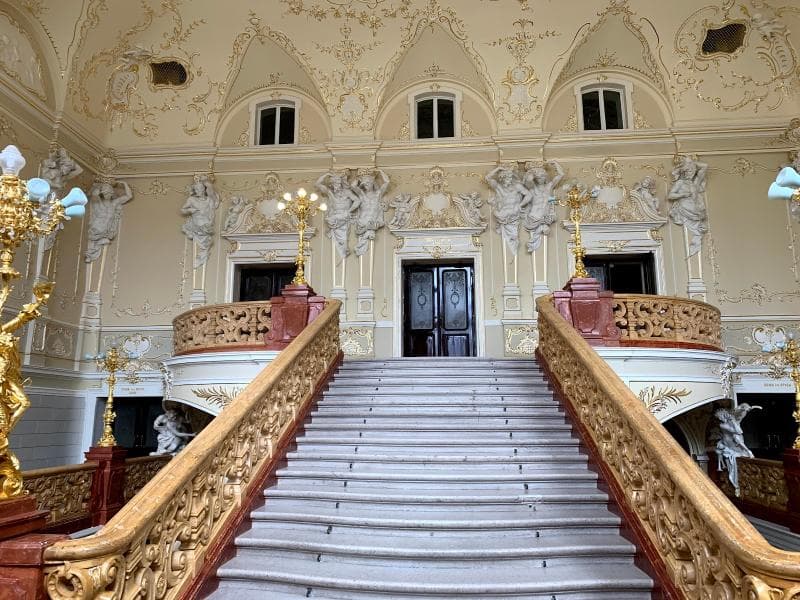
Discover the magnificent facade sculptures of the Odessa Opera and Ballet Theater in Odessa, Ukraine, revealing tales of art, mythology, and history.
Overview
As you approach the Odessa Opera and Ballet Theater, a masterpiece of architectural artistry in Odessa, Ukraine, your gaze is inevitably drawn upward to its magnificent facade sculptures. These intricate carvings and statues are far more than mere decoration; they are a visual symphony, narrating tales of classical mythology, artistic inspiration, and the very essence of human creativity. The facade, a harmonious blend of Neo-Baroque and Renaissance styles, is adorned with a rich tapestry of figures, each meticulously crafted to captivate and engage. From the dramatic allegories gracing its highest points to the thoughtful busts nestled in its niches, these sculptures offer an immediate immersion into the world of performing arts, even before you step inside. They are a testament to the theater's grandeur and its profound cultural significance, inviting visitors to pause and decipher the stories etched in stone.
History & Cultural Background
The current Odessa Opera and Ballet Theater, designed by the acclaimed Viennese architects Ferdinand Fellner and Hermann Helmer, rose from the ashes of a devastating fire that destroyed its predecessor in 1873. Constructed between 1884 and 1887, this architectural marvel was conceived in the opulent Viennese Baroque style, yet it subtly incorporates elements of Italian Renaissance and late French Rococo in its detailing. The facade sculptures were an integral part of the original design, intended to imbue the structure with classical elegance and symbolic meaning. This period, the late 19th century, was a time of immense cultural flourishing in Odessa, a city often compared to Paris, and the theater was designed to be a crown jewel, reflecting the city's cosmopolitan spirit and its deep appreciation for the arts. The sculptors, including masters like F. Netali, F. Friedl, F. Ethel, and L. Stritskius, worked to ensure each figure contributed to the theater's narrative as a temple of art.
What Makes It Special
What truly sets the facade sculptures apart is their thematic depth and allegorical richness. Dominating the pediment, you'll find the awe-inspiring sculptural group featuring Melpomene, the Muse of Tragedy, seated in a chariot. She is depicted with four furious panthers, symbolizing the powerful idea that art possesses the strength to subdue even the fiercest, most untamed aspects of nature. This central allegory immediately communicates the profound impact of dramatic arts. Below, on the portico, two more significant sculptural compositions celebrate music and dance: Orpheus, the legendary musician, enchanting a centaur with his cithara, and Terpsichore, the Muse of Dance, gracefully instructing a young girl. Near the main entrance, two distinct groups vividly personify Comedy and Tragedy, with scenes drawn from Euripides' 'Hippolytus' and Aristophanes' 'Birds', emphasizing the diverse spectrum of human emotion explored within the theater's walls.
Stories, Fun Facts & Local Details
Beyond the grand allegories, the facade holds other delightful details. In round niches along the upper floor, busts of renowned literary and musical figures — Alexander Pushkin, Alexander Griboyedov, Nikolai Gogol, and Mikhail Glinka — pay homage to the foundations of poetry, drama, comedy, and music. These figures serve as a nod to the intellectual and artistic giants whose works grace the stage. A more whimsical detail can be found on the balustrade, where 16 unique putti (cherubs) are playfully scattered, each with its own distinct pose and expression. Local lore suggests that if one swiftly scans the figures of all the angels inside the theater's tiers, they might appear to be dancing, a charming anecdote that speaks to the building's lively spirit. The attention to detail extends to the Roman numerals on the pediment, marking the theater's construction years (MDCCCLXXXIV-MDCCCLXXXVII) and later restoration efforts after a fire in 1925 (MCMLXVII), subtly embedding its own history into its artistic fabric.
Visitor Perspective
For any traveler to Odessa, observing the facade sculptures of the Opera and Ballet Theater is an experience that transcends a simple sightseeing stop. It's an invitation to engage with history, art, and storytelling on a grand scale. Standing before the theater, you can spend considerable time admiring the intricate details, from the flowing drapery of Melpomene to the expressions on the faces of the classical figures. The sculptures, with their dramatic poses and rich symbolism, ignite the imagination, offering glimpses into the classical narratives that inspired them. The way the light plays on the stone, particularly at different times of the day, can bring new dimensions to the figures, making them appear almost alive. These sculptures are not just static decorations; they are active participants in the theater's ongoing dialogue with its audience, providing a powerful and memorable introduction to the cultural heart of Odessa.
Coordinates: 30.741667, 46.485556
View on Google Maps💬 How Travelers Describe This Place
Based on community votes
Interesting
674Must See
546Unique
503Beautiful
92Photogenic
49
Traveler Stories
Discover memorable experiences shared by travelers who have visited this place.
No traveler stories yet.
Be the first traveler to share what made this place memorable.

Tour
By
Spot
Discover amazing places around the world. Your journey starts here.
Explore
© 2026 TourBySpot. All rights reserved.