Exterior Fresco “Landplagenbild”
Graz, Austria
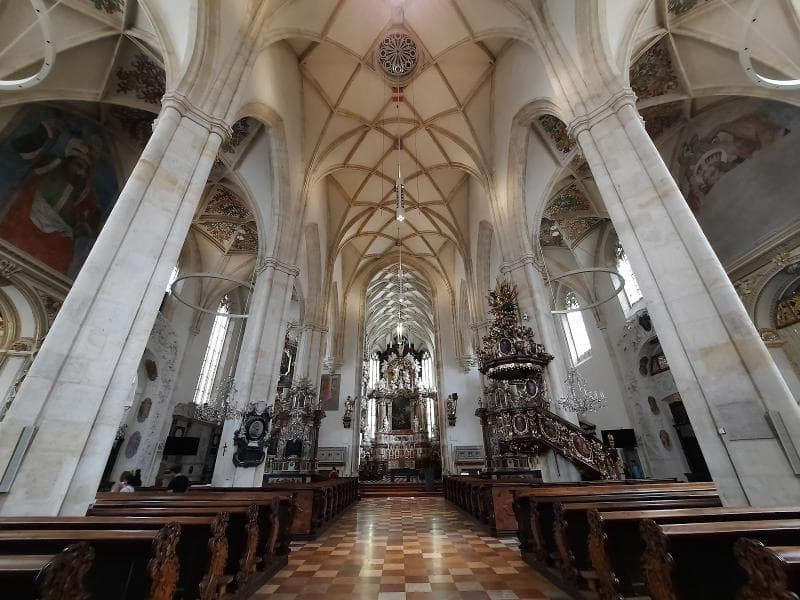
Discover the Landplagenbild, an iconic 15th-century fresco on Graz Cathedral's exterior in Graz, Austria, depicting historical plagues and prayers for mercy.
Overview
The Exterior Fresco ‘Landplagenbild’, also known as the ‘Plagues of God’ fresco, is a remarkable historical and artistic treasure found on the southern exterior wall of Graz Cathedral in Graz, Austria. Created in 1485 and widely attributed to the painter Thomas of Villach, this late Gothic masterpiece vividly depicts the catastrophic events that afflicted Styria in the year 1480: the plague, invasions by the Ottoman Turks, and a devastating locust infestation. It stands as one of the most significant wall paintings in the region, offering a profound glimpse into medieval fears and faith. Despite the cathedral's otherwise restrained exterior today, this surviving fresco serves as an inspiring relic of splendid Gothic painting that continues to captivate visitors.
History & Cultural Background
Graz Cathedral, originally built as the court church for Emperor Frederick III between 1438 and 1464, boasts a rich history that evolved over centuries, eventually becoming the bishop's and main church of Styria in 1786. The year 1480 marked a period of immense suffering for Graz and the wider Styrian region. The city was struck by three devastating calamities, which were widely interpreted as divine punishment. First, a fierce invasion by the Ottoman Turks brought war and destruction. Simultaneously, a widespread locust plague decimated crops, leading to famine. To compound these miseries, the dreaded Black Death, or pestilence, swept through the population. By the end of that dreadful year, sources suggest that up to 80% of Graz’s residents had succumbed to disease and famine or were carried away into Ottoman slavery. Five years later, in 1485, the surviving citizens commissioned this monumental fresco from Thomas of Villach. The painting was conceived as a poignant plea to God for forgiveness and mercy, a collective expression of a community grappling with unspeakable tragedy.
What Makes It Special
The ‘Landplagenbild’ is extraordinary for several compelling reasons. Foremost among them is its exceptional survival; while many Gothic frescoes once adorned the cathedral's exterior, this is the only one that remains visible today. It serves as a rare and invaluable example of late Gothic exterior fresco painting in Austria. Beyond its artistic merit, the fresco functions as a powerful visual historical document, meticulously recording the specific horrors of 1480. Intricate details within the painting even offer what is considered one of the oldest preserved views of medieval Graz, particularly in its depiction of the Turkish siege. Thomas of Villach's artistic composition is particularly noteworthy. He structured the fresco hierarchically: at the lowest level, the three scourges—locusts, plague victims, and Turkish soldiers—unfold in a dramatic sequence. Above them, human representatives of faith and authority, such as clergymen, secular leaders, and figures like Saint Francis and Saint Dominic, intercede. At the apex, divine figures including angels, archangels, John the Baptist, Mary, and the Holy Trinity preside, illustrating the medieval belief in divine intervention and the hope for mercy. The fresco is now carefully protected behind glass to preserve its fragile surface, though its original vibrancy has faded with centuries of exposure.
Stories, Fun Facts & Local Details
The name ‘Landplagenbild’ literally translates to ‘Country Plagues Picture’ or ‘Picture of Plagues,’ while it is also known as ‘Gottesplagenbild,’ meaning ‘God's Plagues Picture’. This powerful imagery effectively conveyed an ‘impressive drama demonstrating God's wrath and the plea for mercy’ to its contemporary audience. Imagine the profound impact it must have had on the citizens of Graz, witnessing this vivid recounting of their recent suffering and their fervent prayers for salvation etched onto the very walls of their church. The fresco is strategically located on the left side of the cathedral's south façade, beneath a small canopy, making it easily identifiable for visitors. The Graz Cathedral itself is not just a standalone monument; it forms a crucial part of the ‘Graz City Crown,’ an architectural ensemble that includes the adjacent Mausoleum and other historic buildings, all contributing to the city's status as a UNESCO World Heritage site. This intricate connection to the city's broader historical and cultural landscape further elevates the significance of the ‘Landplagenbild.’
Visitor Perspective
For any traveler exploring the historic city of Graz, a visit to the Exterior Fresco ‘Landplagenbild’ at Graz Cathedral is an essential experience. Standing before this ancient painting, one is transported back to a pivotal moment in Graz's history, gaining a deep understanding of the challenges and spiritual responses of its medieval inhabitants. While centuries have softened its colors, the fresco's narrative power remains undiminished, serving as a poignant reminder of human resilience and faith in the face of adversity. It is freely accessible on the cathedral's exterior, allowing for quiet contemplation of its details and its historical context. This impressive Gothic fresco is not merely an artwork; it is a profound historical document and a testament to the enduring human spirit, making it a compelling stop on any cultural itinerary in Graz.
Coordinates: 15.44204, 47.07183
View on Google Maps💬 How Travelers Describe This Place
Based on community votes
Interesting
915Must See
211Unique
123Beautiful
74Photogenic
53
Traveler Stories
Discover memorable experiences shared by travelers who have visited this place.
No traveler stories yet.
Be the first traveler to share what made this place memorable.

Tour
By
Spot
Discover amazing places around the world. Your journey starts here.
Explore
© 2026 TourBySpot. All rights reserved.