Exterior Façade
Sofia, Bulgaria
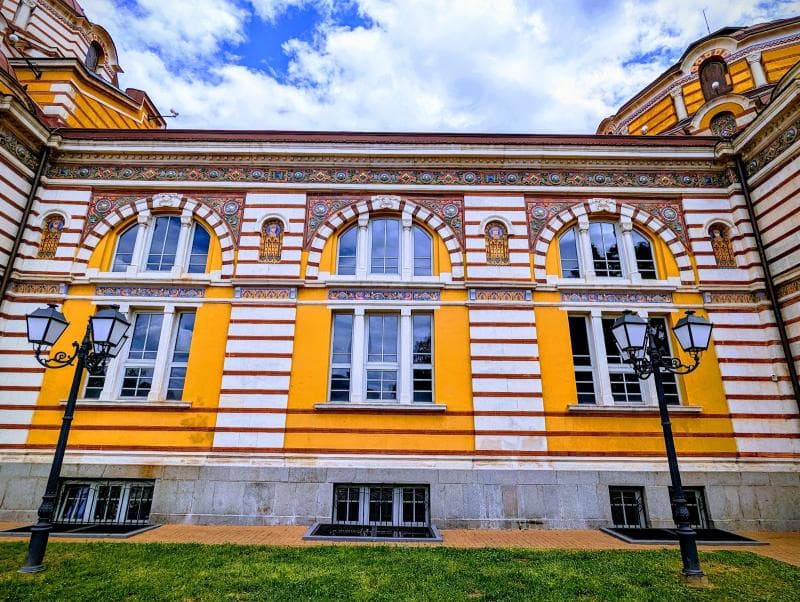
Explore the exquisite exterior façade of the Sofia Central Mineral Baths in Sofia, Bulgaria. Discover its unique blend of Secession, Neo-Byzantine, and Bulgarian architectural styles, adorned with vibrant majolica tiles and rich historical significance.
Overview
Standing as an architectural jewel in the heart of Sofia, Bulgaria, the Exterior Façade of the Sofia Central Mineral Baths immediately captivates with its distinct blend of styles and vibrant detailing. Once a bustling public bathhouse, this landmark now proudly houses the Sofia History Museum, drawing visitors with its rich history and aesthetic grandeur. The building's exterior offers a visual narrative of Sofia's past, reflecting centuries of mineral spring traditions and diverse cultural influences that shaped the city.
Its prominent location near other significant historical sites underscores its importance, making it a focal point for both locals and travelers keen to delve into Sofia's heritage. The façade's intricate design elements and striking colors make it a must-see, embodying the city's spirit and its deep connection to its natural thermal waters.
History & Cultural Background
The story of the Sofia Central Mineral Baths' façade is deeply intertwined with Sofia's long-standing appreciation for its mineral springs, a tradition that dates back to Roman times when the city, then known as Serdica, was renowned for its healing waters. Public baths have existed in Sofia since at least the 16th century, with an Ottoman hammam preceding the current structure on the same site.
The current building was constructed between 1906 and 1913, replacing older bathhouses to meet the growing hygienic needs of the burgeoning capital. The design was a collaborative effort by architects Petko Momchilov and Friedrich Grünanger, integrating several prominent architectural styles. They created a masterpiece that combines the elegant lines of Vienna Secession with distinct Bulgarian, Byzantine, and Eastern Orthodox ornamental elements, sometimes referred to as National Romanticism Style or Neo-Byzantine. The detailed ceramic majolica decoration, a highlight of the façade, was conceived by artist Haralampi Tachev and executed by Stefan Dimitrov. After serving as the city's public baths until 1986, the building underwent extensive renovation and opened as the Sofia History Museum in 2015.
What Makes It Special
The exterior façade of the Sofia Central Mineral Baths is truly special due to its exceptional architectural synthesis and vibrant artistic embellishments. It's a harmonious fusion of European Art Nouveau (Secession) sensibilities with deeply rooted Bulgarian national romantic and Byzantine influences.
The most distinctive feature is arguably the colorful majolica tile work that adorns the entire exterior. These ceramic decorations, designed with plant and geometric patterns, create an eye-catching spectacle of yellow, green, and red hues against the building's cream-colored stone. The façade also features ceramic images of significant deities: Apollo Medicus, the god of health, and Tyche, the patroness of towns, placed prominently near the main entrance. The building's multi-winged composition, complex roofing system, and characteristic onion-shaped domes contribute to its 'fairy-tale silhouette', making it instantly recognizable and a powerful visual statement in Sofia's urban landscape.
Stories, Fun Facts & Local Details
Beyond its architectural beauty, the façade of the Sofia Central Mineral Baths holds many intriguing stories and cultural details. For centuries, the mineral springs flowing beneath the city were not just a source of healing but also a vital social hub. In its heyday as a bathhouse, the building was a central gathering place where Sofia's citizens would meet, socialize, and relax. It even had separate wings for gentlemen and ladies, reflecting the social customs of the time.
A charming local tradition continues today: many residents still line up outside the building at specially designed spigots to collect the warm, mineral-rich water in bottles for drinking or home use, a tangible link to the building's original purpose and Sofia's ancient connection to its thermal waters. The building endured damage during the bombing of Sofia in World War II, particularly its north wing, but was later meticulously restored to its original splendor. Its transformation from a public bath to a museum in 2015 marked a new chapter, allowing its magnificent exterior to tell the city's broader historical narrative.
Visitor Perspective
For any traveler to Sofia, approaching the Sofia Central Mineral Baths' exterior façade is an experience in itself. The building's vivid yellow and green façade, punctuated by red stripes and elaborate domes, creates a striking visual against the backdrop of the city. The best views for photography are often from the small green square opposite the entrance, allowing for a comprehensive appreciation of its intricate details and majestic scale.
Visitors can spend considerable time admiring the detailed majolica work, tracing the patterns and identifying the symbolic figures that adorn the walls. While the interior now houses the Sofia History Museum, the exterior alone offers a profound journey through Sofia's architectural and cultural evolution. Observing locals filling their bottles at the public spigots adds an authentic layer to the visit, connecting contemporary life with ancient traditions, making the façade not just a static monument but a living part of the city's daily rhythm.
Coordinates: 23.323756, 42.6998
View on Google Maps💬 How Travelers Describe This Place
Based on community votes
Photogenic
998Unique
817Interesting
711Must See
299Beautiful
19
Traveler Stories
Discover memorable experiences shared by travelers who have visited this place.
No traveler stories yet.
Be the first traveler to share what made this place memorable.

Tour
By
Spot
Discover amazing places around the world. Your journey starts here.
Explore
© 2026 TourBySpot. All rights reserved.