Exterior Facade
Graz, Austria
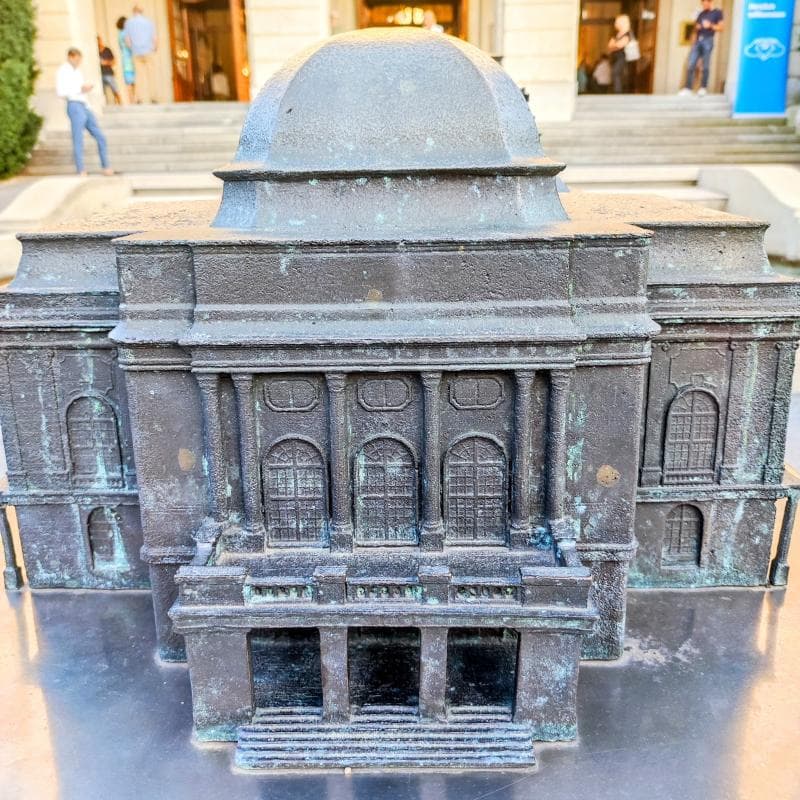
Explore the stunning Neo-Baroque exterior facade of the Graz Opera House in Graz, Austria. Discover its rich history, architectural details, and cultural significance.
Overview
The Graz Opera House, or Oper Graz, presents a magnificent sight in the heart of Graz, Austria, standing as a testament to late 19th-century architectural grandeur. Conceived by the renowned Viennese architects Ferdinand Fellner and Hermann Helmer, this prominent cultural institution first opened its doors in 1899. It proudly holds the distinction of being Austria's second-largest opera house after the Vienna State Opera, commanding attention with its imposing presence and exquisite Neo-Baroque style.
The exterior facade is a carefully orchestrated blend of ornate decorations, grand proportions, and remarkable symmetry. Its warm, golden hues are gracefully contrasted by the subtle green tones of the copper roof, creating a visually captivating palette that complements the surrounding cityscape.
History & Cultural Background
The tradition of opera in Graz dates back to the 17th century, yet the construction of the current opera house marked a significant new era for the city's performing arts.
Plans for a new, grand theatre suitable for Graz's growing importance were first proposed in 1887. The building itself was commissioned to commemorate the 50th anniversary of Emperor Franz Joseph I's reign.
Designed by the celebrated duo Fellner and Helmer, known for their numerous theatre projects across Europe, the opera house was inaugurated on September 16, 1899, with a performance of Schiller's drama 'William Tell,' followed shortly by Wagner's 'Lohengrin'.
The architects drew inspiration from the Baroque master builder Johann Bernhard Fischer von Erlach, even though he did not erect any buildings in Graz himself.
During World War II, the opera house sustained damage from bombings, specifically losing its original portico. However, it was meticulously repaired and reopened, undergoing significant renovations between 1983 and 1985 to modernize its facilities while largely preserving its original exterior and interior.
What Makes It Special
The exterior facade of the Graz Opera House is celebrated as a masterpiece of architectural design, harmoniously combining classical elements with intricate details that capture the eye and imagination.
Its striking symmetry, where the main entrance is flanked by identical wings, establishes a sense of balance and elegance. This meticulous design extends to the precise placement of windows, columns, and other decorative elements, all working together to create a cohesive and pleasing aesthetic.
Elaborate sculptures and reliefs adorn the building, depicting various mythological and allegorical figures that not only add visual richness but also convey the opera house's profound cultural significance.
A notable feature is the grand entrance portico, supported by massive columns and crowned with a triangular pediment, serving as a fitting gateway to the world of operatic and classical music within.
By night, the facade truly comes alive as strategically placed lighting illuminates its features, transforming the building into a glowing cultural beacon in the heart of the city.
Stories, Fun Facts & Local Details
The architects, Ferdinand Fellner and Hermann Helmer, were particularly renowned for their dedication to symmetry in their designs, a characteristic evident throughout the Graz Opera House.
Interestingly, when it first opened, the building was primarily a municipal theatre, not exclusively dedicated to musical performances.
Next to the historic building, one can find the 'Lichtschwert' (Light Sword), a modern sculpture that provides a striking contrast and stands as a powerful message for human rights. This sculpture was originally created for the 'steirischer herbst' festival in 1992, showcasing Graz's commitment to cultural awareness and the interplay between tradition and modern art.
In recognition of its artistic excellence, the Graz Opera House was honored with the title of 'Opera House of the Year' in 2001, an accolade determined by 50 theatre critics.
Visitor Perspective
Whether you are an architecture enthusiast, a history buff, or simply a curious traveler, the exterior facade of the Graz Opera House offers a rewarding experience. It can be easily admired as part of a leisurely stroll through Graz's charming old town, which itself is a UNESCO World Heritage site.
For those wishing to delve deeper, guided tours are regularly offered, providing insights into its architecture, history, and daily operations.
The opera house is designed to be accessible, with a step-free side entrance, ensuring that all visitors can enjoy its cultural significance.
Its blend of history, culture, and stunning architecture makes it a compelling focal point and a must-see attraction for anyone visiting Graz, promising a lasting impression.
Coordinates: 15.44568, 47.069
View on Google Maps💬 How Travelers Describe This Place
Based on community votes
Interesting
799Must See
639Beautiful
526Unique
181Photogenic
30
Traveler Stories
Discover memorable experiences shared by travelers who have visited this place.
No traveler stories yet.
Be the first traveler to share what made this place memorable.

Tour
By
Spot
Discover amazing places around the world. Your journey starts here.
Explore
© 2026 TourBySpot. All rights reserved.