Exhibition Rooms
Lucerne, Switzerland
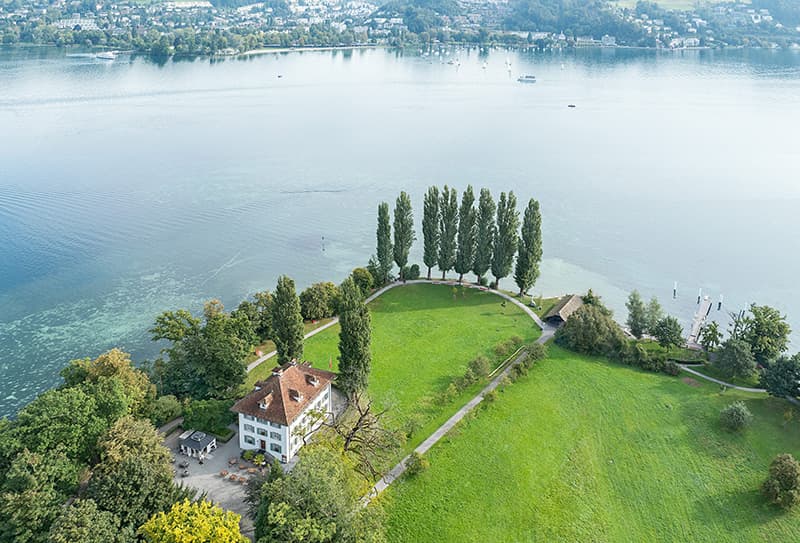
Explore the Richard Wagner Museum's Exhibition Rooms in Lucerne, Switzerland. Discover Wagner's life, works, and his original grand piano.
Overview
Nestled on the picturesque shores of Lake Lucerne in Switzerland, the Exhibition Rooms of the Richard Wagner Museum offer a captivating journey into the life and work of the influential German composer. Housed within Wagner's former residence, the historic Tribschen manor, these rooms serve as the permanent display dedicated to his prolific six-year stay from 1866 to 1872. Visitors can explore five distinct areas on the ground floor, each thoughtfully curated to present a comprehensive narrative of Wagner's creative period in Lucerne and his broader artistic legacy.
The museum, which first opened its doors in 1933, invites travelers to step back in time and experience the environment that inspired some of Wagner's most significant compositions. The collection encompasses an array of historical artifacts, including original manuscripts, personal memorabilia, and the composer's cherished Erard grand piano, still occasionally played during cultural events.
History & Cultural Background
The Tribschen manor, which today hosts the Exhibition Rooms, boasts a history stretching back to the 15th century. Originally a cube-shaped manor, it was significantly remodeled around 1800, giving it the elegant appearance seen today. Richard Wagner leased this idyllic country estate from Colonel Walter am Rhyn, a Lucerne patrician, in April 1866.
Wagner's arrival in Lucerne was facilitated by King Ludwig II of Bavaria, who, despite being forced to banish the scandalous composer from Munich, provided the funds for his new home. This period at Tribschen proved to be one of immense creativity and personal significance for Wagner. It was here that he completed masterpieces such as 'Die Meistersinger von Nürnberg' and the third act of 'Siegfried', and began work on 'Götterdämmerung'. The manor also became a focal point for his personal life, where his relationship with Cosima von Bülow blossomed, leading to their marriage and the birth of their children.
After Wagner's departure for Bayreuth in 1872 to realize his dream of building his own festival theatre, the villa remained largely vacant. The City of Lucerne acquired the property and its extensive parkland in 1931, transforming Wagner's former home into a public museum just two years later.
What Makes It Special
The uniqueness of the Exhibition Rooms lies in their authentic connection to Richard Wagner's creative spirit. Unlike many museums that merely house collections, these rooms occupy the very spaces where the composer lived, loved, and created. The centerpiece is undoubtedly Wagner's 1858 Erard grand piano, a magnificent instrument that witnessed the birth of some of his most profound musical ideas. Visitors can imagine the resonant melodies that once filled these halls, especially when chamber concerts are held, bringing the piano back to life.
The exhibition provides a deeply personal insight into Wagner's daily life, his relationships, and his artistic process through a rich display of historical photographs, paintings, and original manuscripts. One particularly notable exhibit is the musical score for the 'Siegfried Idyll', a tender piece composed as a birthday gift for Cosima and premiered right on the manor's staircase.
Stories, Fun Facts & Local Details
The Tribschen manor was more than just a home; it was a vibrant intellectual hub. During Wagner's residency, it attracted notable figures of the era, including King Ludwig II of Bavaria, who visited incognito, and philosophers like Friedrich Nietzsche and composer Franz Liszt. Imagine the profound conversations and artistic exchanges that took place within these walls.
A delightful anecdote revolves around the 'Siegfried Idyll'. This beautiful symphonic poem was a secret birthday surprise for Cosima, performed by a small orchestra on the staircase of the manor on Christmas morning, December 25, 1870, waking her with its gentle sounds. The piece, originally titled 'Tribschener Idyll', celebrates the birth of their son, Siegfried, and their newfound domestic bliss.
Another interesting detail is the mention of a peacock house built for Cosima Wagner's peacocks between 1866 and 1872, highlighting the domestic charm and tranquil setting of their life at Tribschen.
Visitor Perspective
For any curious traveler, the Exhibition Rooms offer an enriching and intimate experience. The well-curated collection, with its documents and objects clearly labeled in German, French, and English, ensures that the story of Wagner's life and his time in Lucerne is accessible and engaging.
Walking through these historical rooms allows visitors to connect with the composer on a human level, understanding the personal context behind his monumental works. Beyond the indoor exhibits, the museum's setting within a magnificent park directly on Lake Lucerne provides stunning views of the surrounding landscape, including Mount Pilatus. This serene environment, so vital to Wagner's creativity, offers a moment of reflection and appreciation for both art and nature.
Coordinates: 8.328944, 47.042444
View on Google Maps💬 How Travelers Describe This Place
Based on community votes
Photogenic
910Interesting
755Must See
481Beautiful
183Unique
28
Traveler Stories
Discover memorable experiences shared by travelers who have visited this place.
No traveler stories yet.
Be the first traveler to share what made this place memorable.

Tour
By
Spot
Discover amazing places around the world. Your journey starts here.
Explore
© 2026 TourBySpot. All rights reserved.