Exhibition Galleries
Split, Croatia
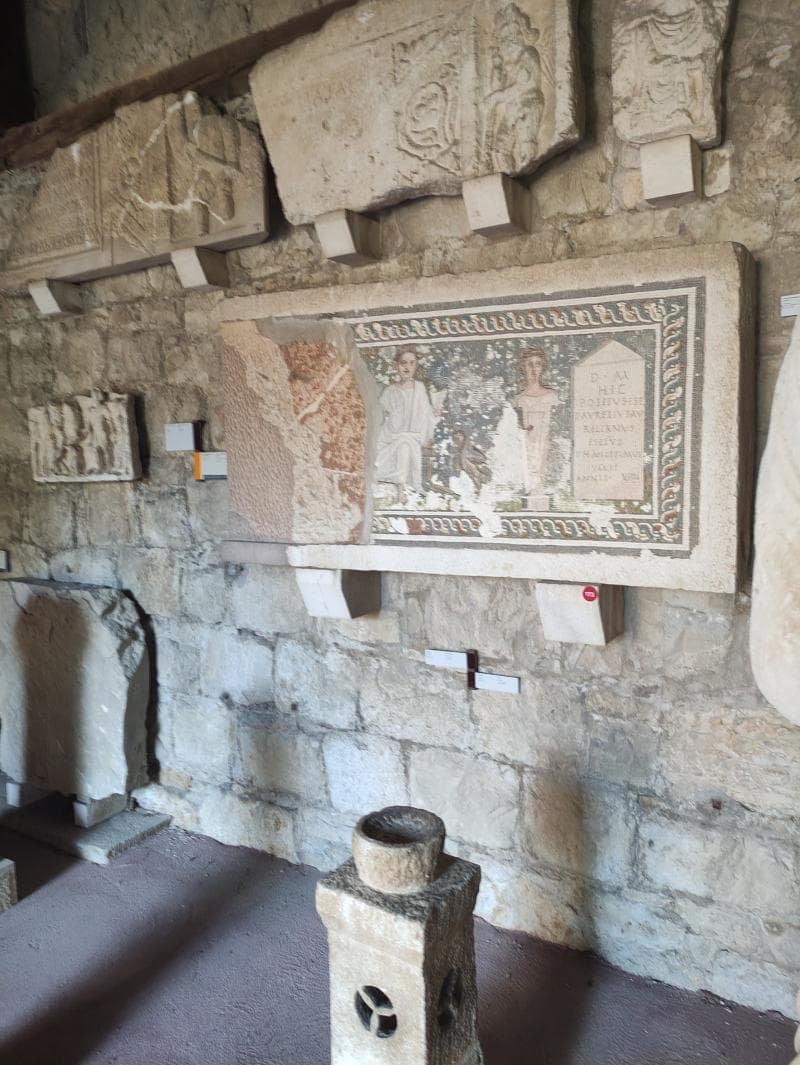
Explore the Exhibition Galleries of the Split Archaeological Museum, Croatia's oldest museum, showcasing 150,000 artifacts from millennia of Dalmatian history.
Overview
The Exhibition Galleries of the Split Archaeological Museum offer a profound journey through the rich tapestry of Dalmatia's past, making it an essential stop for any history enthusiast visiting Split, Croatia. As the oldest museum in Croatia, established in 1820, its galleries house a vast collection of approximately 150,000 artifacts. These treasures meticulously chronicle the region's history from prehistoric times through the Greek colonization of the Adriatic, the Roman Provincial era, the Early Christian period, and into the Early Middle Ages, showcasing the legacy of Croatian rulers. The museum complex itself is thoughtfully designed, featuring a two-story main building where the core exhibition halls are situated on the ground floor. Surrounding the building, a charming set of arcades forms the lapidarium, an outdoor gallery dedicated to stone monuments, complemented by an adjoining garden.
Visitors will find the collections organized chronologically and thematically, providing a clear narrative of the cultural layers that shaped this vibrant Mediterranean crossroads. From everyday objects to monumental stone carvings, the galleries paint a vivid picture of ancient life, governance, and spiritual beliefs in this historically significant part of the world.
History & Cultural Background
The origins of the Split Archaeological Museum trace back to a decree from the Dalmatian government in Zadar in 1820, marking its status as a pioneering institution in Croatian museology. However, the region's interest in its ancient heritage dates even further back. As early as the 16th century, Split humanist Dominik Papalić began collecting ancient tablets, and by 1750, a form of museum had already been established. The museum's present building, constructed between 1912 and 1914, was specifically designed to house and display these invaluable collections. Its foundation and continued dedication reflect a deep-seated appreciation for the historical layers beneath the modern city of Split, a city whose very heart, Diocletian's Palace, is a monument to Roman imperial power.
Many of the museum's most significant holdings originate from the nearby ancient city of Salona, once a thriving Roman provincial capital that boasted a population of 60,000 during Emperor Diocletian's time. The extensive archaeological research conducted in Salona, as well as on the island of Vis (ancient Issa) and at Vid near Metković (ancient Narona), has continually enriched the museum's collections, offering insights into daily life, religious practices, and political structures across millennia.
What Makes It Special
What truly sets the Exhibition Galleries apart is their comprehensive scope and the sheer volume of artifacts that bring the ancient world to life. The museum excels in its thematic presentations, particularly its remarkable collection of over 6,000 stone epitaphs. These inscribed stones offer intimate glimpses into the lives, families, and social structures of past inhabitants, transforming mere names into echoes of history. The Roman Provincial Collection, for instance, provides a detailed account of the Roman presence in Dalmatia, while the Early Christian Collection sheds light on the spread and establishment of Christianity in the region.
Beyond the extensive stone monuments displayed in the lapidarium, visitors can explore a diverse array of materials, including delicate Graeco-Hellenistic ceramic objects, exquisite Roman glass, ancient clay lamps, intricate bone and metal articles, and shimmering gems. The Numismatic Collection, with its more than 70,000 ancient and medieval coins, offers a unique economic and political timeline through various historical periods. An especially intriguing artifact is a headless Egyptian sphinx statue, once part of Emperor Diocletian's elaborate palace decorations, which carries its own tale of historical transformation and conflict.
Stories, Fun Facts & Local Details
Imagine walking through the galleries and encountering the stone headstones of Roman families from Salona. Each weathered face, sometimes lacking facial features due to the ravages of time, tells a story of identity and remembrance. One might ponder the sculptor's craft, the subjects' attire, or their anticipation of being remembered for centuries. A notable piece, the Tyche of Salona relief, depicts the patron goddess of the ancient town, her crown shaped like city walls, symbolizing protection and prosperity. This artifact, originally adorning Salona's Porta Caesarea, is a tangible link to the city's civic pride and spiritual beliefs.
The museum's collections also reflect the resilience of the local people. For example, the upcoming 'Delmatae – Between Myth and Reality' exhibition highlights the indigenous people who gave Dalmatia its name and famously resisted Roman rule for centuries, embodying a spirit that still resonates in the region. These stories of resistance and cultural preservation add a layer of emotional depth to the archaeological finds, connecting the present-day visitor to the enduring spirit of Dalmatia.
Visitor Perspective
As you step into the Exhibition Galleries, you are invited to embark on a self-guided exploration that appeals to both the intellect and the imagination. The ground floor typically houses prehistoric and early Roman artifacts, offering a foundational understanding of the earliest inhabitants. Moving to the upper floor, the narrative continues through late Roman, Early Christian, and early medieval periods, showcasing the transitions and transformations that shaped the region. The chronological and thematic arrangement ensures a clear and coherent experience, allowing for a deeper appreciation of the historical progression.
Beyond the main halls, the outdoor lapidarium is a serene space where large stone monuments, including sarcophagi and architectural fragments, can be admired in natural light. This open-air section provides a different perspective on the monumental scale of ancient craftsmanship. The museum serves not just as a repository of old objects but as a dynamic cultural and scientific center, where the past is actively brought to life, inviting contemplation on how ancient civilizations laid the foundations for the modern city of Split.
Coordinates: 16.43487572504272, 43.51580916740614
View on Google Maps💬 How Travelers Describe This Place
Based on community votes
Interesting
853Must See
667Unique
190Photogenic
93Beautiful
32
Traveler Stories
Discover memorable experiences shared by travelers who have visited this place.
No traveler stories yet.
Be the first traveler to share what made this place memorable.

Tour
By
Spot
Discover amazing places around the world. Your journey starts here.
Explore
© 2026 TourBySpot. All rights reserved.