Exhibition Galleries
Yerevan, Armenia
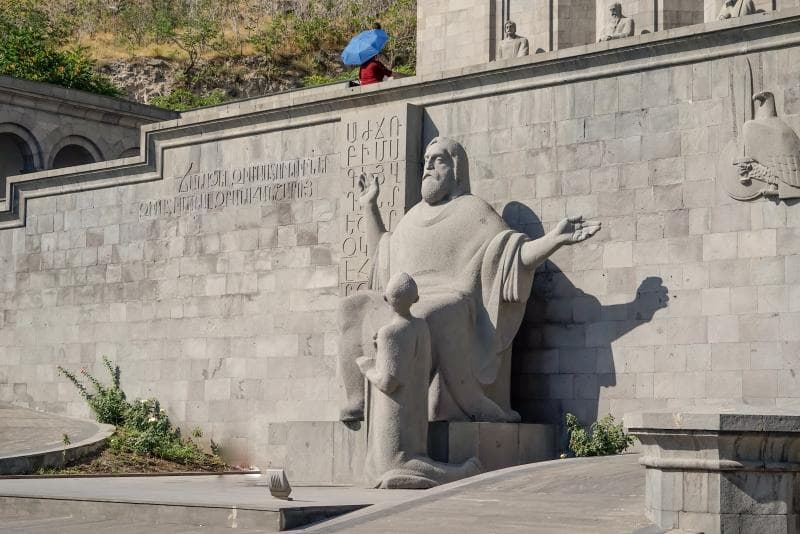
Explore Matenadaran's Exhibition Galleries in Yerevan, Armenia, housing ancient manuscripts, miniature art, and Armenian cultural heritage.
Overview
Perched majestically in Yerevan, Armenia, the Matenadaran, officially known as the Mesrop Mashtots Institute of Ancient Manuscripts, stands as a beacon of Armenian intellectual heritage. This remarkable institution functions as a dynamic museum, an invaluable archive, and a leading scientific research center, all dedicated to the preservation and study of ancient manuscripts. Its Exhibition Galleries offer a profound journey through Armenia's rich cultural and written tradition, showcasing a collection of over 23,000 manuscripts, some dating as far back as the 5th century. Beyond Armenian texts, the Matenadaran's holdings also include significant manuscripts in various languages such as Arabic, Persian, Greek, Latin, and Syriac, underscoring Armenia's historical role as a crossroads of civilizations.
As one of Yerevan's most prominent landmarks, the Matenadaran's striking building, crafted from gray basalt, is a visual testament to its importance. It serves as a repository for one of the world's most extensive collections of Armenian manuscripts, making it an essential destination for anyone seeking to understand the country's profound historical and artistic legacy.
History & Cultural Background
The Matenadaran was formally established in 1959, its foundation built upon the nationalized manuscript collection of the Armenian Church, originally held in Etchmiadzin. In 1962, it was named in honor of Mesrop Mashtots, the brilliant creator of the Armenian alphabet in the early 5th century, a figure whose ingenuity profoundly shaped Armenian identity and literacy. The building itself, designed by architect Mark Grigoryan between 1945 and 1957, draws inspiration from traditional Armenian medieval ecclesiastical architecture. Its forecourt features a powerful sculptural ensemble, including a monument to Mesrop Mashtots, symbolically inviting visitors into a world of ancient wisdom. This iconic collection has continuously grown, largely through generous individual donations, and in 1997, its immense significance was recognized with its inclusion in the UNESCO Memory of the World program.
What Makes It Special
The Exhibition Galleries at Matenadaran are not merely a display of old books; they are a vibrant testament to the evolution of Armenian manuscript art. The permanent exhibition meticulously traces the principal stages of this development, presenting religious texts, historiographical works, medical treatises, philosophical insights, and exquisite examples of miniature painting. These manuscripts are showcased not just as historical documents, but as unique artifacts of medieval art, adorned with intricate designs, gold leaf, and remarkably vibrant colors derived from natural minerals and plants.
Among the specialized exhibition spaces, the Hall of Maps captivates with its display of cartographic and geographical materials that illuminate Armenia's historical context and its surrounding regions. The Hall of Foreign-Language Manuscripts highlights Armenia's extensive scholarly and cultural interactions with other civilizations, featuring texts in Arabic, Persian, Ancient Greek, Latin, and Syriac. A dedicated laboratory, 'Skills, Crafts, and Art of Medieval Armenia', offers a fascinating glimpse into the material and technical dimensions of manuscript production, demonstrating the ancient techniques of pigment preparation, parchment creation, and miniature painting.
The Matenadaran houses truly exceptional items, such as the 8th-century 'Vehamor Avetaran' (Gospel of the Mother of God), recognized as the oldest surviving Armenian manuscript. Visitors can marvel at the stark contrast between the colossal 'Msho Charyntir' (Homilies of Mush), which weighs 28 kilograms, and incredibly tiny books that can fit in the palm of one's hand.
Stories, Fun Facts & Local Details
The very name 'Matenadaran' perfectly encapsulates its essence, translating literally as 'repository of manuscripts' in Armenian. As you approach the entrance, the grand statue of Mesrop Mashtots, standing proudly, seems to extend an invitation, beckoning you to explore the profound wisdom contained within.
A fascinating detail about the vivid miniature paintings found throughout the collection is the origin of their colors. Scribes and artists meticulously extracted pigments from natural sources; for instance, the brilliant red often seen was traditionally obtained from the 'Vordan Karmir', a local Armenian cochineal insect. The Matenadaran is more than a static museum; it is a living center where ancient books are not only displayed but also undergo careful restoration and intensive study, keeping the intellectual heritage alive. A poignant part of the collection includes manuscripts that miraculously survived the Armenian Genocide, serving as powerful symbols of enduring culture. Even the architectural design of the building's facade carries a deep historical echo, with elements referencing the grandeur of Ani, the medieval capital of Armenia.
Visitor Perspective
Stepping into the Matenadaran's Exhibition Galleries offers a unique opportunity to witness masterpieces of medieval art up close. Expect to spend time admiring the intricate details of illuminated manuscripts, some open to reveal their vibrant pages, while others are encased in elaborate covers of silver, gold, and precious stones. The displays allow visitors to appreciate the scale and artistry, from the grandest folios to the most miniature of books. While general photography inside the exhibition halls is typically not permitted, this encourages a deeper, more immersive appreciation of the artifacts, allowing you to truly soak in the atmosphere. However, the impressive exterior of the building and its surrounding statues provide ample opportunities for memorable photographs.
The Matenadaran is generally open from Tuesday to Saturday, with typical hours from 10:00 AM to 5:00 PM, though it's always wise to confirm specific times before your visit. To fully grasp the historical and cultural significance of the manuscripts, a guided tour is highly recommended. Beyond the permanent collections, the Matenadaran regularly hosts temporary thematic exhibitions, offering fresh perspectives on ancient medicine, astronomy, or music, ensuring that each visit can reveal something new.
Coordinates: 44.52113, 40.19207
View on Google Maps💬 How Travelers Describe This Place
Based on community votes
Interesting
995Unique
964Must See
926Photogenic
730Beautiful
482
Traveler Stories
Discover memorable experiences shared by travelers who have visited this place.
No traveler stories yet.
Be the first traveler to share what made this place memorable.

Tour
By
Spot
Discover amazing places around the world. Your journey starts here.
Explore
© 2026 TourBySpot. All rights reserved.