Event Spaces
San Francisco, United States
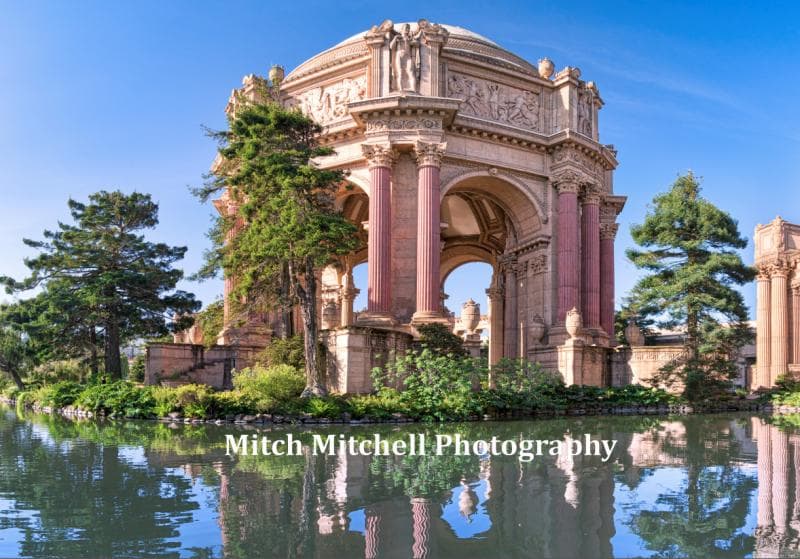
Explore the majestic event spaces at the Palace Of Fine Arts in San Francisco, United States. Discover its rich history and stunning architecture.
Overview
Nestled within the Marina District of San Francisco, the Palace Of Fine Arts stands as a monumental and enchanting structure, renowned not only for its ethereal beauty but also as a versatile destination for a myriad of events. Originally conceived as a temporary exhibition hall, it has transcended its initial purpose to become a cherished landmark and a prime location for gatherings in San Francisco, United States. The 'Event Spaces' at the Palace Of Fine Arts offer a unique blend of Greco-Roman architectural grandeur and modern functionality, accommodating everything from intimate ceremonies beneath its iconic rotunda to large-scale corporate events and elegant galas within its expansive interior.
Visitors and event-goers are captivated by its majestic open rotunda, flanked by stately colonnades, all reflected in a serene lagoon. This picturesque setting provides an unparalleled backdrop, making it a highly sought-after venue that combines historical significance with a truly inspiring atmosphere.
History & Cultural Background
The Palace Of Fine Arts owes its existence to the 1915 Panama-Pacific International Exposition, a grand world's fair hosted by San Francisco. The exposition celebrated the completion of the Panama Canal and, more significantly, showcased San Francisco's remarkable recovery from the devastating 1906 earthquake and fire. Architect Bernard Maybeck, a student of the École des Beaux-Arts, designed the Palace with the intent to evoke a decaying ruin of ancient Rome, creating a quiet zone for reflection amidst the bustling fairgrounds. His vision was inspired by 18th-century etchings of Roman ruins and a painting titled 'Island of the Dead,' aiming to instill a sense of 'the mortality of grandeur and the vanity of human wishes.'
Initially constructed from temporary materials like plaster, wood, and burlap, the Palace was slated for demolition after the exposition. However, its profound impact on both locals and visitors led to a strong public movement for its preservation. Due to its temporary construction, the structure eventually fell into disrepair. In the 1960s, a dedicated effort and significant philanthropic support led to its complete reconstruction using more durable, permanent materials like concrete, faithfully recreating Maybeck's original design and securing its legacy as a permanent fixture in the city's landscape.
What Makes It Special
What truly distinguishes the event spaces at the Palace Of Fine Arts is their seamless integration of historical artistry with contemporary utility. The structure itself is a breathtaking example of Beaux-Arts architecture, characterized by its symmetry, proportion, and detailed ornamentation, instantly transporting visitors to a classical era. The grand rotunda, soaring colonnades, and intricate sculptures provide a dramatic and elegant setting for any occasion. The main exhibition center offers approximately 140,000 square feet of highly versatile indoor space, capable of hosting up to 5,000 people for major events. This includes various breakout rooms, a large mezzanine, and even a performing arts theater, allowing for diverse event configurations.
Beyond the architectural marvel, the tranquil lagoon encircling the Palace, home to swans and ducks, adds a natural serenity that enhances the venue's allure. This blend of monumental architecture and picturesque nature makes it an incredibly photogenic location and a memorable setting for any event.
Stories, Fun Facts & Local Details
The Palace Of Fine Arts is rich with fascinating details. For instance, the original sculptures atop the colonnades, depicting 'weeping women,' were intended to appear to be mourning over trailing vines. Due to budget cuts, the vines were never installed, leading to a humorous, albeit critical, observation by etiquette expert Emily Post, who remarked that they resembled 'wives of a fat Mormon crying over his coffin.' Maybeck himself envisioned the Palace as something that would gracefully decay, a testament to its philosophical underpinning about the transience of human endeavors. Its temporary nature, initially a constraint, ultimately became part of its enduring charm and the reason for its cherished reconstruction.
The Palace has also graced the silver screen, appearing in numerous films and television productions, solidifying its status as a cultural icon. From its humble beginnings as a temporary structure for a world's fair to its current role as a premier event venue, the Palace Of Fine Arts has continuously adapted, reflecting San Francisco's own dynamic spirit.
Visitor Perspective
For a curious traveler, experiencing the event spaces at the Palace Of Fine Arts means stepping into a living piece of history, an architectural masterpiece that simultaneously inspires awe and tranquility. Whether attending a grand gala, a wedding, or simply exploring the grounds, the sheer scale and beauty of the Greco-Roman design are striking. The public nature of the rotunda and surrounding park means that even during private events, there's a sense of shared experience, with tourists often admiring the scene from nearby, creating a vibrant, yet peaceful, atmosphere.
Walking along the lagoon, beneath the towering colonnades, offers a moment of contemplative escape from the city's hustle. It's a place where history whispers through the columns, and every angle provides a perfect photographic opportunity. The Palace of Fine Arts truly is a destination that transcends a mere venue; it's a journey into architectural splendor and cultural heritage, freely accessible to all who wish to wander its hallowed grounds.
Coordinates: -122.44833, 37.80278
View on Google Maps💬 How Travelers Describe This Place
Based on community votes
Beautiful
950Must See
858Unique
287Interesting
231Photogenic
86
Traveler Stories
Discover memorable experiences shared by travelers who have visited this place.
No traveler stories yet.
Be the first traveler to share what made this place memorable.

Tour
By
Spot
Discover amazing places around the world. Your journey starts here.
Explore
© 2026 TourBySpot. All rights reserved.