Event Spaces
Frankfurt, Germany
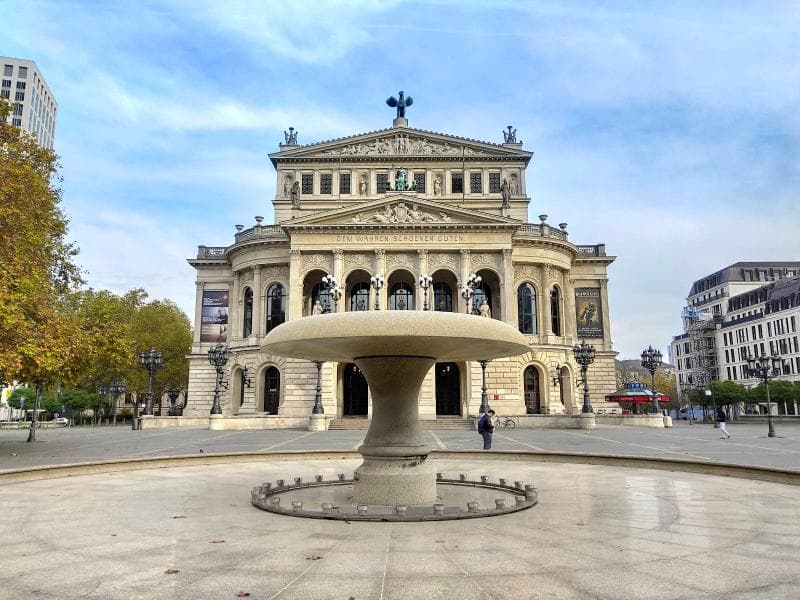
Discover the historic event spaces of Alte Oper Frankfurt, Germany. Explore its Neo-Renaissance architecture, versatile halls, and rich cultural history.
Overview
The Alte Oper Frankfurt, a majestic Neo-Renaissance structure in the heart of Frankfurt, Germany, stands today as a premier concert and congress center. Far more than just a historical landmark, it houses versatile event spaces that seamlessly blend its storied past with modern functionality. These include the grand Großer Saal, the adaptable Mozart Saal, and a collection of elegant Salons and spacious Foyers, each designed to host a diverse array of cultural and corporate events. The building’s impressive facade hints at the richness within, inviting visitors to explore its unique blend of history, architecture, and contemporary event capabilities.
History & Cultural Background
The story of the Alte Oper begins in the late 19th century, when Frankfurt embarked on building its own opera house. Designed by Berlin architect Richard Lucae, the magnificent structure opened on October 20, 1880, with Emperor Wilhelm I among the 2,000 guests. The Emperor, reportedly impressed by its opulence, famously remarked, 'Such luxury would never be permitted in Berlin.' For six decades, it was a cultural beacon, hosting premieres like Carl Orff's 'Carmina Burana' in 1937. However, this golden era ended abruptly when the building was largely destroyed by air raids in March 1944 during World War II, leaving behind what many called 'Germany's most beautiful ruin.' For years, its fate hung in the balance, with proposals ranging from demolition (earning a politician the nickname 'Dynamit-Rudi') to complete reconstruction. It was thanks to the unwavering efforts and significant donations from Frankfurt's citizens that reconstruction began in the 1970s. The Alte Oper was reborn and inaugurated on August 28, 1981, as a concert and congress center, marking a new chapter in its distinguished history with a performance of Gustav Mahler's Eighth Symphony.
What Makes It Special
What truly sets the Alte Oper's event spaces apart is their remarkable blend of historical grandeur and state-of-the-art infrastructure. While the exterior faithfully reflects its 19th-century Neo-Renaissance origins, the interior houses modern technology and flexible spatial concepts. The Großer Saal, the heart of the Alte Oper, is renowned for its superb acoustics, enhanced by mahogany paneling, and can accommodate nearly 2,500 guests. It is an ideal venue for world-class orchestras, jazz performances, and large-scale galas or conferences. The Mozart Saal, with a capacity of up to 700 guests, offers versatility for chamber music, congresses, and more intimate events, equipped with modern lighting, audio, and conferencing technology. Beyond these main halls, the elegant Salons provide exclusive supplementary spaces, perfect for VIP receptions, workshops, or focused discussions. The various Foyers, such as the Clara Schumann Foyer, offer expansive areas for exhibitions, receptions, and catering, making the entire venue adaptable for a multitude of event formats. This adaptability, coupled with its rich history, creates an unparalleled atmosphere.
Stories, Fun Facts & Local Details
The Alte Oper is steeped in intriguing stories and local lore. Beyond Emperor Wilhelm I's famous observation at its inauguration, the building's survival and revival are a testament to civic pride. After its wartime destruction, it lay in ruins for decades, becoming a poignant symbol of Frankfurt's past. The determined citizens' initiative, which raised significant funds for its reconstruction, turned what was once a symbol of destruction into one of hope and cultural resurgence. Its reopening in 1981 was a monumental occasion, celebrated with Mahler's monumental Symphony No. 8, often called the 'Symphony of a Thousand.' Architecturally, the building's facade is adorned with intricate sculptures, including the Three Graces (Euphrosyne, Aglaia, and Thalia) on the tympanum, alongside allegorical representations of comedy and tragedy. A bronze Pegasus, the horse of the muses and poets, crowns the structure, symbolizing artistic inspiration. Statues of figures like Johann Wolfgang von Goethe and Wolfgang Amadeus Mozart further connect the building to enduring cultural legacies.
Visitor Perspective
For visitors, the event spaces within the Alte Oper Frankfurt offer a truly immersive experience. Guests often praise its grand architecture, the intricate details of its Neo-Renaissance design, and the overall enchanting atmosphere. Whether attending a classical concert in the Großer Saal or a corporate gathering in one of its refined Salons, there's a palpable sense of occasion. The excellent acoustics are frequently highlighted, providing an optimal listening experience for any performance. The building itself, rising majestically on Opernplatz, is a striking landmark and a popular photographic subject, especially when illuminated at night. Inside, the spacious foyers and elegant staircases contribute to a sense of timeless charm and sophistication. The Alte Oper is consistently recommended by cultural enthusiasts for its blend of historical significance, architectural beauty, and its role as a vibrant cultural hub in modern Frankfurt.
Coordinates: 8.6719, 50.1162
View on Google Maps💬 How Travelers Describe This Place
Based on community votes
Photogenic
685Interesting
446Beautiful
152Unique
33Must See
16
Traveler Stories
Discover memorable experiences shared by travelers who have visited this place.
No traveler stories yet.
Be the first traveler to share what made this place memorable.

Tour
By
Spot
Discover amazing places around the world. Your journey starts here.
Explore
© 2026 TourBySpot. All rights reserved.