Ethnographic Collection
Ulaanbaatar, Mongolia
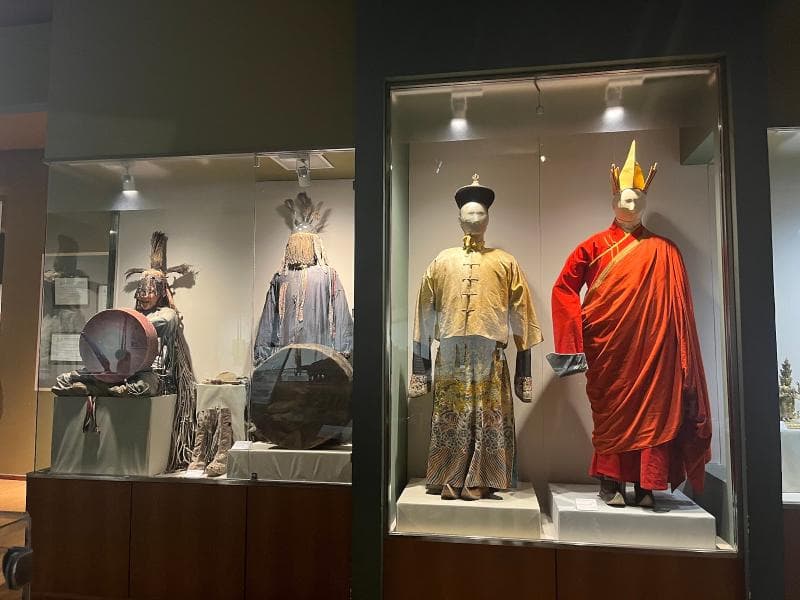
Explore the National Museum of Mongolia's Ethnographic Collection in Ulaanbaatar. Discover nomadic traditions, costumes, tools, and spiritual heritage.
Overview
Step into the heart of Mongolia's rich cultural tapestry at the Ethnographic Collection, a captivating sub-spot within the esteemed National Museum of Mongolia in Ulaanbaatar. This dedicated section serves as a vibrant gateway to understanding the profound traditions, daily life, and spiritual world of Mongolia's diverse ethnic groups. It's more than just an exhibition; it's a meticulously curated journey through centuries of nomadic heritage, showcasing the ingenuity, artistry, and resilience of the Mongolian people. From elaborate traditional attire to essential tools of a pastoral existence, the collection brings to life a way of living deeply intertwined with the vast steppes and unique customs of the land.
History & Cultural Background
The National Museum of Mongolia, established in 1924, is the nation's largest museum, dedicated to preserving Mongolian history and traditional life. The current building, originally constructed in 1971, was officially renamed the National Museum of Mongolia in 2008. The Ethnographic Collection itself is a culmination of extensive efforts to gather and conserve artifacts that illuminate the historical and cultural characteristics of the Mongolian people. Its development involved targeted expeditions by researchers throughout the mid-20th century to collect diverse items, particularly costumes from various ethnic groups. The museum's ethnographic holdings are significant, comprising 5,748 lots and 8,934 individual items, representing a substantial portion of its total catalogue. These artifacts collectively tell the story of a nation shaped by its nomadic roots and the distinct identities of its more than 20 ethnic groups, which include the Khalkh, Oirad, Barga, Dariganga, Kazak, Uzemchin, Zakhchin, Torguud, and Khoton, among others.
What Makes It Special
The Ethnographic Collection at the National Museum of Mongolia stands out for its comprehensive portrayal of Mongolian traditional culture and nomadic life, primarily distributed across Halls 3, 5, and 6. Hall 3, 'Mongolian Traditional Costume and Ornaments,' is a dazzling display of the intricate attire and jewelry of various Mongolian ethnic groups. Here, visitors can admire state ceremonial wear, seasonal garments, and exquisite accessories dating from the 10th to the 20th centuries, each reflecting unique cultural nuances and regional variations. Hall 5 delves into 'Mongolian Traditional Culture,' featuring items of spiritual importance, ancient manuscripts and scriptures, traditional musical instruments, and even games and toys that highlight the rich leisure and intellectual life of the nomads. This hall also provides insights into the significance of the national Naadam festival. Meanwhile, Hall 6, 'Mongolian Traditional Life,' immerses visitors in the realities of nomadic existence. It showcases a fully furnished 'ger' (yurt), alongside a remarkable array of tools used for animal husbandry, hunting, and even early agriculture, demonstrating the self-sufficiency and resourcefulness of a mobile society.
Stories, Fun Facts & Local Details
Among the many fascinating exhibits, the traditional Mongolian 'deel'—a long, one-piece gown—tells a story of practical elegance and cultural identity. Most Mongolians own several deels, suited for different seasons, with winter versions often lined with sheepskin for warmth. The design, featuring buttons on the right and a high collar, reflects historical influences and continues to be worn today. Another intriguing detail can be found in the 'gutul,' the traditional high boots. These leather boots are designed to be interchangeable for either foot, but their most distinctive feature is the upturned toe. While practical explanations exist, a widely held belief attributes this design to religious custom. It is said that the upturned toe touches less of the earth, thereby theoretically harming fewer insects, in accordance with Buddhist principles of non-violence. The collection also highlights the incredible ingenuity of nomadic tools and household items. Visitors will see expertly crafted wooden and leather containers for milk products, intricate copper teapots, and even a mechanical weaving machine, illustrating how art and utility were seamlessly integrated into daily life on the steppe.
Visitor Perspective
For any curious traveler, the Ethnographic Collection offers an invaluable opportunity to connect deeply with Mongolia's soul. The museum prides itself on being a cultural, scientific, and educational institution, aiming to provide first-hand experiences of how Mongolians lived through history. The exhibits are thoughtfully presented with clear labels in both Mongolian and English, making the rich historical and cultural context accessible to international visitors. Walking through these halls, one can truly appreciate the depth of craftsmanship, the spirituality that permeated daily routines, and the adaptive genius required to thrive in a challenging environment. It's an immersive experience that not only educates but also fosters a profound respect for the enduring traditions that continue to shape modern Mongolia. The extensive collection ensures that there is always something new and intriguing to discover, offering a unique glimpse into the nomadic heritage that defines this remarkable nation.
Coordinates: 106.9154, 47.9208
View on Google Maps💬 How Travelers Describe This Place
Based on community votes
Unique
799Must See
526Photogenic
424Beautiful
181Interesting
30
Traveler Stories
Discover memorable experiences shared by travelers who have visited this place.
No traveler stories yet.
Be the first traveler to share what made this place memorable.

Tour
By
Spot
Discover amazing places around the world. Your journey starts here.
Explore
© 2026 TourBySpot. All rights reserved.