Eternal Flame
Yerevan, Armenia
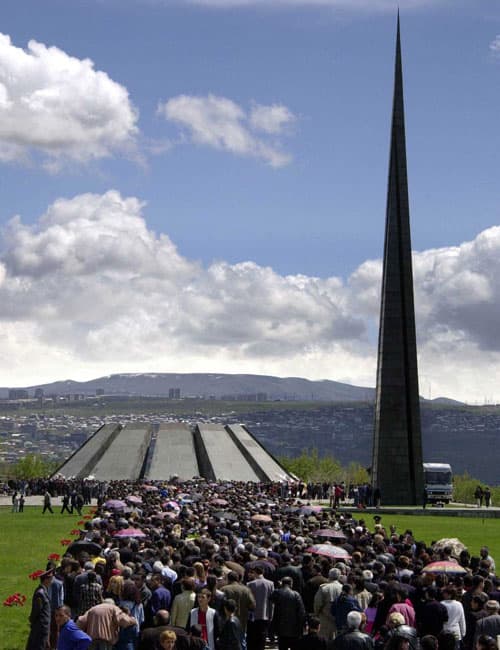
Discover the Eternal Flame at Tsitsernakaberd Armenian Genocide Memorial Complex in Yerevan, Armenia, a powerful symbol of remembrance and resilience.
Overview
Nestled on the scenic Tsitsernakaberd hill overlooking Yerevan, Armenia, the Eternal Flame is the poignant heart of the Tsitsernakaberd Armenian Genocide Memorial Complex. This hallowed ground serves as Armenia's official memorial, dedicated to the memory of the 1.5 million Armenians who perished in the Armenian Genocide of the early 20th century. More than just a monument, it is a powerful pilgrimage site and an integral part of Yerevan's architectural and emotional landscape.
The memorial complex, completed in 1967, stands as a testament to the enduring spirit of a nation that survived a ruthless campaign of extermination. The Eternal Flame itself is cradled within a unique architectural formation, designed to evoke deep contemplation and remembrance, drawing thousands of visitors annually, including international dignitaries and scholars, to pay their respects and reflect on the tragic past.
History & Cultural Background
The genesis of the Tsitsernakaberd Memorial traces back to the 1960s, with calls for a monument to honor the victims of the Armenian Genocide. The decision to build the memorial was finalized on February 15, 1965, by the Armenian authorities, following widespread demonstrations in Yerevan commemorating the 50th anniversary of the genocide.
The construction of the complex began in 1966 and was completed in a remarkably short two and a half years, officially opening on November 29, 1967. Architects Arthur Tarkhanyan and Sashur Kalashyan, along with sculptor F. Arakelyan and Lyudmila Mkrtchyan for the later museum, were instrumental in shaping its profound design. The memorial's creation during the Soviet era was a significant socio-political event, transforming a once-forbidden topic into a nationally recognized day of mourning and remembrance.
Culturally, the memorial complex has become a central point for the collective memory and identity of the Armenian people. Every year on April 24th, Armenian Genocide Remembrance Day, hundreds of thousands gather at Tsitsernakaberd to honor the victims, laying fresh flowers around the Eternal Flame. This annual commemoration ensures that the memory of those lost is never extinguished and reinforces the nation's commitment to seeking justice and preventing future atrocities.
What Makes It Special
The Eternal Flame is enshrined within the 'Sanctuary of Eternity' or 'Temple of Eternity,' a deeply symbolic structure. It is surrounded by twelve massive, inwardly-canted basalt slabs, forming a circle. These twelve slabs represent the twelve lost provinces of historic Western Armenia, territories that are now part of present-day Turkey, from which many Armenians were displaced or perished during the genocide.
The inward lean of the slabs symbolizes figures bowing in eternal mourning for the victims. The circular arrangement, with the flame at its heart, creates a powerful sense of enclosure and protection, fostering a contemplative atmosphere. The flame itself burns continuously, symbolizing the unyielding memory of the Armenian people and the enduring spirit that cannot be extinguished, despite immense tragedy.
Adjacent to this central sanctuary stands a 44-meter-high granite stele, often referred to as the 'Memorial Column' or 'Reborn Armenia.' This towering obelisk, split down the middle, symbolizes the rebirth and spiritual revival of the Armenian nation, rising from the ashes of genocide.
Stories, Fun Facts & Local Details
The name 'Tsitsernakaberd' itself carries a meaningful local detail; it translates to 'Swallow's Fortress.' According to legend, the hill was home to the palace of Astghik, the goddess of love, whose swallow messengers carried news to the god Vahagn. The swallow is a symbol of return, suggesting that despite displacement and loss, the Armenian people, like the swallows, always return to their nest.
On April 24th, the annual commemoration day, the area around the Eternal Flame becomes a sea of flowers, often piling several feet high, brought by countless individuals paying their respects. Beyond this annual event, foreign dignitaries, politicians, and public figures frequently visit the memorial, planting trees in the 'Memory Alley' nearby as a gesture of solidarity and remembrance.
Another poignant detail lies behind the Memorial Wall, where urns containing soil from the graves of international figures who condemned the Armenian Genocide are placed, acknowledging their advocacy. The entire complex is designed to be visited alongside the Armenian Genocide Museum-Institute, which opened in 1995. The museum is built into the hillside to avoid detracting from the monument's impact, providing historical documents, photographs, and survivor testimonies that deepen the visitor's understanding.
Visitor Perspective
A visit to the Eternal Flame at Tsitsernakaberd is an intensely moving and profound experience. The solemn atmosphere, often accompanied by soft, somber music playing in the background, prepares visitors for a journey of remembrance. As one approaches the central memorial, the design intentionally guides the visitor to a lower circular space, where the Eternal Flame burns, compelling them to bow their heads in a natural gesture of respect and mourning.
The quiet intensity of the flame and the imposing, yet sorrowful, presence of the leaning basalt slabs evoke a powerful emotional response. It is a place that encourages deep reflection on the atrocities of the past and the resilience of the human spirit. The absence of ornate decorations emphasizes the gravity of the events being commemorated.
Visitors often describe a sense of profound reverence and a clearer understanding of the Armenian people's history and their ongoing struggle for recognition and justice. It is a destination that transcends a typical tourist attraction, offering an essential opportunity to engage with a significant chapter of human history and to stand in solidarity with a community that refuses to let its past be forgotten.
Coordinates: 44.4877, 40.1848
View on Google Maps💬 How Travelers Describe This Place
Based on community votes
Interesting
817Photogenic
711Must See
657Beautiful
299Unique
19
Traveler Stories
Discover memorable experiences shared by travelers who have visited this place.
No traveler stories yet.
Be the first traveler to share what made this place memorable.

Tour
By
Spot
Discover amazing places around the world. Your journey starts here.
Explore
© 2026 TourBySpot. All rights reserved.