Eternal Flame Area
Ashgabat, Turkmenistan
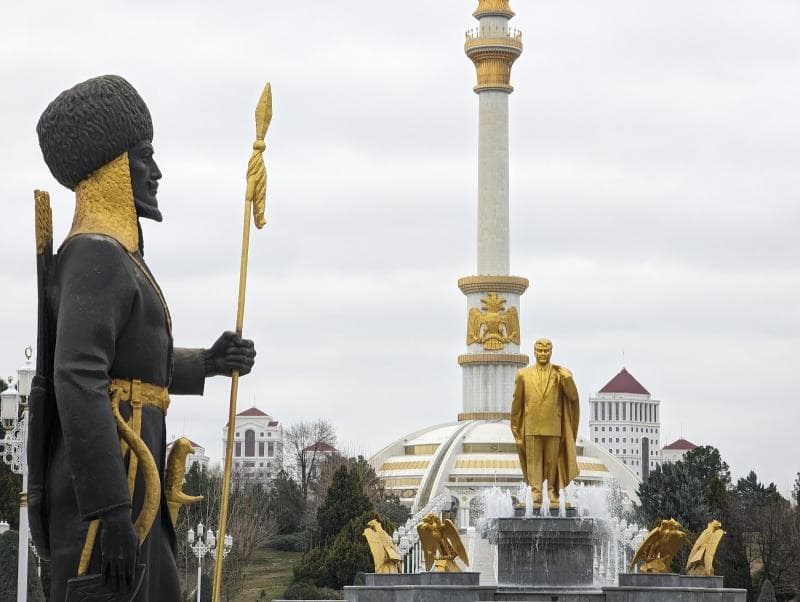
Explore Ashgabat's Independence Monument, a towering symbol of Turkmenistan's sovereignty, rich in history, cultural design, and heroic statues.
Overview
The Independence Monument, known locally as Garaşsyzlyk binasy, stands as a prominent and evocative symbol of Turkmenistan's sovereignty in its capital city, Ashgabat. Erected to commemorate the nation's independence from the Soviet Union in 1991, this majestic structure is nestled within a beautifully landscaped park, serving as a powerful reminder of the country's historical journey and national pride. While travelers often inquire about an 'Eternal Flame Area' within its confines, it is important to note that credible sources do not identify a specific sub-spot by this name at the Independence Monument. The most renowned 'Eternal Flame' in Turkmenistan is the Darvaza Gas Crater, a distinct natural phenomenon located far in the Karakum Desert. However, the Independence Monument itself, with its profound symbolism and expansive grounds, offers a significant space for reflection and remembrance of Turkmenistan's heritage and its heroes.
History & Cultural Background
The Independence Monument was completed in 2001, marking the tenth anniversary of Turkmenistan's independence, which occurred on October 27, 1991. The monument's design is rich with symbolism, drawing inspiration from traditional Turkmen tents and the distinctive headgear worn by Turkmen girls. Its impressive height of 118 meters is not arbitrary; it cleverly integrates the independence date: the main reinforced concrete tower is 91 meters tall, representing the year 1991, while the golden gilt steel construction on top adds another 27 meters, signifying the 27th day of the month. This blend of traditional motifs and numerical representation creates a unique architectural narrative that tells the story of the nation's birth. The monument was constructed by the Turkish company Polimeks, further highlighting international collaboration in its creation.
What Makes It Special
Beyond its significant height and symbolic design, the Independence Monument is distinguished by its expansive surrounding park, which spans over 80,000 square meters. This verdant space is adorned with cascaded pools, fountains, and numerous statues of Turkmen historical figures and national heroes who shaped the country's past. At the forefront of the monument stands a golden statue of Turkmenistan's first president, Saparmurat Niyazov, often referred to as Turkmenbashi. The base of the monument is designed to resemble a traditional Turkmen yurt, a nod to nomadic heritage. Inside the monument, exhibition halls showcase important works of art that depict Turkmenistan's rich history, offering visitors a deeper insight into the nation's cultural values and journey to independence.
Stories, Fun Facts & Local Details
The Independence Monument, despite its grandeur, has garnered an affectionate local nickname: 'the plunger,' owing to its distinctive shape. A fascinating tradition associated with the monument involves foreign dignitaries and guests planting young trees along an 'Alley of Honorary Guests' near the site, symbolizing friendship and lasting relations. The park also houses other significant elements, including a golden crescent moon and five stars atop the main structure, symbolizing the unity of the five major Turkmen tribes. While the prompt specifically asked about an 'Eternal Flame Area' at this site, it's important to clarify that Turkmenistan's most famous 'eternal flame' is actually the Darvaza Gas Crater, also known as the 'Door to Hell,' located in the Karakum Desert. This natural gas fire has been burning for decades and is a popular, albeit distant, tourist attraction, distinct from any memorial at the Independence Monument. In Ashgabat, there was previously an 'Eternal Flame' dedicated to heroes of the Great Patriotic War, which was later moved and integrated into the Halk Hakydasy Memorial Complex, a separate site commemorating various historical tragedies and heroes.
Visitor Perspective
Visiting the Independence Monument offers a serene yet awe-inspiring experience. The vast, meticulously maintained park provides a tranquil oasis amidst the bustling city of Ashgabat, inviting leisurely strolls and peaceful reflection. Visitors are often struck by the monument's sheer scale and the pristine white marble that characterizes much of Ashgabat's architecture. While photography is generally permitted, visitors are usually advised to be mindful of restrictions, particularly regarding military personnel who may be present. The clean environment and impressive structures make for a memorable visit, allowing travelers to connect with Turkmenistan's national identity and history. The monument and its surrounding park serve as a vital gathering place for national celebrations and events, showcasing the vibrant cultural heritage of the Turkmen people.
Coordinates: 58.3823, 37.8811
View on Google Maps💬 How Travelers Describe This Place
Based on community votes
Photogenic
800Beautiful
658Unique
589Must See
374Interesting
90
Traveler Stories
Discover memorable experiences shared by travelers who have visited this place.
No traveler stories yet.
Be the first traveler to share what made this place memorable.

Tour
By
Spot
Discover amazing places around the world. Your journey starts here.
Explore
© 2026 TourBySpot. All rights reserved.