Emperor’s Mosque Area
Sarajevo, Bosnia and Herzegovina
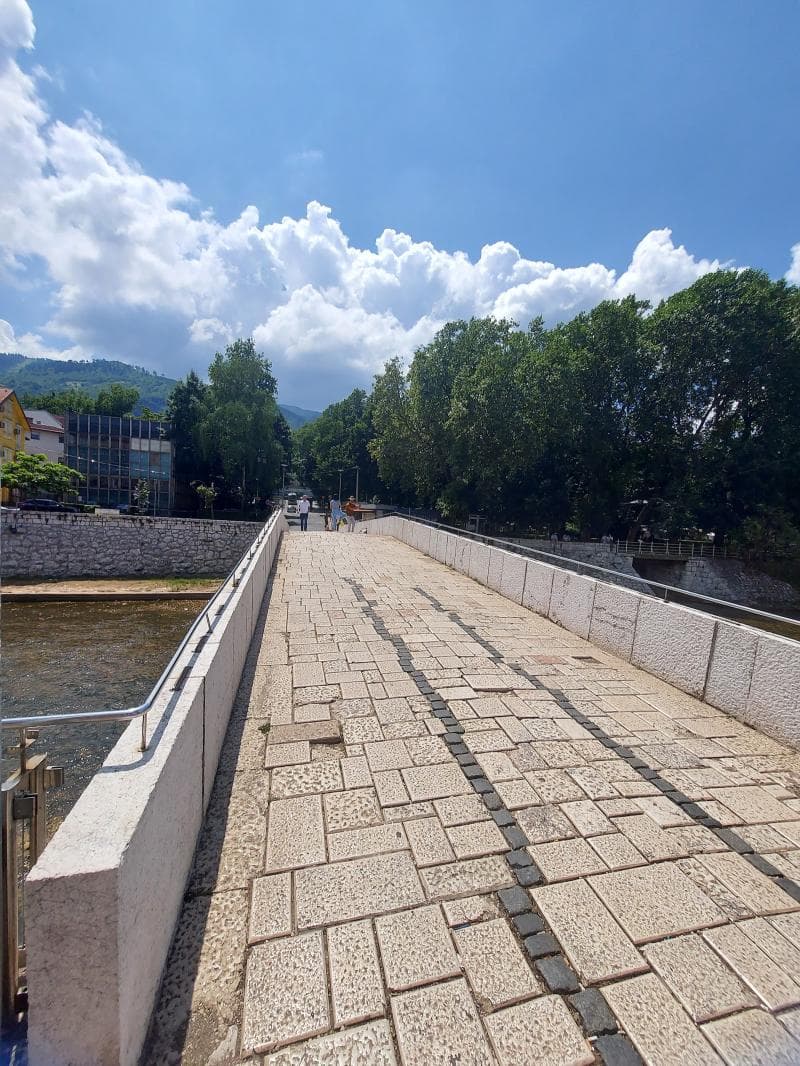
Discover the Emperor’s Mosque Area in Sarajevo, Bosnia and Herzegovina, a historical core encompassing the ancient Emperor’s Mosque and the Latin Bridge, site of Archduke Franz Ferdinand's assassination.
Overview
Nestled in the vibrant heart of Sarajevo, Bosnia and Herzegovina, the Emperor’s Mosque Area offers a profound journey into the city’s foundational history and enduring cultural spirit. While the Latin Bridge, famous for its pivotal role in 20th-century history, draws many visitors, the Emperor’s Mosque (Careva Džamija) stands as Sarajevo’s oldest mosque and its spiritual nucleus, a mere stone’s throw away. This area is where the Ottoman city first took root, embodying centuries of Bosnian identity and resilience. It is a place where layers of history, from the initial Ottoman settlement to the tragic events that sparked a world war, converge along the serene Miljacka River.
History & Cultural Background
The story of Sarajevo truly begins with the Emperor’s Mosque. Commissioned by Isa-beg Ishaković, an Ottoman commander and the city’s founder, the original wooden mosque was completed in 1457 CE, marking the establishment of a new urban center after the Ottoman conquest of Bosnia. It was dedicated to Sultan Mehmed the Conqueror, thus earning its imperial title. This initial structure quickly became the heart from which Sarajevo grew, an urban principle characteristic of Ottoman city planning.
However, this first mosque faced destruction in 1480 during a raid by Hungarian forces. Rising from its ashes, the mosque was rebuilt in stone in 1565, under the patronage of Sultan Suleiman the Magnificent, giving it the classical Ottoman style that largely defines its appearance today. This resilient rebuilding solidified its role as a central pillar of Islamic faith and culture in the Balkans, a function it has continuously served for over five centuries, surviving numerous conflicts and eras.
Nearby, the Latin Bridge, or Latinska Ćuprija, though distinct, is inextricably linked to the area’s narrative. Its foundations suggest it is among the city's oldest preserved bridges, with a wooden predecessor mentioned as early as 1541. The current stone bridge dates back to 1565 and was named for its connection to the 'Latinluk' – the Catholic quarter of the city. More famously, on June 28, 1914, the northern end of this bridge became the site of the assassination of Archduke Franz Ferdinand, an event that directly triggered the outbreak of World War I, indelibly marking the area in global history. During the Yugoslav era, it was briefly renamed 'Principov Most' after Gavrilo Princip, before its original name was restored following the Yugoslav Wars.
What Makes It Special
The Emperor's Mosque is renowned as the largest single-subdome mosque in Bosnia and Herzegovina, a testament to classical Ottoman architecture. Its spacious prayer hall is crowned by an impressive dome, while a slender, elegant minaret reaches skyward. The mosque's interior features high-quality decorative details, including a magnificent mihrab and intricate wall decorations, some of which date back to the 16th, 18th, and early 19th centuries, meticulously conserved and restored over time. It holds status as a national monument, reflecting its immense cultural and historical value.
Beyond its architectural grandeur, the area offers a unique cultural confluence. The mosque's serene courtyard houses an ancient cemetery, or harem, containing gravestones of viziers, mullahs, and other prominent figures, including the presumed grave of Isa-beg Ishaković himself. This peaceful space invites reflection on the lineage of Sarajevo's spiritual and civic leaders. The proximity to the Latin Bridge creates a powerful contrast between spiritual beginnings and world-altering historical events, offering visitors a holistic view of Sarajevo's complex identity.
Stories, Fun Facts & Local Details
It's said that Isa-beg Ishaković originally built a bridge directly leading to his mosque, which further emphasizes how central this religious site was to his vision for Sarajevo. While that original bridge is no longer there, the 'Emperor's Bridge' (not the Latin Bridge), an Austro-Hungarian era structure, stands nearby as a testament to the area’s continuous importance. The mosque itself has been lovingly restored after damages from conflicts, particularly the 1990s Bosnian War, symbolizing the resilience and enduring faith of the Bosnian people.
A delightful local detail is how the Latin Bridge received its name: not from ancient Rome, but from the 'Latinluk' quarter, a Catholic neighborhood it connected, showcasing Sarajevo’s long history of diverse communities living in close proximity. The distinctive 'eyes' in the Latin Bridge's structure, above its pillars, are more than decorative; they are practical openings designed to reduce pressure during the Miljacka River's frequent floods, demonstrating generations of local ingenuity.
Visitor Perspective
Visiting the Emperor’s Mosque Area is an experience that resonates deeply with history and culture. You can easily spend an hour or two exploring the mosque’s interior, appreciating its Ottoman design, and wandering through the historic cemetery. Combining this with a stroll across the Latin Bridge and a moment of contemplation at the site where Franz Ferdinand's assassination took place, allows for a comprehensive understanding of Sarajevo’s layered past.
As an active place of worship, visitors are encouraged to dress modestly, and women should cover their heads before entering the mosque. Respectful behavior and awareness of prayer times ensure a meaningful visit. The area, with its blend of spiritual sanctity and pivotal historical moments, offers a powerful narrative for any curious traveler seeking to understand the soul of Sarajevo.
Coordinates: 18.4303, 43.8575
View on Google Maps💬 How Travelers Describe This Place
Based on community votes
Unique
995Beautiful
964Photogenic
929Interesting
730Must See
482
Traveler Stories
Discover memorable experiences shared by travelers who have visited this place.
No traveler stories yet.
Be the first traveler to share what made this place memorable.

Tour
By
Spot
Discover amazing places around the world. Your journey starts here.
Explore
© 2026 TourBySpot. All rights reserved.