Elevators & Mechanics
Paris, France
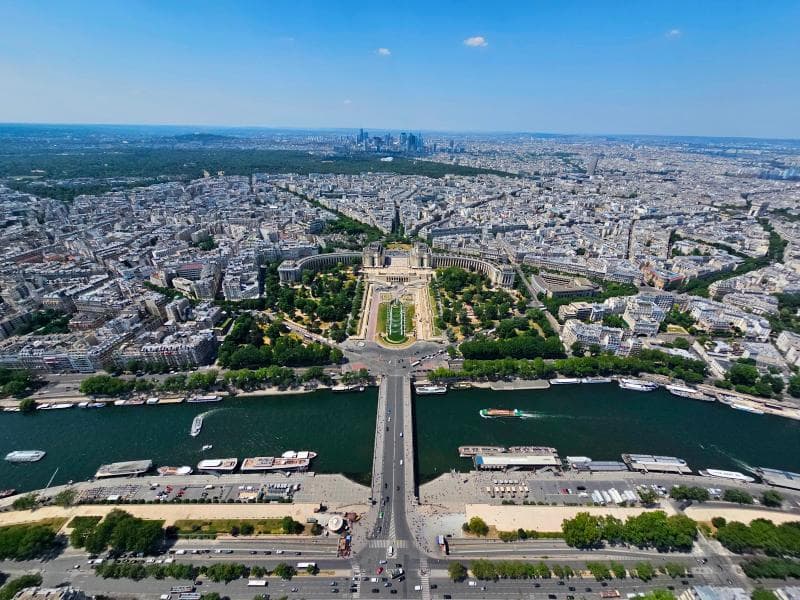
Discover the incredible history and mechanics of the Eiffel Tower's elevators in Paris, France. A journey through groundbreaking engineering.
Overview
The 'Elevators & Mechanics' of the Eiffel Tower are not merely a means of ascent; they are an integral part of its historical narrative and a marvel of engineering that transports millions of visitors each year to breathtaking heights above Paris. The tower features several elevator systems. Three public elevators are located in the East, North, and West pillars, providing access to the second floor. From the second floor, two additional elevators whisk visitors further up to the summit. A private elevator also operates in the South pillar.
For many, the elevator journey is the quintessential way to experience the tower, offering panoramic views through glass-enclosed cabins as you ascend the iconic structure. The summit, the highest accessible point for visitors, can only be reached by elevator. These mechanical workhorses travel an astonishing distance annually, covering approximately 103,000 kilometers (64,000 miles), equivalent to about two and a half times the Earth's circumference.
History & Cultural Background
The history of the Eiffel Tower's elevators is one of audacious vision and groundbreaking engineering. When Gustave Eiffel embarked on building his monumental tower for the 1889 Exposition Universelle, the challenge of transporting crowds to its upper levels was immense. The curved legs of the tower presented a unique dilemma, demanding innovative solutions far beyond conventional vertical lift systems.
Eiffel initially faced difficulties finding companies willing to tackle the complex design for the curved sections of the tower's lower legs. Ultimately, the American Otis Elevator Company rose to the challenge, designing revolutionary hydraulic cable lifts for the North and West pillars. These were not just elevators but intricate 'half elevator, half inclined railroad' systems, celebrated for their complexity and beauty.
Meanwhile, a French firm was contracted for the elevator connecting the second floor to the summit. This original Edoux elevator was particularly notable for its unique hydraulic cylinder, 80 meters long, a technological marvel of its time. Despite initial concerns and French nationalism pushing for local solutions in other pillars, the Otis systems proved to be avant-garde technology. The elevators were not fully completed when the tower first opened, leading nearly 30,000 eager visitors to climb the stairs to the top.
Over the decades, the systems have evolved. The early hydraulic elevators, which famously struggled in winter due to freezing temperatures, were eventually replaced by electric ones. Significant renovations in the 1980s and 1990s saw further modernization, ensuring the tower's continued accessibility and safety. A poignant moment in their history occurred during the German occupation of Paris in 1940 when the lift cables were cut by the French, only to be repaired in 1946.
What Makes It Special
The special allure of the Eiffel Tower's elevators lies in their blend of historical ingenuity and continuous technological advancement. What makes them truly stand out is the original engineering feat involved in their creation. The curved ascent path in the lower sections required the elevator cabins to constantly adjust their tilt to remain level, a complex mechanism that was revolutionary for its era.
Visitors can still observe some of the original hydraulic machinery at the tower's base, offering a tangible connection to the past and a glimpse into the raw power that once propelled these cabins skyward. The precise counterweight systems, especially in the newer duolift™ elevators, are marvels of mechanical efficiency, where one cabin's ascent aids another's descent. This intricate ballet of cables and hydraulics allows millions to effortlessly reach heights that were once unimaginable, solidifying the elevators' status as both historical artifacts and functional wonders.
Stories, Fun Facts & Local Details
The story of the Eiffel Tower's elevators is rich with anecdotes, highlighting the spirit of innovation and daring of the late 19th century. Perhaps one of the most famous tales involves the American engineer Elisha Otis, whose company installed elevators in two of the tower's legs. To demonstrate the safety of his new brake system to a skeptical audience, including Gustave Eiffel himself, Otis conducted a dramatic test. He loaded an elevator with 3,000 kilograms of lead, and then, in front of a captivated crowd, had the ropes cut. The elevator, equipped with its innovative safety brake, came to a safe stop, proving its reliability and earning widespread acclaim.
Another fascinating detail is the immense distance these elevators cover each year. Imagine traveling the equivalent of two and a half times around the globe without leaving the confines of a single structure; that's the annual mileage racked up by the Eiffel Tower's lifts.
When the tower first opened, the elevators were not immediately ready for operation. This meant that for the initial nine days, nearly 30,000 visitors had to rely on their own two feet, climbing all 1,710 steps to the top to experience the panoramic views. These 'beautiful machines,' as some of the early hydraulic lifts were described, became attractions in their own right, drawing crowds eager to witness the marvel of vertical transport.
Visitor Perspective
For the curious traveler, the elevators of the Eiffel Tower offer an experience that transcends mere transportation. As the cabin smoothly ascends, the city of Paris unfurls beneath you, a living map of iconic landmarks. The glass panels provide unobstructed, ever-expanding views, transforming the ride into a gradual reveal of the 'City of Light.'
While climbing the stairs to the first and second floors offers a more intimate and physically engaging interaction with the iron lattice, the elevators provide convenience, speed, and the sole pathway to the majestic summit. The journey to the top, where Gustave Eiffel's private apartment once stood, offers the highest public vantage point in the European Union, a truly unparalleled panorama.
To make the most of your visit, especially during peak seasons, it's highly recommended to book elevator tickets in advance and arrive early to minimize waiting times. The experience of riding these historic and technologically advanced elevators is a significant part of the magic of visiting the Eiffel Tower, connecting you directly to the ingenuity and vision that brought this global icon to life.
Coordinates: 2.2945, 48.8584
View on Google Maps💬 How Travelers Describe This Place
Based on community votes
Beautiful
981Unique
617Interesting
357Photogenic
147Must See
28
Traveler Stories
Discover memorable experiences shared by travelers who have visited this place.
No traveler stories yet.
Be the first traveler to share what made this place memorable.

Tour
By
Spot
Discover amazing places around the world. Your journey starts here.
Explore
© 2026 TourBySpot. All rights reserved.