Egyptian Collection
Copenhagen, Denmark
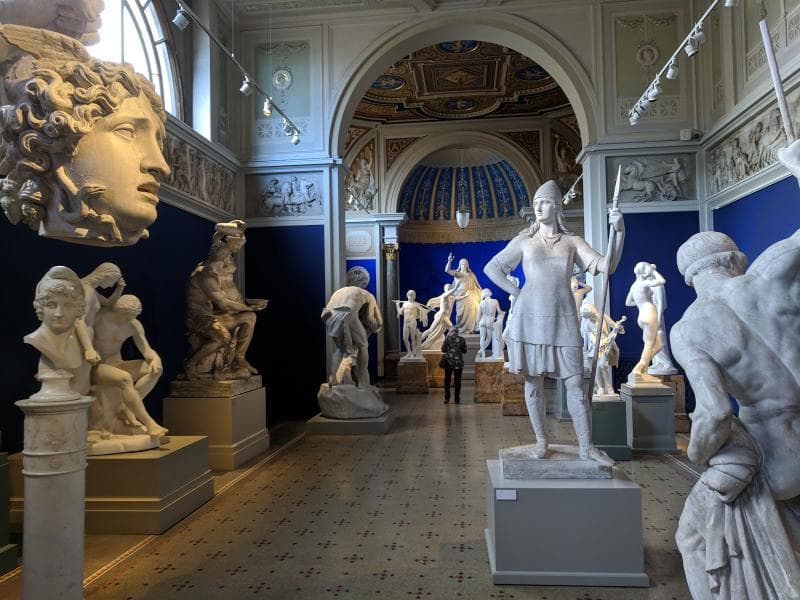
Explore the Egyptian Collection at Ny Carlsberg Glyptotek in Copenhagen, Denmark, home to 1,900+ artifacts spanning 3,000 years of history. Discover mummies, pharaoh sculptures, and Amarna treasures.
Overview
Deep within the architectural splendor of the Ny Carlsberg Glyptotek in Copenhagen, Denmark, lies a captivating journey back in time: the Egyptian Collection. This impressive collection, one of the finest in Northern Europe, boasts over 1,900 artifacts, meticulously assembled to span more than 3,000 years of Ancient Egyptian history, from approximately 3000 BCE to the 1st century CE. Visitors can explore relics from the Predynastic Period through the Middle Kingdom and into the Roman Period of Egypt. It serves as a vital bridge to understanding a civilization that profoundly shaped human history and art.
The collection is not merely a display of ancient objects; it's a narrative woven from monumental sculptures, intricate architectural fragments, divine depictions, and the mysterious allure of hieroglyphic texts. It even includes actual mummies housed in a crypt-like setting, designed to evoke the solemnity of an ancient Egyptian tomb. The Glyptotek's Egyptian treasures offer a comprehensive view of life, death, and belief in one of the world's oldest continuous cultures.
History & Cultural Background
The genesis of the Egyptian Collection is intrinsically linked to the vision and passion of Carl Jacobsen, the renowned son of the Carlsberg Breweries founder. Jacobsen, a fervent art collector and philanthropist, began acquiring Egyptian artifacts in 1882, with his very first purchase being a sarcophagus from the Egyptian Museum in Cairo. His ambition was grand: to connect the artistic lineage from ancient Egypt through Greco-Roman antiquity to the art of his own contemporary era.
Jacobsen's commitment to building this collection was relentless. He didn't just buy; he actively sponsored excavations in Egypt during the early 20th century. Key figures in Egyptology, such as W.M.F. Petrie, John Garstang, and Francis Llewellyn Griffith, oversaw these endeavors, with funding often provided by the New Carlsberg Foundation, which Jacobsen established in 1902. He also collaborated closely with Denmark's first Egyptologist, Valdemar Schmidt, who acted as his trusted emissary and buyer in the competitive international antiquities market. The museum itself, the Ny Carlsberg Glyptotek, opened its doors in 1897, with Jacobsen's vast collection of ancient art, including the growing Egyptian segment, donated in 1899, necessitating the construction of an entirely new wing.
What Makes It Special
What truly distinguishes the Egyptian Collection at Ny Carlsberg Glyptotek is its exceptional breadth and quality, particularly for a museum situated outside of Egypt. It provides an unparalleled insight into the evolution of Egyptian art and society over millennia. Among its many masterpieces is the colossal dyad of Ramses II and the god Ptah, a powerful testament to royal and divine might. Other notable sculptures include the dignified Treasury Master Gebu, a depiction of the jackal-headed god Anubis, and the striking black head of Pharaoh Amenemhat.
The collection also boasts a unique and significant array of artifacts from the Amarna Period, a revolutionary era under pharaohs Akhenaten, Nefertiti, and Tutankhamun. A particularly intriguing piece from this period is a talatat block, believed to depict Queen Kiya, secondary wife of Akhenaten, later potentially re-carved to represent Princess Meryetaten. Adding to its ancient wonders, visitors can marvel at one of the museum's oldest objects: a 5,000-year-old sculpture of a hippopotamus. The thoughtful curation extends beyond monumental pieces, including objects that illustrate the daily lives of ancient Egyptians, such as amulets, tools, cosmetics, and jewelry, offering a tangible connection to their world.
Stories, Fun Facts & Local Details
Carl Jacobsen's passion for art was legendary. A telling anecdote recounts his visit to the Cairo Museum in 1909, where, upon seeing a statue of the goddess Neith, he declared, 'Bigger, but not as good as mine.' This boast, perhaps rooted in confidence and pride, underscores the exceptional quality he strived for in his own collection. The museum's very name, 'Glyptotek,' is derived from the Greek words 'glyptos,' meaning 'carved,' and 'theke,' meaning 'storage place,' reflecting Jacobsen's initial focus on sculpture.
Jacobsen believed that art should be accessible to everyone, a principle that guided his decision to open his private collection to the public even before the Glyptotek was formally established. The museum building itself is an artistic statement, integrating natural light through clever skylights and featuring a magnificent central Winter Garden with palm trees and a fountain, creating a serene oasis amidst the ancient artifacts.
Visitor Perspective
Visiting the Egyptian Collection is an immersive experience. The artifacts are displayed to allow a chronological understanding of ancient Egyptian art and societal development. A highlight for many is the mummy basement, where two prominent Roman-period mummies are exhibited. The space is intentionally dimly lit, designed to simulate the descent into an ancient tomb, fostering a hushed and mysterious atmosphere that amplifies the sense of history and respect for the afterlife. Accompanying coffins and sarcophagi further illuminate millennia of Egyptian funerary practices.
The Glyptotek is conveniently located in central Copenhagen, adjacent to the famous Tivoli Gardens. It is easily reachable, being a short walk from Copenhagen Central Station and well-served by public transport. While there is a general admission fee, visitors under 18 years old and those holding a Copenhagen Card can enjoy free entry, making this invaluable collection accessible to a wider audience. The overall presentation encourages visitors to linger and contemplate, creating a profoundly engaging and educational journey through ancient Egypt.
Coordinates: 12.5698, 55.6702
View on Google Maps💬 How Travelers Describe This Place
Based on community votes
Interesting
953Beautiful
695Photogenic
658Must See
396Unique
22
Traveler Stories
Discover memorable experiences shared by travelers who have visited this place.
No traveler stories yet.
Be the first traveler to share what made this place memorable.

Tour
By
Spot
Discover amazing places around the world. Your journey starts here.
Explore
© 2026 TourBySpot. All rights reserved.