Educational Spaces
Warsaw, Poland
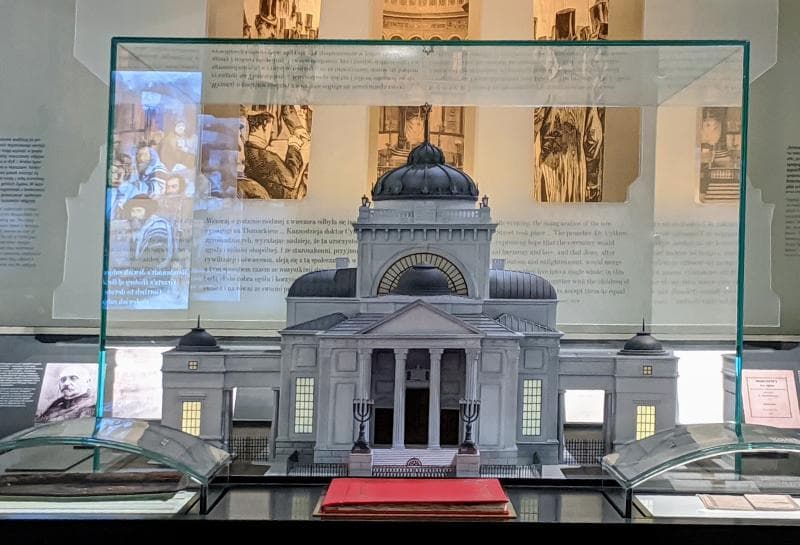
Explore the Educational Spaces at POLIN Museum of the History of Polish Jews in Warsaw, Poland, offering diverse programs for all ages.
Overview
The Educational Spaces at the POLIN Museum of the History of Polish Jews in Warsaw, Poland, represent a vibrant and inclusive hub dedicated to learning and dialogue. Far more than just an adjunct to the core exhibitions, these spaces are central to the museum's mission: to preserve and share the thousand-year history of Polish Jews, while actively promoting mutual understanding, respect, and combating xenophobia. The museum's educational offerings cater to a remarkably diverse audience, including schools, families, individual students, teachers, and adults, ensuring that the rich cultural heritage and complex history are accessible to all.
Since the Education Center's inception, predating the museum's full opening with its first Polish-Israeli youth exchange program in 2006, it has been committed to creating a unique environment for reflection, contemplation, and meaningful encounters. It strives to make history not just a series of facts, but an accessible, cherished, and personal journey for every visitor.
History & Cultural Background
The POLIN Museum stands on deeply symbolic ground in Warsaw's Muranów district, the heart of what was once a thriving Jewish community and later tragically transformed into the Warsaw Ghetto during World War II. This historical setting imbues the Educational Spaces with profound significance, anchoring their mission in a tangible past. The museum's overarching educational philosophy is encapsulated in its aim to 'preserve the past and shape the future.' This involves not only historical education but also the cultivation of respect for people from varied backgrounds and a strong commitment to fighting xenophobia and discrimination.
The Education Center launched its pioneering Polish-Israeli Youth Exchange in 2006, marking its very first educational initiative. This program was designed to immerse young people from both nations in the multifaceted history and contemporary cultures of Poland and Israel, fostering genuine relationships and challenging preconceived notions. This early focus on direct engagement and cross-cultural understanding laid the groundwork for the comprehensive educational approach seen today. The museum's dedication to innovative educational initiatives and its compelling architectural design contributed to it being awarded the European Museum of the Year in 2016, a testament to its impactful work.
What Makes It Special
The Educational Spaces at POLIN are distinguished by their comprehensive and inclusive programming tailored for every age group and background. For the youngest visitors, the 'King Matt's Family Education Area' provides a colorful, modern, and safe environment. This dedicated space for children aged 0-10 encourages play, drawing, reading, and music, making the museum experience enjoyable and engaging for families.
Adult learners can participate in a wide range of activities, including workshops, guided tours, insightful discussions, seminars, and even international projects. A core aspect of the museum's educational mission is its commitment to diversity in its broadest sense. This includes addressing the situations of national and ethnic minorities, as well as people with migrant and refugee backgrounds, with offerings available in multiple languages. Anti-discrimination workshops are also a vital component, promoting critical thinking and empathy.
Notably, following the war in Ukraine, the POLIN Museum significantly increased its support for displaced Ukrainian refugees. It recruited Ukrainian staff and collaborated with the Ukrainian House in Warsaw to provide safe spaces and structured activities for children, aiming to alleviate trauma and facilitate their integration into a new environment. Furthermore, the museum extends its reach through online educational resources, providing valuable materials for schools and various community groups, ensuring its educational impact goes beyond its physical walls.
Stories, Fun Facts & Local Details
One of the most charming elements of the Educational Spaces is the 'King Matt's Family Education Area,' affectionately named after 'King Matt the First,' a classic children's book by Janusz Korczak. Korczak was a remarkable Jewish pediatrician and children's educator who famously ran an orphanage in pre-war Warsaw, embodying the very values of care and education that the museum champions. This namesake adds a touching local and historical resonance to the children's area.
The museum itself stands opposite the Monument to the Ghetto Heroes, making its location a powerful educational tool in its own right, constantly reminding visitors of the history it seeks to preserve. Annually, the museum is a central participant in the 'Daffodils (Żonkile) Campaign,' which commemorates the Warsaw Ghetto Uprising. For this significant event, POLIN creates special educational resources, including animated films for children, connecting historical memory with accessible storytelling.
The architectural design of the POLIN Museum, by Finnish architects Rainer Mahlamäki and Ilmari Lahdelma, is also part of its story. Its unique, undulating glass facade is not merely aesthetic but symbolic, said to represent the splitting of the Red Sea, a powerful metaphor for the journey and resilience of the Jewish people. The museum's interactive nature, with multimedia displays and hands-on elements, ensures that history is experienced rather than just observed, allowing visitors to 'sit at the desk of a Yiddish poet' or 'wait for the train at the station.'
Visitor Perspective
For visitors, the Educational Spaces at POLIN Museum offer a deeply immersive and reflective experience. The museum's design is intentionally interactive, moving beyond traditional displays to draw visitors into the narrative through multimedia and engaging installations. This approach makes the 1000-year history of Polish Jews come alive, encouraging active participation rather than passive viewing.
The educational programming is meticulously crafted to foster mutual understanding and respect, directly addressing issues of antisemitism, discrimination, and exclusion. Visitors leave not only with historical knowledge but also with a heightened sense of empathy and a desire for dialogue. For those visiting with children, the museum provides thoughtful guidance, recommending that children under 12 might opt to bypass the more difficult Holocaust gallery, instead offering the enriching and age-appropriate experiences of the 'King Matt's Family Education Area.' This consideration ensures that all visitors, regardless of age, can engage with the museum's complex themes in a sensitive and impactful way. The aim is for visitors to internalize this history, making it 'accessible, cherished, and personal.'
Coordinates: 20.993483308031593, 52.249183900290966
View on Google Maps💬 How Travelers Describe This Place
Based on community votes
Must See
623Unique
545Beautiful
343Photogenic
211Interesting
20
Traveler Stories
Discover memorable experiences shared by travelers who have visited this place.
No traveler stories yet.
Be the first traveler to share what made this place memorable.

Tour
By
Spot
Discover amazing places around the world. Your journey starts here.
Explore
© 2026 TourBySpot. All rights reserved.