Dugald Stewart Monument
Edinburgh, United Kingdom
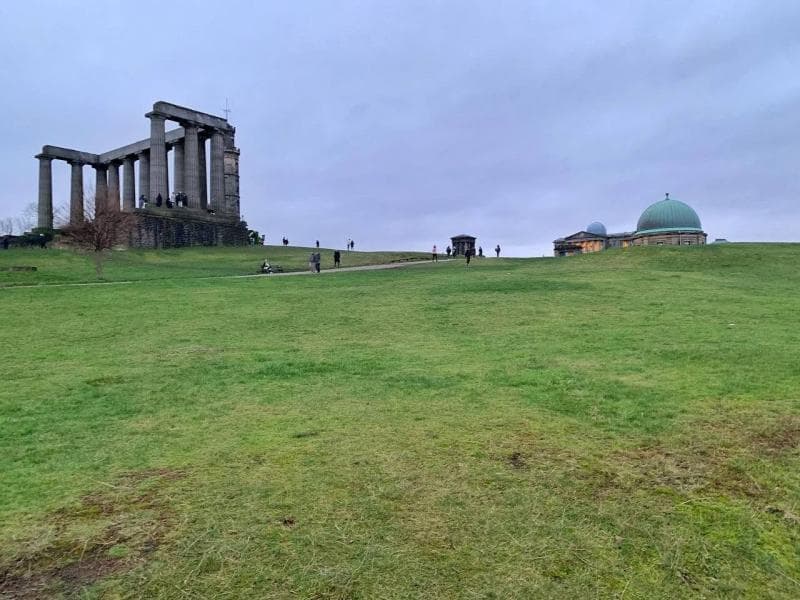
Explore Edinburgh's Dugald Stewart Monument on Calton Hill, UK. Discover its neoclassical architecture, historical significance, and panoramic city views.
Overview
Perched majestically atop Calton Hill in Edinburgh, United Kingdom, the Dugald Stewart Monument stands as a neoclassical tribute to one of the Scottish Enlightenment's most influential figures, philosopher Dugald Stewart. This distinctive circular temple, a prominent feature of Edinburgh's iconic skyline, offers visitors breathtaking panoramic views of the city, including Edinburgh Castle, Arthur's Seat, and the bustling cityscape stretching towards the Firth of Forth. Its elegant form, inspired by ancient Greek architecture, contributes significantly to Edinburgh's moniker as the 'Athens of the North', a title earned through its rich intellectual history and striking classical revival buildings. The monument is freely accessible year-round, inviting travelers to explore its historical significance and enjoy one of Edinburgh's most picturesque vantage points.
History & Cultural Background
Dugald Stewart (1753-1828) was a distinguished Professor of Moral Philosophy at the University of Edinburgh from 1786 until his death. He was a pivotal figure in the Scottish Enlightenment, known for his contributions to moral philosophy and his influence on modern psychology. His students included notable figures like James Mill, Lord Palmerston, and Sir Walter Scott, highlighting his widespread impact on the intellectual landscape of his time.
Following Stewart's passing, the Royal Society of Edinburgh commissioned a monument in his honor, selecting its prominent site on Calton Hill in 1830. The task of design fell to William Henry Playfair, one of Scotland's most eminent 19th-century architects. Playfair's design, completed in September 1831, was directly inspired by the Choragic Monument of Lysicrates in Athens, Greece. This ancient Greek structure had gained widespread recognition through its detailed illustration in 'The Antiquities of Athens', a seminal work published in 1762 by James 'Athenian' Stuart and Nicholas Revett. The monument's classical inspiration and execution are key to its aesthetic and historical importance within Edinburgh's architectural heritage. Since April 19, 1966, the Dugald Stewart Monument has been designated as a Category A listed building, signifying its exceptional historical and architectural significance.
What Makes It Special
What truly sets the Dugald Stewart Monument apart is its perfectly proportioned, Neo-Greek circular design featuring an open Corinthian colonnade encircling a decorative urn, all resting upon a sturdy podium. This architectural elegance, coupled with its strategic location on the southwestern edge of Calton Hill, makes it an indispensable element of the city's celebrated skyline.
The monument's design is not merely decorative; it is a thoughtful homage to the philosophical and intellectual ideals of the Scottish Enlightenment, drawing a direct link to the classical traditions of ancient Greece. Its commanding position ensures that it provides some of the most spectacular, uninterrupted views across Edinburgh. From this vantage point, visitors can appreciate the grand sweep of Princes Street, the historic Edinburgh Castle, the dramatic profile of Arthur's Seat, and the architectural tapestry of the Old and New Towns. It is a harmonious blend of historical commemoration and an unparalleled scenic outlook, making it a unique landmark even among the many monuments on Calton Hill.
Stories, Fun Facts & Local Details
The inspiration for Playfair's design, the Choragic Monument of Lysicrates, was a prize monument erected in Athens for a theatrical victory. It's thought that the subtle reference to a choragic contest in the monument's design is significant, given Dugald Stewart's renown as an orator and academic.
Interestingly, the Choragic Monument form was quite popular in early 19th-century Scottish architecture; a contemporaneous example is the nearby Robert Burns Monument, designed by Thomas Hamilton, which also draws from this classical model. This shared inspiration sometimes leads to visitors noting a similar aesthetic among different monuments on Calton Hill. The Dugald Stewart Monument has become a beloved subject for photographers and artists, frequently appearing on postcards and in tourist brochures, often silhouetted against a dramatic sunset or with the city lights twinkling below. Its photogenic qualities make it a favourite spot for capturing the quintessential Edinburgh vista.
Visitor Perspective
Visiting the Dugald Stewart Monument is an essential Edinburgh experience, easily accessible from the city centre by a pleasant walk up Calton Hill. There is no admission fee to visit the monument itself, making it an open invitation for all. The path to the summit can be a climb, but the reward is immense. Upon reaching the monument, visitors are greeted not only by its architectural beauty but also by stunning 180-degree panoramic views that stretch across the city.
From this elevated position, the city unfolds beneath you, offering perfect photographic opportunities, especially during sunrise or sunset when the light bathes Edinburgh in a golden glow. It's a tranquil spot for contemplation, allowing one to reflect on the intellectual legacy of Dugald Stewart while taking in the vibrant modern city that grew around the ideals he championed. Beyond the monument, Calton Hill itself is rich with other historical landmarks, including the National Monument and Nelson Monument, making a visit to the Dugald Stewart Monument part of a larger, rewarding exploration of Edinburgh's unique cultural landscape.
Coordinates: -3.18222, 55.95528
View on Google Maps💬 How Travelers Describe This Place
Based on community votes
Unique
799Must See
526Photogenic
424Beautiful
181Interesting
30
Traveler Stories
Discover memorable experiences shared by travelers who have visited this place.
No traveler stories yet.
Be the first traveler to share what made this place memorable.

Tour
By
Spot
Discover amazing places around the world. Your journey starts here.
Explore
© 2026 TourBySpot. All rights reserved.