Dragon Statues
Ljubljana, Slovenia
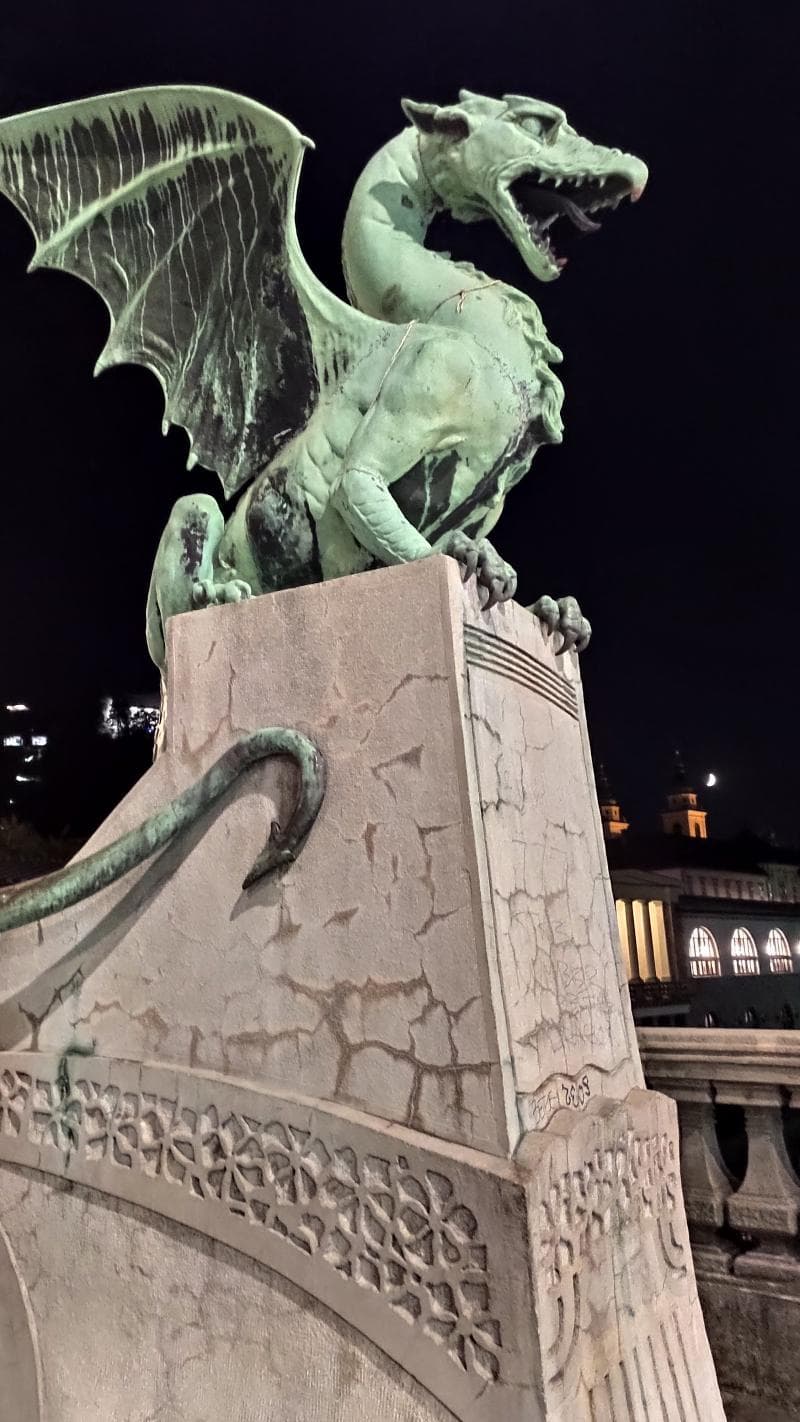
Discover the iconic Dragon Statues on Dragon Bridge in Ljubljana, Slovenia. Explore its Art Nouveau design, rich history, and mythical legends.
Overview
As you stroll through the charming streets of Ljubljana, the capital of Slovenia, you'll inevitably encounter a landmark that is both a marvel of engineering and a beacon of local legend: the Dragon Bridge, or Zmajski Most. Guarding its four corners are majestic dragon statues, powerful symbols deeply woven into the city's identity. These imposing, verdigris-patinated figures are more than mere decorations; they are the heart of a narrative that defines Ljubljana, inviting curious travelers to delve into a world where myth and modernity intertwine. Each dragon, with its fierce gaze and impressive stance, stands as a silent sentinel, embodying the strength and spirit of this captivating city.
History & Cultural Background
The Dragon Bridge emerged from the ashes of a devastating earthquake that struck Ljubljana in 1895, necessitating a comprehensive urban renewal. Completed in 1901, it replaced an older wooden bridge known as the Butchers' Bridge. Initially, the new bridge was christened the 'Jubilee Bridge of Emperor Franz Joseph I', commemorating his 40th year on the throne, with an inscription '1848-1888' visible on its side. However, this name gradually faded as the bridge's most striking features—its dragons—captured the public's imagination, leading to its official renaming to Dragon Bridge in July 1919. The dragon's presence on the bridge was no arbitrary choice; it is deeply rooted in Ljubljana's ancient mythology. According to a renowned Greek legend, Jason, the mythical hero, and his Argonauts journeyed through this region on their quest for the Golden Fleece. They encountered and ultimately vanquished a fearsome dragon residing in the Ljubljana marshes, a feat that, according to folklore, marked the founding of the city. This pivotal tale cemented the dragon's place as Ljubljana's enduring emblem, representing courage, protection, and the triumph over adversity.
What Makes It Special
The Dragon Bridge is a remarkable testament to early 20th-century innovation and Art Nouveau aesthetics. It was one of the first reinforced concrete bridges in Europe and the very first in Ljubljana, showcasing an avant-garde construction technique for its time. Designed with influences from the Vienna Secession style, the bridge's elegance is matched by its structural ingenuity. The true stars, however, are the twenty dragon statues that adorn it. Four magnificent, large sheet-copper dragons stand majestically on pedestals at each corner of the bridge, their surfaces now gleaming with a distinctive green patina due to oxidation. These powerful creatures, originally conceived by architect Jurij Zaninović, were initially planned as winged lions but were ultimately replaced by dragons, aligning with the city's deep-seated symbolism. Complementing these larger guardians are sixteen smaller dragons that decorate the lamp posts along the bridge's balustrades, adding intricate detail to the overall design. This blend of pioneering engineering and profound mythological artistry distinguishes the Dragon Bridge as a truly unique landmark.
Stories, Fun Facts & Local Details
Beyond its architectural grandeur, the Dragon Bridge is rich with local lore and playful anecdotes. The most famous local legend playfully suggests that if a virgin crosses the bridge, the dragons will wag their tails. This whimsical tale adds a touch of humor and personality to the otherwise formidable figures. Interestingly, while Jurij Zaninović designed the dragons, the main copper statues themselves were crafted in Vienna and then transported to Ljubljana to take their positions as the city's guardians. The dragon symbol is so ingrained in Ljubljana's identity that it features prominently on the city's coat of arms and flag, serving as a constant reminder of its mythological roots and the values of strength and resilience it represents. Throughout the city, you'll find countless other dragon depictions, from souvenirs to manhole covers, solidifying its status as Ljubljana's unofficial mascot. The legend of Jason defeating the dragon in the Ljubljana marsh is not merely a historical footnote; it is a living narrative that continues to inspire local art, festivals, and even escape rooms within the Ljubljana Castle, proving the dragon is very much alive in the city's cultural heart.
Visitor Perspective
For any traveler to Ljubljana, a visit to the Dragon Bridge is an essential experience. It's easily accessible in the city center, situated just north of the vibrant Central Market and a short walk from Prešeren Square and the Triple Bridge. Walking across the bridge offers an intimate encounter with these legendary beasts, allowing you to appreciate their scale and the intricate details of their design. The views from the bridge itself are picturesque, overlooking the Ljubljanica River and providing excellent photographic opportunities, especially of the nearby St. Nicholas' Cathedral. For the best photographs and a more tranquil experience, consider visiting in the early morning or late afternoon to avoid larger crowds and benefit from softer natural light. The Dragon Bridge serves not just as a crossing, but as a symbolic gateway into Ljubljana's rich past and vibrant present, offering a tangible connection to its founding myths and enduring spirit. It’s a powerful visual representation of a city that cherishes its legends and proudly displays its heritage for all to admire.
Coordinates: 14.5103, 46.0519
View on Google Maps💬 How Travelers Describe This Place
Based on community votes
Interesting
712Must See
513Beautiful
482Photogenic
288Unique
62
Traveler Stories
Discover memorable experiences shared by travelers who have visited this place.
No traveler stories yet.
Be the first traveler to share what made this place memorable.

Tour
By
Spot
Discover amazing places around the world. Your journey starts here.
Explore
© 2026 TourBySpot. All rights reserved.