Doric Columns
Athens, Greece
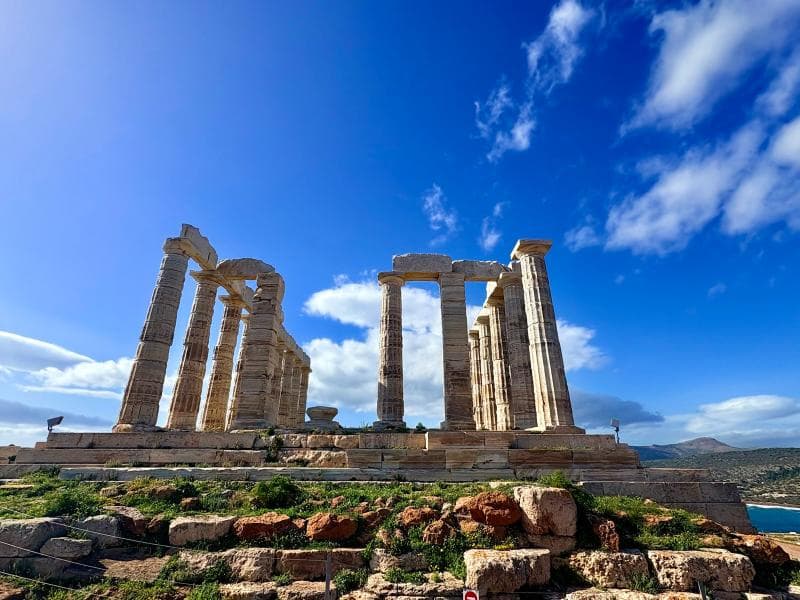
Explore the majestic Doric Columns of the Temple of Poseidon at Cape Sounion, Athens, Greece. Discover its rich history, unique architecture, and mythological tales.
Overview
Perched majestically on the rugged cliffs of Cape Sounion, overlooking the cerulean expanse of the Aegean Sea, stand the timeless Doric Columns of the Temple of Poseidon. This iconic archaeological site, located in Athens, Greece, is a quintessential example of classical Greek architecture, embodying strength, simplicity, and harmonious proportions. The columns, remnants of a grand temple dedicated to Poseidon, the mighty god of the sea, offer a profound glimpse into ancient Athenian ingenuity and reverence for the natural world. They serve not only as a landmark for seafarers but also as a powerful testament to a civilization deeply intertwined with the sea.
History & Cultural Background
The Temple of Poseidon was constructed during the Golden Age of Athens, between 444 and 440 BCE, under the ambitious building program initiated by Pericles. It was erected upon the foundations of an earlier temple, which had been destroyed by the Persians in 490 BCE. The location itself, Cape Sounion, held immense strategic and religious significance. For the Athenians, a dominant maritime power, building a temple to Poseidon at this commanding position was a powerful declaration of their naval strength and their devotion to the god who controlled the seas. The temple served as a crucial navigational marker, its gleaming white marble columns visible from afar, guiding sailors returning to the port of Piraeus and offering a beacon of hope for safe passage. It was a sacred site where seafarers would offer prayers and sacrifices to ensure calm voyages or express gratitude for their safe return.
What Makes It Special
The Doric columns of the Temple of Poseidon are renowned for their distinctive features. Originally, the temple comprised 34 columns around its perimeter, measuring approximately 31.1 meters in length and 13.4 meters in width. Today, 15 of these magnificent columns still stand, enduring centuries of coastal winds and salt air. Each column stands at about 6.12 meters (20 feet) tall and measures three feet in diameter, crafted from local Agrileza marble. A unique architectural detail of these particular Doric columns is that they feature only 16 flutes (the shallow grooves running vertically along the shaft) instead of the more customary 20. This deliberate design choice was likely influenced by the softer texture of the marble and the temple's exposed clifftop location, making the columns more resilient to harsh weather conditions. The temple's hexastyle design, with six columns at each end and thirteen along each side, exemplifies the characteristic simplicity and robust elegance of the Doric order.
Stories, Fun Facts & Local Details
Cape Sounion and its temple are steeped in captivating Greek mythology. Most famously, it is linked to the tragic legend of King Aegeus of Athens, father of the hero Theseus. Aegeus anxiously awaited his son's return from Crete after his quest to slay the Minotaur. Theseus had promised to hoist white sails if victorious, but black sails if he perished. Forgetting his promise, Theseus sailed home with black sails, leading a distraught Aegeus to believe his son was dead. In his despair, King Aegeus tragically cast himself from the cliffs into the sea below, which has since borne his name: the Aegean Sea. In more recent history, the allure of the temple captivated the romantic English poet Lord Byron, who visited in 1810. So moved was he by the dramatic setting that he carved his name into one of the Doric columns, an inscription still visible today. This blend of myth, history, and natural beauty makes the Doric Columns not just an architectural marvel but a place where ancient tales feel palpably alive.
Visitor Perspective
Visiting the Doric Columns of the Temple of Poseidon offers an unforgettable experience. As you approach the site, the columns gradually emerge against the backdrop of the sea and sky, creating a breathtaking silhouette. The panoramic views from the cape are simply spectacular, extending across the Aegean and offering an unparalleled vantage point for observing the vastness of the sea. Many visitors time their visit to coincide with sunset, when the ancient marble glows with warm hues and the sky transforms into a canvas of vibrant colors, creating a truly magical atmosphere. Walking among these ancient ruins, touching the cool marble, and gazing out at the endless horizon provides a powerful connection to the past and the enduring spirit of Greece. The site is easily accessible from Athens, making it a popular and rewarding day trip for anyone seeking to explore the rich history and stunning natural beauty of the Attica peninsula.
Coordinates: 24.02455, 37.6502
View on Google Maps💬 How Travelers Describe This Place
Based on community votes
Unique
1.0kMust See
869Beautiful
309Interesting
100Photogenic
63
Traveler Stories
Discover memorable experiences shared by travelers who have visited this place.
No traveler stories yet.
Be the first traveler to share what made this place memorable.

Tour
By
Spot
Discover amazing places around the world. Your journey starts here.
Explore
© 2026 TourBySpot. All rights reserved.