Donhwamun Gate
Seoul, South Korea
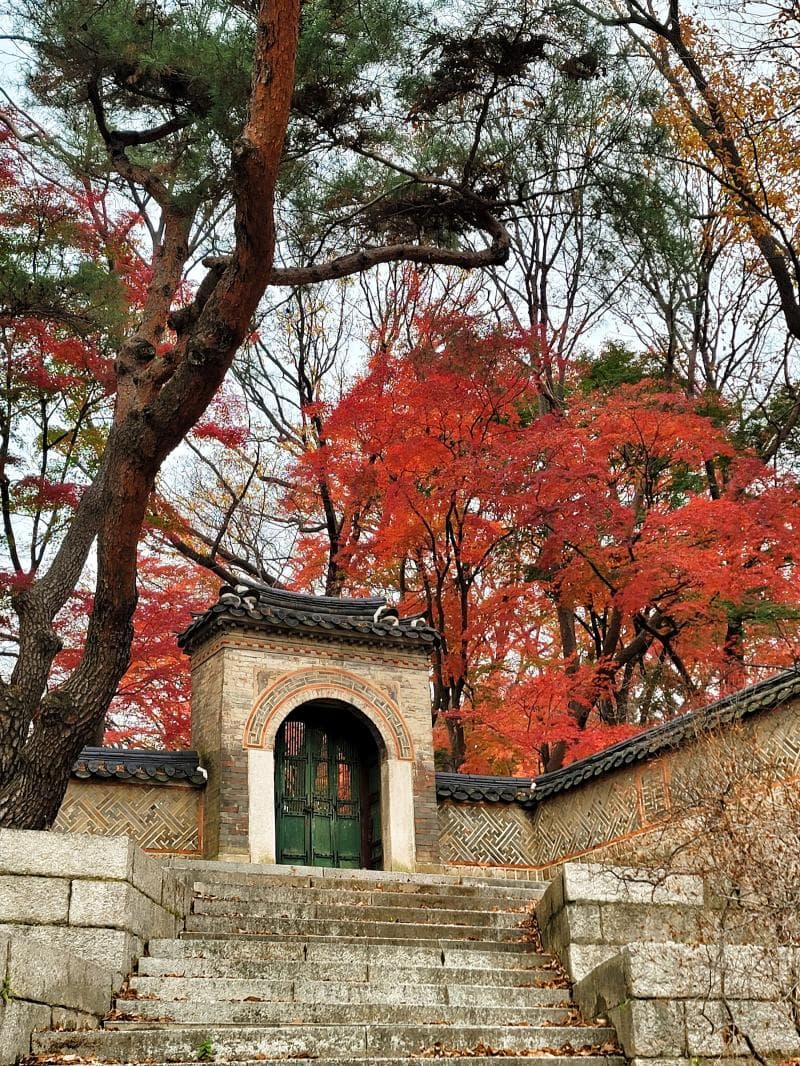
Explore Donhwamun Gate, the oldest and largest palace gate in Seoul, South Korea, guarding Changdeokgung Palace. Discover its history and unique architecture.
Overview
Donhwamun Gate stands as the grand main entrance to Changdeokgung Palace, a UNESCO World Heritage site nestled in the heart of Seoul, South Korea. More than just a portal, it is a designated Treasure of South Korea and holds the distinction of being the oldest extant gate among all Joseon dynasty palaces. This magnificent two-story, pavilion-style wooden structure greets visitors, offering an immediate sense of the rich history and cultural heritage that lies within the palace grounds.
Originally constructed in 1412 during the reign of King Taejong, the gate has weathered centuries of change. Its strategic location, in the southwest corner of the palace, is notable. Unlike other palace gates that often align directly with the main throne hall, Donhwamun's positioning was influenced by the pre-existing Jongmyo Royal Shrine, demonstrating a thoughtful integration with its urban landscape.
History & Cultural Background
The story of Donhwamun Gate begins in the early 15th century, completed on the 22nd day of the fifth month of 1412. Its name, 'Donhwamun', is derived from the Chinese text 'Doctrine of the Mean', embodying the profound Joseon philosophical ideal 'to govern with a warm heart and edify with virtue' or 'strengthening education'. This name reflects the dynasty's commitment to benevolent rule and the moral cultivation of its people.
Tragically, the original gate was consumed by flames during the devastating Japanese Invasion of 1592, a period of immense strife for the Korean peninsula. However, a testament to its importance, Donhwamun was meticulously rebuilt between 1607 and 1609 during the reign of King Gwanghaegun, ensuring its survival to the present day. In the early 20th century, the elevated stone platform, known as a 'wŏltae', in front of the gate was removed to accommodate royal vehicles. Yet, in a significant effort to restore its historical authenticity, both the 'wŏltae' and the gate were returned to their pre-colonial splendor in 1997.
What Makes It Special
Donhwamun Gate is not merely an entrance; it is a significant architectural and historical landmark. Its status as the oldest extant gate of all Joseon palaces immediately sets it apart. Furthermore, it is the largest of Seoul's palace gates, commanding an imposing presence with its grand scale and two-story timber construction.
Architecturally, the gate showcases distinctive Joseon-era craftsmanship. It features a hip roof, known as 'ujingakjibung', and employs the 'dapo' style, characterized by multiple column-heads supporting the roof's substantial weight. The wide 'wŏltae' platform in front amplifies its regal dignity, providing a ceremonial space that speaks to its past as a royal thoroughfare. The very fact that its main entrance is not geometrically aligned with the palace's throne hall—a conscious decision to respect the nearby Jongmyo Shrine—underscores a unique and thoughtful urban planning approach, blending reverence for tradition with practical considerations.
Stories, Fun Facts & Local Details
Stepping through Donhwamun Gate is like stepping into a living history book, filled with fascinating tales. Imagine the bustling activity when a bill was famously hung at the gate in 1413, signaling important decrees to the populace. A darker, yet equally significant, historical event saw the head of a rebel leader displayed here in 1728, a stark reminder of the tumultuous political landscape of the era.
Historically, this majestic gate was reserved primarily for the king's grand entry, symbolizing royal authority, while his attendants and other officials typically used secondary entrances like the western Geumhomun Gate. The upper floor of Donhwamun once housed a bell and drum, not just for ceremonial purposes, but critically, to signal emergencies and mark the curfew hours across the city, their resounding calls echoing through ancient Seoul. The name itself, 'Donhwamun', is a constant whisper of the Joseon Dynasty's foundational values—a gentle reminder of the pursuit of virtue and the benevolent education of its subjects.
Visitor Perspective
For the curious traveler, Donhwamun Gate serves as the principal gateway to exploring the enchanting Changdeokgung Palace. Upon passing through its ancient timbers, you immediately enter a realm where nature and architecture coexist in harmony, a characteristic for which Changdeokgung is renowned. It is highly recommended to take a moment to appreciate the gate's intricate details and the impressive view it frames, often showcasing a distant mountain, offering a unique photographic opportunity.
To enrich your visit, read the informational signs available, which provide deeper insights into each historical structure within the palace complex. For an optimal experience and to avoid larger crowds, consider visiting early in the morning. Changdeokgung Palace is generally open daily, though it is typically closed on Mondays. Visitors wearing a traditional Korean 'hanbok' can often enjoy free admission to the palace, adding a vibrant cultural immersion to their journey.
Coordinates: 126.989, 37.577
View on Google Maps💬 How Travelers Describe This Place
Based on community votes
Beautiful
853Interesting
639Photogenic
569Must See
190Unique
93
Traveler Stories
Discover memorable experiences shared by travelers who have visited this place.
No traveler stories yet.
Be the first traveler to share what made this place memorable.

Tour
By
Spot
Discover amazing places around the world. Your journey starts here.
Explore
© 2026 TourBySpot. All rights reserved.