Dome Square
Riga, Latvia
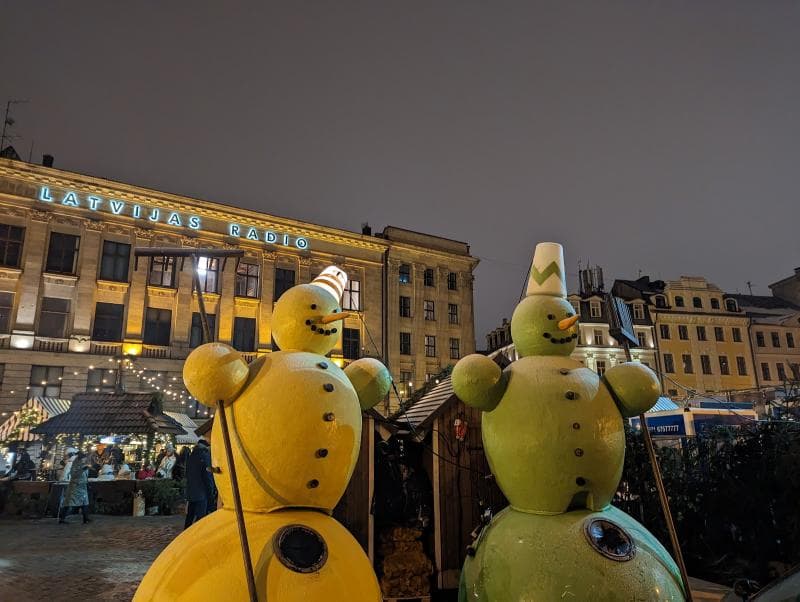
Explore Dome Square, the vibrant heart of Riga Old Town, Latvia. Discover its rich history, stunning architecture, and cultural significance.
Overview
Stepping into Dome Square, or Doma laukums as it's known locally, is akin to stepping into the living room of Riga's Old Town. As the largest open space within the historic heart of Riga, Latvia, it naturally serves as a vibrant focal point for both locals and travelers alike. Surrounded by centuries of architectural heritage, this expansive cobblestone plaza is not merely a beautiful sight but a pulsating hub where seven streets converge, metaphorically acting as the city's arteries. At its heart stands the magnificent Riga Dome Cathedral, lending its name and imposing presence to the square, inviting exploration and contemplation of Riga's rich past.
History & Cultural Background
The story of Dome Square is inextricably linked with that of the Riga Dome Cathedral, a monumental structure whose foundation stone was laid with solemn ceremony by Bishop Albert of Riga in 1211. This marked the beginning of what would become one of the oldest and largest sacred buildings in the Baltic region, showcasing a fascinating blend of architectural styles over the centuries, including Romanesque, early Gothic, Baroque, and even touches of Art Nouveau. Construction continued until around 1270, and the cathedral has seen numerous modifications and rebuilds, including a new tower with a pyramidal spire by 1595.
During the Reformation in 1524, the cathedral transitioned to a Lutheran church. Its history is marked by significant events; it served as a granary during the Great Northern War and a warehouse for Napoleon's army. Notably, during the Soviet period from 1959 to 1962, the church was temporarily converted into a concert hall, with its altar demolished and seating arranged to face the famous organ. After Latvia regained independence in 1991, it was restored to religious use, serving as the seat of the Archbishop of the Latvian Evangelical Lutheran Church. The square itself began to take its current form in the late 19th century, when several buildings were removed to open up the view of the Cathedral's grand entrance, officially acquiring its name in 1885 and its present features by 1936.
What Makes It Special
Dome Square's unique charm lies in its sheer scale and the eclectic architectural tapestry that frames it. Unlike many cramped medieval squares, its generous proportions create a sense of openness and grandeur. Surrounding the square are impressive buildings predominantly from the 19th and early 20th centuries, including the Riga Bourse House, an exquisite example of Eclecticism, and the Latvian Radio building, formerly the Riga Commercial Bank. The Riga Dome Cathedral itself is a treasure, housing one of the largest pipe organs in Europe, built in the late 19th century with over 6,700 pipes, which continues to draw music lovers to its frequent concerts.
Beyond its architectural beauty, Dome Square is the city's vibrant cultural heart. It's a stage for numerous public gatherings, festivals, and concerts throughout the year. In summer, it buzzes with street performers and open-air events, while in winter, it transforms into a magical Christmas market, adorned with festive stalls and lights.
Stories, Fun Facts & Local Details
Beneath the modern-day bustle of Dome Square lies a much older, almost invisible history: for centuries, this area was a cemetery. Excavations have revealed thousands of burials dating from the 13th to the 18th century, hinting at the epidemics and struggles the city endured. Today, this history is preserved beneath the traditional grey and pink granite cobblestones that were restored after Latvia regained independence, replacing Soviet-era concrete to reclaim the square's historical appearance.
A delightful local detail involves the golden cockerels. From a specific marked spot on the square, visitors can uniquely glimpse all three golden cockerels perched atop Old Town's major church spires, including the one on the Dome Cathedral itself. These weathercocks are iconic symbols of Riga. Keep an eye out for other whimsical details within the square's paving, such as an armadillo escaping a maze or a reclining unicorn, adding playful touches to the historical setting. Also, look for Doma laukums 8A, a building designed by Nikolay Proskurnin, noted for its blend of styles and window sizes, standing out like a 'white sparrow' among Riga's architectural landscape.
Visitor Perspective
For the curious traveler, Dome Square offers an authentic immersion into Riga's spirit. It's a place where history resonates in every cobblestone and architectural detail. You can spend hours simply strolling across its wide expanse, admiring the facades of the surrounding buildings, or finding a spot at one of the cafes to people-watch. The square provides a perfect backdrop for memorable photographs and a natural starting point for exploring the labyrinthine streets of Old Town. Whether you're drawn by the majestic presence of the Dome Cathedral, the echoes of past markets and celebrations, or the vibrant pulse of contemporary events, Dome Square is an essential experience, offering a profound sense of connection to Riga's enduring heritage.
Coordinates: 24.10444, 56.94965
View on Google Maps💬 How Travelers Describe This Place
Based on community votes
Photogenic
836Must See
287Interesting
255Beautiful
231Unique
86
Traveler Stories
Discover memorable experiences shared by travelers who have visited this place.
No traveler stories yet.
Be the first traveler to share what made this place memorable.

Tour
By
Spot
Discover amazing places around the world. Your journey starts here.
Explore
© 2026 TourBySpot. All rights reserved.