Doge’s Palace
Venice, Italy
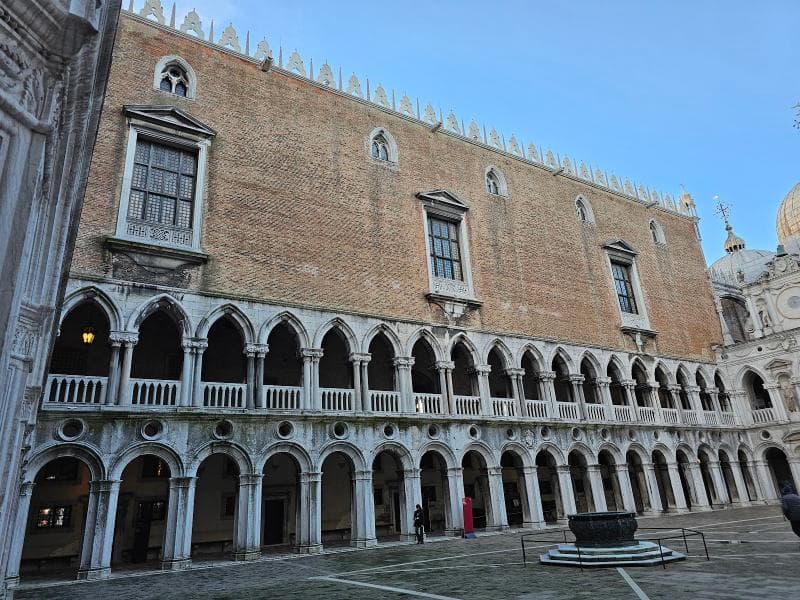
Explore Doge's Palace in Venice, Italy – a stunning Venetian Gothic masterpiece and former seat of the Republic's power, rich in history and art.
Overview
Nestled in the heart of Venice, Italy, within the iconic St. Mark's Square, stands the magnificent Doge’s Palace, or Palazzo Ducale. This architectural marvel, with its distinctive Venetian Gothic style, once served as the vibrant political and administrative hub of the Venetian Republic for centuries. Far more than just a residence, it was the seat of the Doge – the highest elected authority – and housed government offices, law courts, and even a notorious prison. Today, it welcomes visitors as a public museum, offering an unparalleled journey into Venice’s glorious past.
History & Cultural Background
The origins of the Doge's Palace trace back to the 9th century, when Venice first began to establish itself as an autonomous power. The structure you see today, however, largely began to take shape from 1340 onwards, evolving into a masterpiece of Gothic art. The wing facing the St. Mark's Basin is the oldest, rebuilt from 1340, while the wing towards St. Mark's Square was completed in its present Gothic form by 1424. Various fires throughout its history necessitated extensive renovations and expansions, introducing Renaissance and Mannerist elements, such as the canal-side wing built between 1483 and 1565. After the fall of the Venetian Republic in 1797, the palace transitioned from a center of power to housing cultural institutions like the Biblioteca Marciana. In 1923, it officially became a public museum, preserving its profound historical appearance for future generations.
What Makes It Special
The Doge's Palace is a unique blend of Gothic, Renaissance, and Mannerist architectural styles, making it a true masterpiece. Its exterior, particularly the facade with its pink and white marble and intricate arcades, is instantly recognizable and breathtaking. Inside, visitors are greeted by grand features such as the Porta della Carta, a 15th-century Gothic gateway, and the monumental Scala dei Giganti (Giants' Staircase), flanked by imposing statues of Mars and Neptune symbolizing Venice's power on land and sea. Perhaps its most renowned chamber is the Great Council Chamber (Sala del Maggior Consiglio), one of the largest rooms in Europe, adorned with magnificent artworks including Tintoretto's 'Paradise', one of the world's largest oil paintings on canvas. The palace's connection to the Bridge of Sighs, which famously linked the palace to the New Prison, adds another layer of intrigue and historical significance.
Stories, Fun Facts & Local Details
The role of the Doge, derived from the Latin 'dux' meaning leader, evolved over centuries, becoming an elected position within the Republic, though not a king. Despite the palace's grandeur, the Doge's private apartments were notably modest, intended to symbolize his role as a public servant. The palace endured several devastating fires, particularly in 1483 and 1577, which destroyed parts of the building and many valuable artworks, necessitating continuous restoration and rebuilding. One of the most poignant tales involves the Bridge of Sighs (Ponte dei Sospiri), named for the sighs of prisoners catching their last glimpse of Venice through its barred windows before entering the grim cells of the New Prison, including the infamous 'Pozzi' (wells) and 'Piombi' (leads) prisons. Famously, the legendary lover Casanova was imprisoned here, eventually achieving a daring escape. Another fascinating detail is the 'Lion's Mouth' (Bocca di Leone) postboxes found on walls, where anonymous denunciations were once submitted to the state inquisitors.
Visitor Perspective
Visiting the Doge's Palace is an immersive experience that transports you directly into the heart of the Venetian Republic. Walking through its opulent halls, you gain a tangible sense of the power, wealth, and sophisticated governance that once defined Venice. From the ornate Doge's Apartments to the solemn Chambers of the Council, each space tells a story of political intrigue, justice, and artistry. Crossing the Bridge of Sighs offers a moment of reflection, contrasting the Doge's lavish life with the fate of those incarcerated, and offers a unique view of the city. The sheer scale of the Grand Council Chamber and the intricate details of its artwork are truly awe-inspiring. It's a journey not just through a building, but through the soul of a historical superpower, providing deep insights into the culture and history of Venice that cannot be gleaned elsewhere.
Coordinates: 12.3405, 45.4337
View on Google Maps💬 How Travelers Describe This Place
Based on community votes
Beautiful
872Must See
846Unique
684Interesting
363Photogenic
250
Traveler Stories
Discover memorable experiences shared by travelers who have visited this place.
No traveler stories yet.
Be the first traveler to share what made this place memorable.

Tour
By
Spot
Discover amazing places around the world. Your journey starts here.
Explore
© 2026 TourBySpot. All rights reserved.