Doan Mon Gate
Hanoi, Vietnam
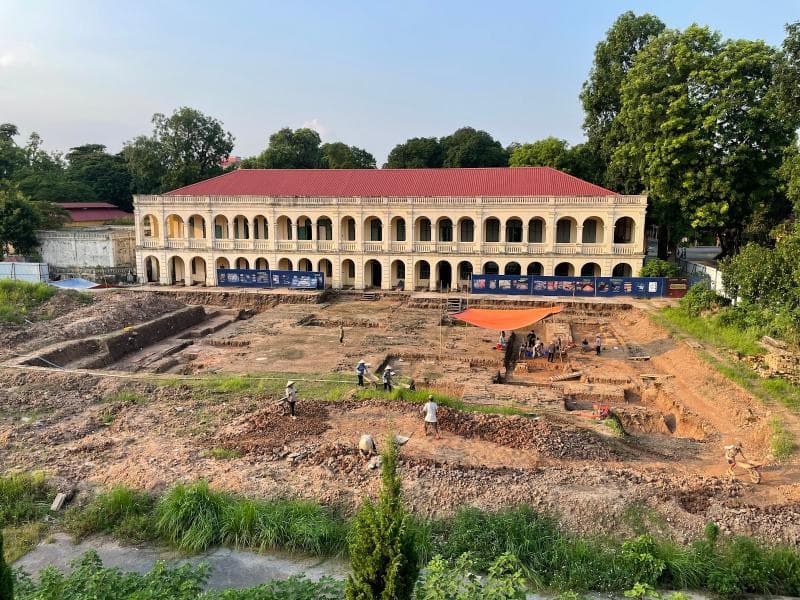
Explore Doan Mon Gate, the majestic southern entrance to the Forbidden City within the Thang Long Imperial Citadel in Hanoi, Vietnam. Discover its rich history and stunning imperial architecture.
Overview
Stepping through the imposing Doan Mon Gate is akin to walking through centuries of Vietnamese history. This magnificent structure serves as the main southern entrance to the Forbidden City, the innermost sanctum of the Thang Long Imperial Citadel in Hanoi, Vietnam. As a pivotal component of this UNESCO World Heritage Site, Doan Mon Gate stands as a testament to Vietnam's enduring imperial past and its rich architectural heritage.
Located strategically at 19C Hoang Dieu Street, within the Ba Dinh District, the gate is easily accessible and often marks the beginning of a visitor's journey into the citadel's historical complex. Its grand arches and robust stone construction immediately convey a sense of the power and majesty once held within the royal grounds. Today, Doan Mon Gate continues to captivate visitors, offering a tangible link to the emperors and mandarins who once passed through its formidable entrances.
History & Cultural Background
The history of Doan Mon Gate is deeply intertwined with the broader narrative of the Thang Long Imperial Citadel, a site that has served as the political center of Vietnam for over 13 centuries. The citadel's origins trace back to the 7th century, with significant development beginning in the 11th century under the Ly Dynasty.
Doan Mon Gate itself was originally constructed during the Le Dynasty in the 15th century and subsequently underwent significant restoration and upgrading during the Nguyen Dynasty in the 19th century. It was designed as a ceremonial entrance, forming part of a grand 'Tam Mon Gate' system. Archaeological excavations in 2002 unveiled remnants of Tran dynasty pathways and Ly era bricks beneath the gate, highlighting the continuous layers of history that underpin this site. This intricate layering of construction reflects the various dynasties that ruled from Thang Long, each leaving their indelible mark on its architecture and significance. The gate's enduring presence, despite centuries of conflict and change, underscores its historical importance and the resilience of Vietnamese heritage.
What Makes It Special
What truly sets Doan Mon Gate apart is its architectural grandeur and its symbolic role as the main gateway to the Forbidden City. The gate's distinctive U-shaped structure, crafted from stone and brick, features five arched entrances. The central and largest arch was exclusively reserved for the emperor, while the four smaller side arches were designated for mandarins and other members of the royal court. This hierarchical arrangement visually expressed the strict protocols and social order of the imperial court.
Above the arched passageways, the gate is topped with a watchtower gazebo, featuring a design with three rolling arches. This architectural style not only contributed to its aesthetic elegance but also provided robust load-bearing capabilities. The meticulous craftsmanship, including intricate carvings and the careful selection of materials like wooden-hammer bricks popular during the Le Dynasty, showcase the advanced architectural artistry of ancient Vietnam. Doan Mon Gate is not just an entry point; it is a historical artifact that embodies the sophisticated engineering and artistic sensibilities of the past.
Stories, Fun Facts & Local Details
Imagine the vibrant imperial processions that once streamed through Doan Mon Gate. The emperor, adorned in his finest robes, would pass through the central arch, a privilege denied to all others, underscoring his divine right and supreme authority. Mandarins, distinguished by their official attire, would respectfully use the side gates, their ranks clearly demarcated by their entry point. These passages were more than just physical routes; they were stages for demonstrating power and order within the imperial system.
A fun detail for visitors is that Doan Mon Gate is often the starting point for the popular 'Decoding the Thang Long Imperial Citadel' night tour. This immersive experience allows travelers to explore the ancient site under enchanting lights, bringing its history to life through storytelling and cultural performances. The gate's enduring photogenic quality also makes it a favorite spot for visitors to capture memorable moments, providing a picturesque backdrop that speaks volumes of Hanoi's ancient charm.
Visitor Perspective
For any curious traveler in Hanoi, Doan Mon Gate offers an unmissable experience. As you approach, its monumental scale and historical presence immediately set a contemplative mood. Passing through one of its arches, one can't help but feel a profound connection to the countless historical figures who once traversed these very grounds. The gate's central location within the Thang Long Imperial Citadel makes it a natural focal point for exploring the wider complex, including the nearby Kinh Thien Palace foundation and the Hanoi Flag Tower.
The gate is remarkably well-preserved, allowing visitors to appreciate the intricate details of its construction and the robust engineering that has enabled it to stand for centuries. It's recommended to take your time observing the different arches and the watchtower above. Whether you're a history enthusiast or simply a traveler seeking to absorb the cultural essence of Hanoi, Doan Mon Gate provides a compelling glimpse into Vietnam's imperial heart. It stands not merely as a relic, but as a vibrant portal to a thousand years of rich Vietnamese heritage.
Coordinates: 105.83722, 21.03944
View on Google Maps💬 How Travelers Describe This Place
Based on community votes
Must See
797Unique
770Photogenic
583Interesting
477Beautiful
100
Traveler Stories
Discover memorable experiences shared by travelers who have visited this place.
No traveler stories yet.
Be the first traveler to share what made this place memorable.

Tour
By
Spot
Discover amazing places around the world. Your journey starts here.
Explore
© 2026 TourBySpot. All rights reserved.