Divankhana
Baku, Azerbaijan
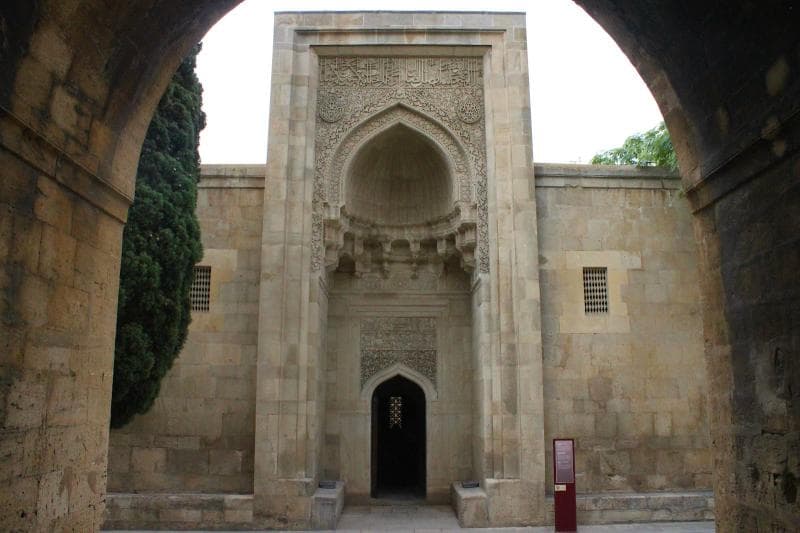
Explore Divankhana, a mysterious 15th-century rotunda pavilion within the Palace of the Shirvanshahs in Baku, Azerbaijan. Discover its unique architecture and debated history.
Overview
Deep within the ancient walls of Icherisheher, Baku's Old City, lies the enchanting Divankhana, a significant sub-spot within the grand Palace of the Shirvanshahs complex. This remarkable rotunda pavilion stands as a testament to Azerbaijan's rich medieval history and architectural prowess. It forms an integral part of the larger Palace of the Shirvanshahs, which, alongside the iconic Maiden Tower, proudly holds its place on the UNESCO World Heritage List. Visitors venturing into the heart of old Baku will discover Divankhana positioned in the northwest of the palace ensemble, its unique structure and intricate details offering a fascinating glimpse into a bygone era.
While its architectural beauty is undeniable, the precise original function of Divankhana remains a subject of intriguing historical debate. Scholars and historians propose several compelling theories, ranging from it serving as a royal court or reception hall for important state functions, to a government council chamber where crucial decisions were made. Another prominent theory suggests it was intended as a mausoleum or a place with pre-Islamic funeral connections. This air of mystery only adds to its allure, inviting curious travelers to ponder its true purpose as they explore its venerable stone chambers.
History & Cultural Background
The construction of Divankhana dates back to the 15th century, a period of significant cultural and political development for the Shirvanshah dynasty. The Shirvanshahs, who ruled parts of present-day Azerbaijan for centuries, had moved their capital from Shamakhi to Baku, ushering in a new era of construction and prosperity in the city. The building's creation is largely attributed to Shirvanshah Farrukh Yassar or Khalilullah I, two influential rulers of the era. However, historical records suggest that its construction may have been abruptly halted and left incomplete due to the tumultuous political events of the late 15th century, specifically the Safavid armies' conquest of Baku.
The name 'Divankhana' itself carries significant cultural weight. In many historical Islamic societies, a 'Divan' referred to a high administrative body, a council, or a formal reception area where rulers held audiences. This context strongly supports the theories of Divankhana serving as a place for official receptions, judicial proceedings, or state council meetings, underscoring its importance in the governance of the Shirvanshah state. The entire Palace of the Shirvanshahs complex, including Divankhana, was officially declared a museum-reserve in 1964 and later gained international recognition in 2000 with its inscription on the UNESCO World Heritage List.
What Makes It Special
Divankhana stands out as a prime example of the distinctive Shirvan-Absheron architectural school, a regional style known for its elegant stone masonry and intricate decorative elements. Its most striking feature is the central octagonal hall, crowned by a graceful cupola or dome, which is surrounded by a columned arcade. The main entrance portal is particularly captivating, adorned with extraordinarily rich and delicate stone carvings. These arabesques depict sophisticated patterns, including stylized fig and wine leaves, which are typical of medieval Azerbaijani art. The craftsmanship is exceptional, with some relief patterns reaching a depth of 4-5 centimeters, creating a mesmerizing play of light and shadow.
Further enhancing its unique character are the hexagonal medallions on either side of the portal, which feature sacred Kufic Arabic inscriptions. These elements not only add to the aesthetic beauty but also hint at the profound spiritual and political significance embedded within the structure. The ongoing debate about its true purpose, whether a court, a ceremonial hall, or a tomb, allows visitors to engage with its history on a deeper, more imaginative level, making each exploration a personal journey of discovery.
Stories, Fun Facts & Local Details
One of the most intriguing aspects of Divankhana is the rich tapestry of stories and theories surrounding its origin and function. Beyond its use as an administrative building, some historians believe the site may have held sacred significance even before the arrival of Islam, possibly being a place for pre-Islamic rituals or ceremonies. Another compelling narrative suggests that Divankhana was intended as a grand mausoleum for Shirvanshah Khalilullah I, or perhaps his son Farrukh Yassar. However, due to unforeseen circumstances, the ruler may not have been interred there, leaving behind a monument whose purpose became ambiguous. This incomplete or altered destiny adds a layer of poignant human history to its stoic stone facade.
A 'fun fact' for those with a keen eye for symbolism: the octagonal hall is said to reflect a 'crown image,' subtly embodying the concept of statehood and royal authority. This architectural detail speaks volumes about the power and prestige of the Shirvanshahs. The exquisite stone carving, renowned for its delicate arabesques and deep reliefs, is a testament to the master craftsmen of the 15th century. Imagine the hours of meticulous work required to achieve such intricate detail, where patterns seemingly float in three dimensions. The enduring mystery of its exact purpose invites visitors to engage in their own historical detective work, piecing together clues from architecture, inscriptions, and legend.
Visitor Perspective
Visiting Divankhana is an immersive journey into the heart of medieval Azerbaijan. As you step into the Palace of the Shirvanshahs complex, located within the UNESCO-listed Icherisheher, you are immediately transported centuries back in time. Divankhana's distinctive architecture, with its harmonious blend of local tradition and Islamic artistic influences, offers a unique visual experience. The play of light on the golden-hued limestone, especially during the morning or late afternoon, accentuates the intricate carvings and grand portal, making for truly memorable photographs. Observing the detailed craftsmanship of the stone, particularly the Kufic inscriptions and floral motifs, provides a tangible connection to the artistic achievements of the Shirvanshah era.
Walking through the courtyard and into the octagonal hall, one can almost sense the echoes of historical debates, royal decrees, or perhaps solemn ceremonies that once took place here. The quiet dignity of the structure encourages contemplation of the lives and decisions of the Shirvanshah rulers. Exploring Divankhana is not just about seeing an old building; it's about connecting with the soul of Baku's past. Knowledgeable guides are often available within the complex to provide deeper insights into its history, architectural nuances, and the compelling theories surrounding its purpose, enriching the visitor experience significantly. It is an essential stop for anyone seeking to understand the cultural heritage and architectural legacy of Azerbaijan.
Coordinates: 49.83343, 40.36605
View on Google Maps💬 How Travelers Describe This Place
Based on community votes
Must See
995Unique
839Beautiful
388Interesting
289Photogenic
141
Traveler Stories
Discover memorable experiences shared by travelers who have visited this place.
No traveler stories yet.
Be the first traveler to share what made this place memorable.

Tour
By
Spot
Discover amazing places around the world. Your journey starts here.
Explore
© 2026 TourBySpot. All rights reserved.