Decorative Roofs
Vientiane, Laos
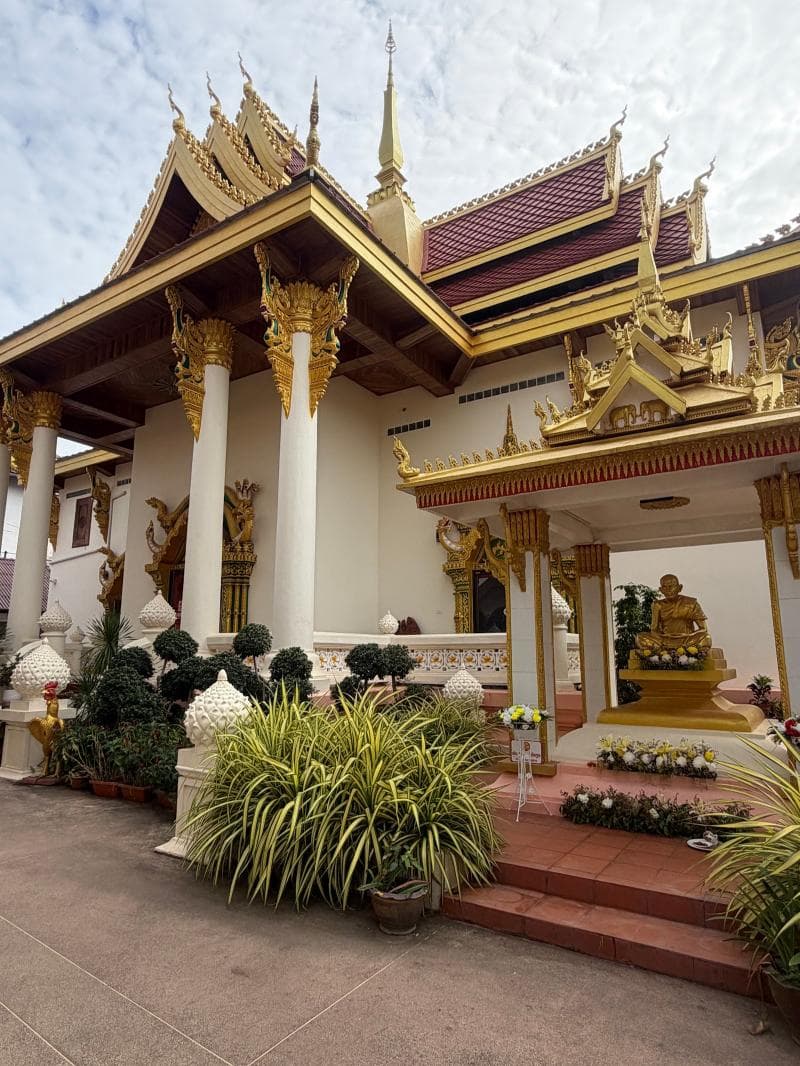
Explore the decorative roofs of Wat Ong Teu Mahawihan in Vientiane, Laos, a stunning example of Lao Buddhist architecture and spiritual artistry.
Overview
The decorative roofs of Wat Ong Teu Mahawihan in Vientiane, Laos, are more than just architectural coverings; they are a profound expression of Lao Buddhist art and spirituality. This revered temple, often called the 'Temple of the Heavy Buddha' due to its monumental bronze Buddha image, showcases a captivating blend of traditional Lao and Thai architectural styles. The roofs, with their multi-tiered, steeply pitched design, are an immediate visual highlight, drawing the eye upwards with their elegant curves and rich ornamentation. They are an integral part of the temple's overall aesthetic, contributing to its tranquil yet majestic presence in the heart of the city. Visitors are often struck by the intricate details, from the gilded finials to the symbolic carvings that adorn every layer, each element telling a part of a larger spiritual narrative. These roofs not only protect the sacred spaces within but also serve as a canvas for artistic devotion, reflecting centuries of cultural exchange and craftsmanship.
History & Cultural Background
Wat Ong Teu Mahawihan itself boasts a history stretching back to the 16th century, originally founded by King Setthathirath I during a golden age of Buddhism in Laos. Like many of Vientiane's historic structures, the temple suffered significant damage, particularly during the Siamese invasion of 1828, necessitating multiple reconstructions and restorations throughout the 19th and 20th centuries. This history of destruction and rebirth has allowed for a fascinating evolution in its architectural elements, including the decorative roofs. While rooted in ancient traditions, the present-day roofs likely incorporate techniques and styles that have adapted over time, blending original Lao Buddhist design principles with influences from neighboring cultures, notably Thai architecture. This layering of history is visible in the detailed craftsmanship and the symbolic language embedded within the roof's design, reflecting the enduring faith and artistic resilience of the Lao people.
What Makes It Special
What truly sets the decorative roofs of Wat Ong Teu Mahawihan apart is their intricate complexity and symbolic depth. The multi-tiered structure, a hallmark of Lao temple architecture, creates a sense of ascending spirituality, with each layer often representing different levels of Buddhist doctrine. These steeply pitched roofs are frequently adorned with elaborate wooden carvings and gilded ornaments that shimmer under the tropical sun. Look closely, and you might spot naga serpent guardians gracing the roof edges, believed to protect the temple from harm. Lotus-shaped finials, symbolizing purity and enlightenment, often crown the eaves. At the very peak of the roof, a decorative metal spire known as the Dok So Fa points skyward, a profound symbol representing the universe itself. The curved lines, a feature influenced by Chinese architectural beliefs, are thought to ward off evil spirits, adding an apotropaic function to their aesthetic beauty. The visual appearance is strikingly colorful, with massive red brick walls often contrasted by bright yellow details, enhancing the elegance lent by the multi-tiered curved roofs. This meticulous attention to detail and symbolic meaning transforms the roofs from mere structural elements into captivating works of sacred art.
Stories, Fun Facts & Local Details
The decorative roofs of Wat Ong Teu Mahawihan hold subtle stories and cultural nuances that reveal deeper insights into Lao beliefs. One fascinating aspect is the traditional belief, shared with some other Asian cultures, that the distinctive curved lines of temple roofs are not just for aesthetic appeal but also serve a spiritual purpose: deterring malevolent spirits who are thought to dislike non-linear paths. This gives the elegant curves a practical, protective function. Another intriguing detail is the blend of styles. While distinctly Lao, the architecture shows subtle influences, a testament to Laos' historical interactions with its neighbors. The 'Dok Huang Pheung', a carved wood panel with a beehive-like pattern, sometimes found near the entrance, further elaborates on the intricate detailing found in Lao sacred architecture, suggesting a connection to nature's intricate designs. Observing the roofs from different angles throughout the day allows for a unique experience, as the changing sunlight plays across the gilded elements and intricate carvings, bringing different details to life and offering new perspectives on their craftsmanship.
Visitor Perspective
For the curious traveler, observing the decorative roofs of Wat Ong Teu Mahawihan is an experience that encourages quiet contemplation and appreciation for traditional artistry. As you approach the ordination hall, take a moment to look up and let your gaze trace the multiple tiers and the delicate artistry. The sheer scale and detail of the wooden carvings and gilded accents can be mesmerizing. It's easy to imagine the skilled artisans who, over centuries, dedicated their craft to creating these magnificent structures, imbued with both beauty and spiritual significance. The roofs contribute significantly to the temple's serene atmosphere, providing a sense of grandeur and tradition that is both humbling and inspiring. Rather than rushing through, allow yourself time to absorb the visual language of the architecture, noticing how the various decorative elements—from the naga finials to the central Dok So Fa—work together to create a harmonious and deeply meaningful whole. It is a visual journey into the heart of Lao Buddhist culture and artistic heritage.
Coordinates: 102.6038, 17.9656
View on Google Maps💬 How Travelers Describe This Place
Based on community votes
Unique
703Must See
521Photogenic
380Interesting
291Beautiful
28
Traveler Stories
Discover memorable experiences shared by travelers who have visited this place.
No traveler stories yet.
Be the first traveler to share what made this place memorable.

Tour
By
Spot
Discover amazing places around the world. Your journey starts here.
Explore
© 2026 TourBySpot. All rights reserved.