De Young Museum
San Francisco, United States
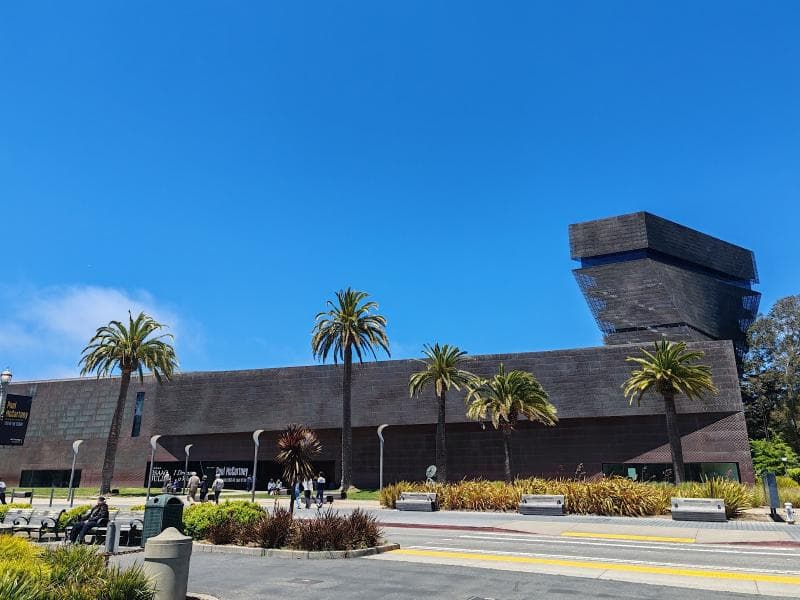
Discover the De Young Museum in San Francisco, United States, a world-class fine arts institution in Golden Gate Park, showcasing diverse global art and unique architecture.
Overview
Nestled within the verdant expanse of Golden Gate Park in San Francisco, California, the De Young Museum stands as a prominent institution dedicated to fine arts, offering a rich tapestry of global cultures and artistic heritage. As a vital component of the Fine Arts Museums of San Francisco, alongside the Legion of Honor, the De Young presents an extensive and diverse collection that invites visitors on a journey through centuries of human creativity. From its distinctive copper-clad architecture that harmonizes with its natural surroundings to its captivating permanent collections and special exhibitions, the museum is a beacon for art enthusiasts and curious travelers alike.
The museum showcases an impressive array of art, including American art from the 17th through the 21st centuries, international contemporary art, and significant works from Africa, Oceania, and the Americas. Its collection also boasts a world-renowned textile and costume arts department, spanning nearly 3,000 years of history and representing over 125 countries. Beyond the galleries, the De Young's iconic Hamon Observation Tower provides breathtaking panoramic views of San Francisco, the Pacific Ocean, and the sprawling park itself.
History & Cultural Background
The De Young Museum's story is deeply intertwined with San Francisco's history, tracing its origins back to the California Midwinter International Exposition of 1894. Michael H. de Young, a co-founder of the San Francisco Chronicle, was instrumental in championing the conversion of the fair's temporary Egyptian Revival-style Fine Arts Building into a permanent museum. It officially opened its doors as the Memorial Museum on March 23, 1895, initially housing objects from the exposition and de Young's personal collections.
The museum endured significant challenges, including severe damage from the 1906 San Francisco earthquake, which necessitated a temporary closure and subsequent rebuilds. Over the decades, it evolved, expanding into new structures and changing its name to the M. H. de Young Memorial Museum in 1921. The most recent architectural transformation came after the 1989 Loma Prieta earthquake, leading to the construction of a new, seismically-sound building designed by the Swiss firm Herzog & de Meuron in collaboration with Fong & Chan Architects, which reopened in 2005.
What Makes It Special
The De Young Museum distinguishes itself through several unique features. Its architectural design, by Herzog & de Meuron, is a work of art in itself. The building is enveloped in perforated copper panels, designed to oxidize and change color over time, creating a living facade that mirrors the dappled light filtering through the trees of Golden Gate Park. This innovative design blurs the lines between the museum structure and its natural environment.
Inside, the museum's collections are remarkable. The American art collection, one of the most comprehensive in the American West, spans from the 17th century to the present day, with a strong focus on art from California and the American West. The African, Oceanic, and Arts of the Americas collections are particularly significant, featuring ancient works and indigenous tribal art from diverse regions. The extensive textile arts and costumes collection, boasting over 13,000 pieces, is another highlight, showcasing global craftsmanship and cultural traditions. Furthermore, the Hamon Observation Tower, a 144-foot spiraled structure, offers an accessible, free-to-visit vantage point with unparalleled 360-degree views of the city and its surroundings.
Stories, Fun Facts & Local Details
Visitors are often charmed by the subtle details and intriguing stories embedded within the museum and its grounds. For instance, outside the museum, a 'faux fault line' sculpture by British artist Andy Goldsworthy symbolically cracks the sidewalk, reflecting San Francisco's seismic history and adding an artistic touch to the entrance. The museum's copper facade is a dynamic element, evolving in appearance as it patinas over time, intentionally designed to blend with the park's greenery.
A notable fun fact is that Queen Elizabeth II visited the De Young Museum in 1983. Inside, the lobby features iconic wire sculptures by Bay Area artist Ruth Asawa, whose work adds a unique artistic dimension to the museum's contemporary offerings. For local residents of the nine Bay Area counties, the De Young offers free general admission to its permanent collection galleries every Saturday, making it an accessible cultural gem.
Visitor Perspective
A visit to the De Young Museum offers a contemplative and enriching experience. Plan to spend at least 2-3 hours to explore the permanent collections, with additional time needed for special exhibitions. The museum is conveniently located in Golden Gate Park, across from the California Academy of Sciences and near the Japanese Tea Garden, making it easy to combine with other park attractions for a full day of exploration.
The museum encourages the use of public transportation, with several Muni bus routes stopping nearby. For those driving, paid parking is available in the Music Concourse Garage. It's worth noting that the Hamon Observation Tower is free to enter and does not require a museum ticket, offering an incredible viewpoint even for those on a quick visit. The De Young Cafe provides a pleasant spot for a break, with indoor and outdoor dining on the Sculpture Garden Terrace. The museum operates Tuesday through Sunday, typically from 9:30 AM to 5:15 PM, remaining closed on Mondays.
Coordinates: -122.468676, 37.771469
View on Google Maps💬 How Travelers Describe This Place
Based on community votes
Photogenic
457Interesting
252Beautiful
147Must See
114Unique
19
Traveler Stories
Discover memorable experiences shared by travelers who have visited this place.
No traveler stories yet.
Be the first traveler to share what made this place memorable.

Tour
By
Spot
Discover amazing places around the world. Your journey starts here.
Explore
© 2026 TourBySpot. All rights reserved.