Daliborka Tower
Prague, Czech Republic
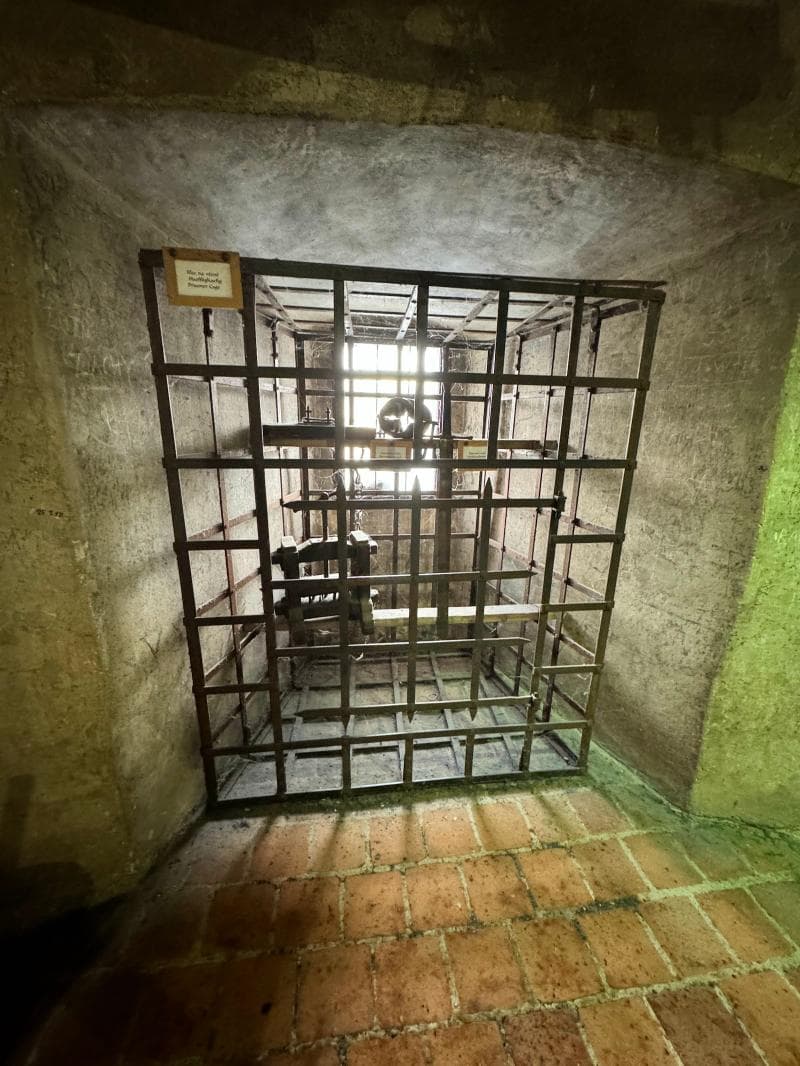
Explore Daliborka Tower, a medieval prison within Prague Castle, Czech Republic. Discover its dark history, the legend of Dalibor, and unique insights.
Overview
Nestled within the majestic Prague Castle complex, at the eastern end of the charming Golden Lane, stands the Daliborka Tower. This late-Gothic defensive tower, built in the late 15th century, quickly transformed from a military fortification into one of the most infamous prisons in the Czech lands. Its stone walls hold centuries of grim history and are inextricably linked to the captivating legend of its most famous prisoner, Dalibor of Kozojedy, after whom it is named. Today, the Daliborka Tower offers visitors a compelling, albeit somber, journey into medieval justice and castle life, providing a stark contrast to the colorful allure of the nearby Golden Lane.
History & Cultural Background
The Daliborka Tower was constructed in 1496 under the reign of King Vladislas II Jagiello and designed by architect Benedict Reid as a crucial part of Prague Castle's new northern fortifications. Its original purpose was to serve as a robust artillery tower, safeguarding the castle from potential attacks. However, its strategic location and formidable structure soon led to its secondary, more enduring role: a prison. Initially, the tower was intended for high-ranking noble prisoners, reflecting the hierarchical nature of medieval society. Over time, however, its doors opened to inmates of all social strata, housing both common criminals and political dissidents until the late 18th century. Its function as a prison finally ceased following the judicial reforms introduced by Emperor Joseph II.
What Makes It Special
What sets Daliborka Tower apart is its unvarnished authenticity as a medieval prison. Unlike many romanticized historical sites, Daliborka presents a raw, tangible glimpse into the harsh realities of confinement. The tower's narrow spaces, thick stone walls, and grim atmosphere speak volumes about the difficult conditions prisoners endured. Visitors can explore displays related to prison life, including the daunting oubliette, a dark, bottom-floor dungeon with walls up to 320 centimeters thick, accessible only through a hole at the top. Prisoners who caused trouble might be lowered into this pit to starve, a chilling testament to the severity of medieval punishment. Daliborka provides a vital, darker narrative to the Prague Castle experience, underscoring that the sprawling complex was not merely a royal residence but also a center of law, power, and often brutal justice.
Stories, Fun Facts & Local Details
The tower's most enduring legacy is undoubtedly the legend of Dalibor of Kozojedy, its first and most celebrated inmate. Imprisoned in 1498, Dalibor was a knight accused of supporting rebellious serfs against their cruel lord. According to the widely known legend, while awaiting his execution in the tower's dungeon, Dalibor learned to play the violin. His melancholic melodies were said to be so moving that people gathered outside the tower to listen, bringing him food and drink out of sympathy. This touching story gave rise to the Czech proverb, 'Nouze naučila Dalibora housti,' meaning 'necessity taught Dalibor to fiddle,' akin to 'necessity is the mother of invention.' This legend inspired Bedřich Smetana's famous opera, 'Dalibor.'
However, a darker interpretation of the 'violin' exists. Some historians suggest the 'fiddle' might refer to a medieval torture device, the rack, or a form of thumbscrew, implying a more sinister reality than the romanticized musical tale. Despite this, records suggest Dalibor, as a noble, likely enjoyed better conditions than common prisoners, including private cells with wooden interiors, small windows, and even stoves for heating. Yet, the very real oubliette below serves as a grim reminder of the fate awaiting those who truly defied the authorities. Archaeological research has reportedly uncovered skeletons at the bottom of the tower, underscoring the brutal finality of this part of the prison.
Visitor Perspective
Visiting Daliborka Tower today is an integral part of exploring the Prague Castle complex and is typically included with tickets that grant access to Golden Lane. As you walk through the colorful, diminutive houses of Golden Lane, the imposing presence of Daliborka at its eastern end creates a striking contrast. Inside, visitors can still feel the palpable weight of history within its ancient walls. The displays illustrate the harsh realities of medieval prison life, prompting reflection on the lives of those confined within its confines. It is recommended to approach Daliborka after experiencing the brighter aspects of Golden Lane, allowing the tower's somber narrative to powerfully punctuate your journey through this iconic part of Prague Castle.
Coordinates: 14.4378, 50.07554
View on Google Maps💬 How Travelers Describe This Place
Based on community votes
Must See
673Photogenic
336Interesting
219Unique
186Beautiful
80
Traveler Stories
Discover memorable experiences shared by travelers who have visited this place.
No traveler stories yet.
Be the first traveler to share what made this place memorable.

Tour
By
Spot
Discover amazing places around the world. Your journey starts here.
Explore
© 2026 TourBySpot. All rights reserved.