D67 Bunker
Hanoi, Vietnam
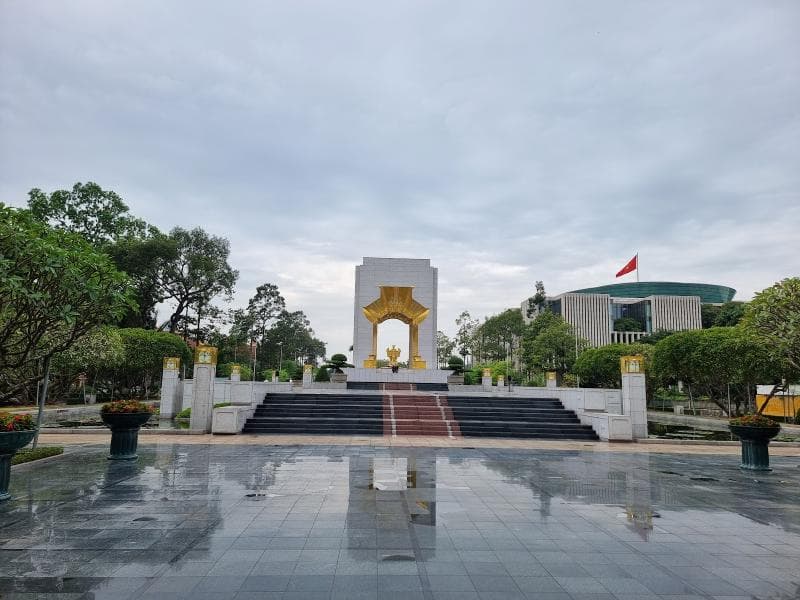
Explore the D67 Bunker within Hanoi's Thang Long Imperial Citadel, a vital command post of the Vietnam War. Discover its history and significance.
Overview
Deep within the ancient grounds of the Thang Long Imperial Citadel in Hanoi, Vietnam, lies a powerful and poignant historical relic: the D67 Bunker. This unassuming structure, built in 1967, served as a crucial nerve center during one of Vietnam's most challenging periods—the American War, often referred to locally as the Vietnam War. It stands as a testament to strategic military planning and the unwavering resolve of a nation. Visiting the D67 Bunker offers a unique glimpse into the command decisions that shaped the course of modern Vietnamese history, providing clear explanations of its role and significance within the broader context of the UNESCO World Heritage Site it inhabits.
History & Cultural Background
The D67 Bunker was constructed in 1967 amidst the intense American bombing campaigns targeting North Vietnam. Its name, 'D67,' directly references its year of construction. This underground command post was designed to be the highly secretive headquarters for the Politburo and the Central Military Commission of the Vietnam People's Army. From 1968 to 1975, it was here, within the fortified walls of Building D67 and its accompanying bunker, that Vietnam's top military and political leaders gathered. Figures such as First Secretary Le Duan, Prime Minister Pham Van Dong, General Secretary Truong Chinh, and notably, Commander-in-Chief General Vo Nguyen Giap, frequently presided over critical meetings in this location. The bunker provided a secure and bomb-proof environment for these leaders to strategize and issue directives to battlefields across Vietnam and Indochina.
What Makes It Special
What makes the D67 Bunker particularly special is its clandestine nature and robust design, built to withstand direct aerial bombardments. The main building, House D67, features thick concrete walls, reinforced ceilings with multiple layers of sand for protection, and heavy, 12cm thick steel doors designed to resist water and toxic gases. The actual bunker itself is located 9 meters deep underground, connected by three stairways and two corridors, ensuring continuous operation even under severe combat conditions with its special ventilation and lighting systems. This hidden command center was the birthplace of numerous pivotal strategies, including those for the 1968 Tet Offensive, the 1972 'Hanoi 12-day-and-night Campaign' against airstrikes, and the decisive 1975 Spring Offensive that led to the reunification of Vietnam. One notable artifact is the 'Number 1' telephone, which provided a direct line to President Ho Chi Minh's stilt house, allowing for immediate communication on battlefield situations.
Stories, Fun Facts & Local Details
The D67 Bunker's unassuming exterior belies the immense historical gravity contained within. From the outside, Building D67 appears as a relatively ordinary, flat-roofed, one-story structure, cleverly camouflaged amidst a grove of trees within the citadel complex. Yet, behind its reinforced doors, an atmosphere of intense focus and secrecy permeated. It's said that the leaders would quickly move from their nearby working offices to the D67 House during air raids. Imagine the hushed intensity of the Politburo and Central Military Commission meetings, where the fate of the nation was discussed over wartime maps and communication devices. The bunker joyfully received news of the victory on April 30, 1975, marking the end of the war, a moment of profound national pride. Since 2017, the bunker has been opened to the public, allowing visitors to connect with this crucial, yet previously hidden, chapter of Vietnam's past.
Visitor Perspective
For the curious traveler, a visit to the D67 Bunker offers a powerfully immersive experience into a defining era of Vietnamese history. Stepping through the thick, green steel doors and descending into the underground command rooms provides a tangible connection to the past. Visitors can explore the meeting hall where critical decisions were made, and see the offices used by prominent generals like Vo Nguyen Giap and Van Tien Dung, complete with original artifacts such as battle maps, communication equipment, and meeting tables. The preserved environment, with its reinforced concrete and soundproofed walls, allows one to appreciate the strategic significance and the conditions under which these leaders operated. It's a journey from the daylight into a space that symbolizes resilience, determination, and ingenuity, providing a deeper understanding of Vietnam's modern revolutionary heritage.
Coordinates: 105.8381, 21.0367
View on Google Maps💬 How Travelers Describe This Place
Based on community votes
Beautiful
922Must See
665Interesting
379Unique
183Photogenic
19
Traveler Stories
Discover memorable experiences shared by travelers who have visited this place.
No traveler stories yet.
Be the first traveler to share what made this place memorable.

Tour
By
Spot
Discover amazing places around the world. Your journey starts here.
Explore
© 2026 TourBySpot. All rights reserved.