Cultural Event Space
Ulaanbaatar, Mongolia
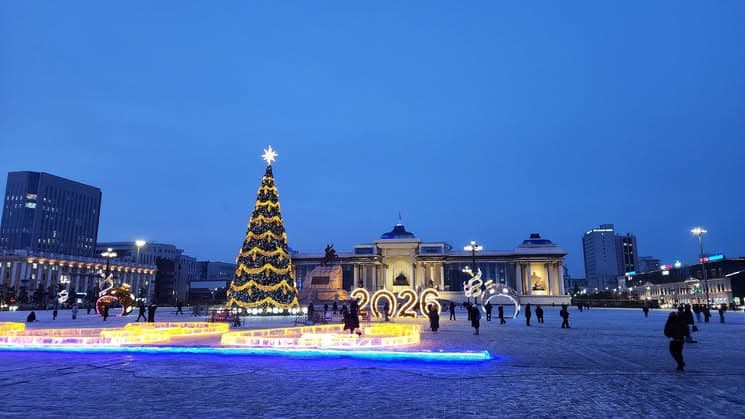
Discover Sukhbaatar Square, Ulaanbaatar's central cultural event space in Mongolia, hosting festivals, concerts, and historical commemorations.
Overview
Sukhbaatar Square, often known interchangeably as Chinggis Khaan Square, lies at the vibrant heart of Ulaanbaatar, Mongolia's bustling capital. This immense public plaza serves not merely as a landmark, but as the city's quintessential cultural event space, a grand stage where the nation's past and present converge. It is here that Mongolia's spirit is most palpably felt, a place of immense size surrounded by significant governmental buildings and cultural institutions.
A visit to Sukhbaatar Square offers a unique window into Mongolian life, from its profound historical narratives to its dynamic contemporary culture. It is a central gathering point that bustles with activity, reflecting the democratic spirit and sociopolitical landscape of Mongolia.
History & Cultural Background
The square bears the name of Damdin Sukhbaatar, a pivotal figure in Mongolian history. He was the revolutionary hero who, in 1921, declared Mongolia's final independence from China. His equestrian statue, a powerful symbol of an independent Mongolia, stands proudly at the square's center, marking the spot where his horse famously urinated during a rally, an event considered a good omen.
Before becoming the grand public space it is today, the area housed a temple-monastery-palace complex known as the Yellow Palace. In a notable, albeit temporary, change, the square's name was officially changed to Chinggis Square in 2013 to honor Genghis Khan, the revered founding father of the Mongolian nation. However, the original name, Sukhbaatar Square, was restored in 2016, reflecting the country's complex and evolving identity.
To the north, dominating the square, stands the Government Palace, fronted by a magnificent colonnade monument. This impressive structure features a grand statue of Genghis Khan at its center, flanked by his third son Ögedei Khan and his grandson Kublai Khan, with his loyal generals Muqali and Bo'orchu guarding them. This monument, completed in 2006 for the 800th anniversary of Genghis Khan's coronation, bridges Mongolia's ancient imperial legacy with its modern statehood.
Throughout the socialist period until 1989, Sukhbaatar Square was the venue for annual civil, youth, and military parades. It also served as the focal point of the Democratic Revolution of 1990, witnessing massive demonstrations and peaceful hunger strikes that reshaped the nation's political landscape.
What Makes It Special
Sukhbaatar Square is undeniably the premier cultural event space in Ulaanbaatar. It is the main stage for countless national holidays, state ceremonies, and a diverse array of cultural events and exhibitions. From traditional festivals to modern concerts, the square plays a vital role in unifying the community and showcasing Mongolia's rich traditions and contemporary artistic expressions.
Visitors can experience major national celebrations here, including the spectacular Naadam Festival, the traditional Mongolian New Year festivities, and the solemn annual commemoration of Genghis Khan. The square transforms with the seasons: during winter, it hosts a magical Winter Night Market, complete with glowing braziers and ice sculptures. In the warmer months, it becomes a hub for outdoor concerts and vibrant cultural festivals, including international events like the Japan Festival.
Adding to its allure, a new urban park and a musical fountain were unveiled in 2020, offering daily light and water shows that captivate crowds of all ages. This constant flux of activities ensures that there is almost always 'something going on' for locals and travelers alike to enjoy.
Stories, Fun Facts & Local Details
The square is rich with local flavor and meaningful details. The inscription on the base of Sukhbaatar's monument is a powerful quote attributed to him: 'If we an entire people unite in a common effort and common will, there is nothing in the world that we can not achieve, learn and succeed in.' This embodies the spirit of national unity and determination.
It's common to see Mongolian families and friends gathering here for photographs, celebrating significant life events like graduations, weddings, and birthdays. Foreign dignitaries often pay their respects in front of Sukhbaatar's statue, highlighting the square's continued political importance. Even the Parliament building, located on the square, reflects tradition by facing south, mirroring the orientation of a traditional Mongolian ger.
One of the most visually stunning events is the annual Traditional Costume Festival, known as 'Deeltei Mongolia,' held just before the Naadam Festival. During this event, the square becomes a vibrant runway for thousands of Mongolians showcasing exquisite traditional deels (traditional garments) from across the country.
Visitor Perspective
For any curious traveler, Sukhbaatar Square is an essential first stop when exploring Ulaanbaatar. Its central location makes it an ideal starting point for discovering the city's historical and cultural treasures. The square is particularly enchanting at night when it is beautifully illuminated, and weekends often bring a lively, friendly atmosphere perfect for people-watching.
Being pedestrian-friendly, it invites leisurely strolls, allowing visitors to absorb the grandeur of the surrounding architecture and the palpable sense of history. Beyond the square itself, numerous cultural attractions are within easy reach, including the Government Palace, the National Museum of Mongolia, the State Opera and Ballet Academic Theatre, and the Central Post Office. Sukhbaatar Square truly offers an authentic and engaging cultural experience that allows visitors to connect with the heart and soul of Mongolia.
Coordinates: 106.9175, 47.91889
View on Google Maps💬 How Travelers Describe This Place
Based on community votes
Photogenic
998Must See
685Unique
472Beautiful
399Interesting
92
Traveler Stories
Discover memorable experiences shared by travelers who have visited this place.
No traveler stories yet.
Be the first traveler to share what made this place memorable.

Tour
By
Spot
Discover amazing places around the world. Your journey starts here.
Explore
© 2026 TourBySpot. All rights reserved.