Cultural Artifacts
Tashkent, Uzbekistan
Explore ancient cultural artifacts at the State Museum of the History of Uzbekistan in Tashkent, featuring relics from the Stone Age to the present day.
Overview
The State Museum of the History of Uzbekistan, nestled in the heart of Tashkent, is a beacon of Central Asian heritage, offering an unparalleled journey through the nation's profound past. Established in 1876, it stands as one of the oldest and most significant museums in the region. This institution houses an immense collection of over 250,000 to 340,000 exhibits, meticulously curated to chronicle the history of Uzbekistan from the Stone Age to the contemporary era. Visitors can explore archaeological treasures, rare numismatic finds, diverse ethnographic items, and a wealth of historical documents and photographs. The museum's imposing modernist building, constructed in 1970, is a landmark in itself, blending Soviet-era architecture with traditional Uzbek design elements, and was recently recognized as a UNESCO World Heritage Site in July 2026, as part of the 'Tashkent Modernist Architecture' inscription.
History & Cultural Background
Originally known as the National Museum of Turkestan, and later as the Lenin Museum, the State Museum of the History of Uzbekistan has evolved significantly since its founding in 1876. Its establishment marked a pivotal moment in the preservation of the region's cultural legacy. Throughout its history, the museum has continuously expanded its collections, adapting its exhibitions to reflect new archaeological discoveries and a deeper understanding of Uzbekistan's intricate past. The current building, a striking example of 1970s modernist architecture softened by decorative sun-shading screens inspired by traditional Uzbek panjara latticework, provides a fitting home for these invaluable artifacts. The museum's comprehensive scope showcases the deep historical roots of the Uzbek people, highlighting periods of flourishing civilizations, the rich cultural exchange along the Silk Road, and the enduring traditions that have shaped the nation's identity.
What Makes It Special
The true magic of the State Museum of the History of Uzbekistan lies in the sheer breadth and depth of its cultural artifacts, which bring to life millennia of human endeavor and artistic expression. Among its most remarkable possessions are the fossilized remains of a primitive human, unearthed from the Sel-Ungur cave and dating back an astonishing 1.5 million years B.C., offering a glimpse into the earliest inhabitants of the region. Another captivating piece is a stone sculpture of two snakes from the Fergana Valley, dating to the 2nd millennium B.C., hinting at ancient symbolism and belief systems. The museum proudly displays fragments of 7th-8th century mural paintings from the ancient Afrosiab settlement, revealing the sophisticated artistic traditions of early Central Asian cities.
A significant highlight for many visitors is the extraordinary collection of Buddhist artifacts, reflecting a period when Buddhism flourished in parts of this region. This includes a well-preserved alabaster Buddha relief found at Fayaz Tepe in Termez, and the remarkable 'Triad' – an ancient statue of Buddha accompanied by two monks, dating from the 1st-4th centuries BC. Beyond these, the museum's numismatic collection is exceptionally rich, featuring coins from the 5th century BC to the 19th century, showcasing the currencies of empires from the Akhaemenids to the Timurids, and charting centuries of trade and power shifts. The museum also features a bronze Saka goat from the 4th-5th centuries BC, decorated with intricate animal figurines, demonstrating the artistry of ancient nomadic cultures.
Stories, Fun Facts & Local Details
Imagine standing before tools crafted by human hands over a million years ago, or gazing upon coins that once exchanged hands along the bustling Silk Road, facilitating trade between East and West. These artifacts are not merely objects; they are storytellers. The museum's extensive ethnographic collection, for instance, tells tales of daily life, traditions, and the vibrant cultural tapestry of Uzbekistan through its exquisite ethnic art and costumes. You can trace the evolution of writing through the Muslim section's collection of calligraphy and regal edicts from various dynasties, including the Tamerlane era.
The museum building itself has its own narrative. Its cube-like form, symbolizing eternity in Eastern architecture, is adorned with sun-shielding metal bars and marble, reflecting a blend of traditional aesthetics and Soviet modernist principles. The four floors are organized thematically, creating a narrative flow that guides visitors from the earliest traces of human activity to the country's recent history, allowing for an immersive and educational experience. Even the intricate décor from a 6th-8th century Bukhara governors' palace speaks of the opulence and political power that once characterized this land.
Visitor Perspective
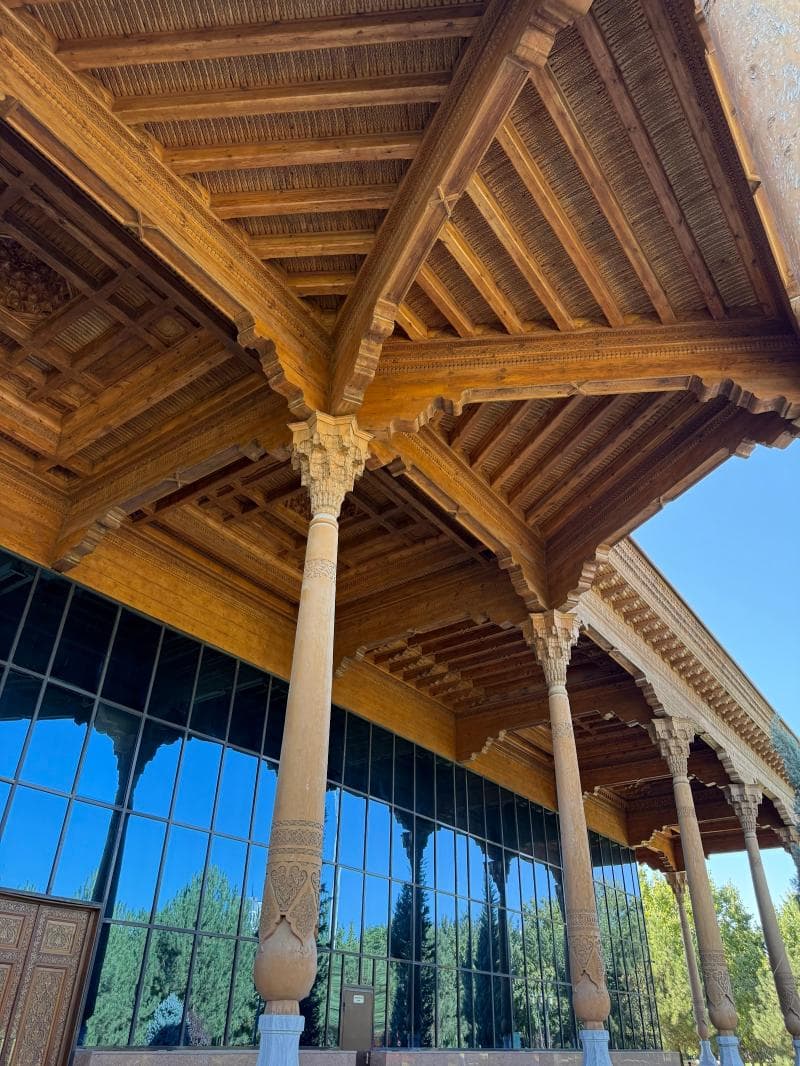
Visiting the ‘Cultural Artifacts’ section within the State Museum of the History of Uzbekistan is like stepping into a living timeline. You'll move from the primitive tools of early man to the refined pottery and jewelry that adorned medieval societies. The diverse range of exhibits, from Stone Age implements to elaborately carved wooden columns from the 10th century, provides a profound appreciation for the continuous human presence and innovation in this strategic crossroads of civilizations. The museum is designed to offer clear explanations and historical context, guiding curious travelers through the significant epochs of Uzbek history. While not overtly promotional, the sheer volume and historical weight of the artifacts naturally inspire a deep respect for the region's heritage. Allow ample time to explore, as each artifact, from ancient coins to fragments of monumental frescoes, holds a piece of Uzbekistan's extraordinary story, inviting contemplation and wonder.
Coordinates: 69.2693612, 41.3116984
View on Google Maps💬 How Travelers Describe This Place
Based on community votes
Unique
951Must See
748Interesting
491Beautiful
427Photogenic
414
Traveler Stories
Discover memorable experiences shared by travelers who have visited this place.
No traveler stories yet.
Be the first traveler to share what made this place memorable.

Tour
By
Spot
Discover amazing places around the world. Your journey starts here.
Explore
© 2026 TourBySpot. All rights reserved.