Crypt
Split, Croatia
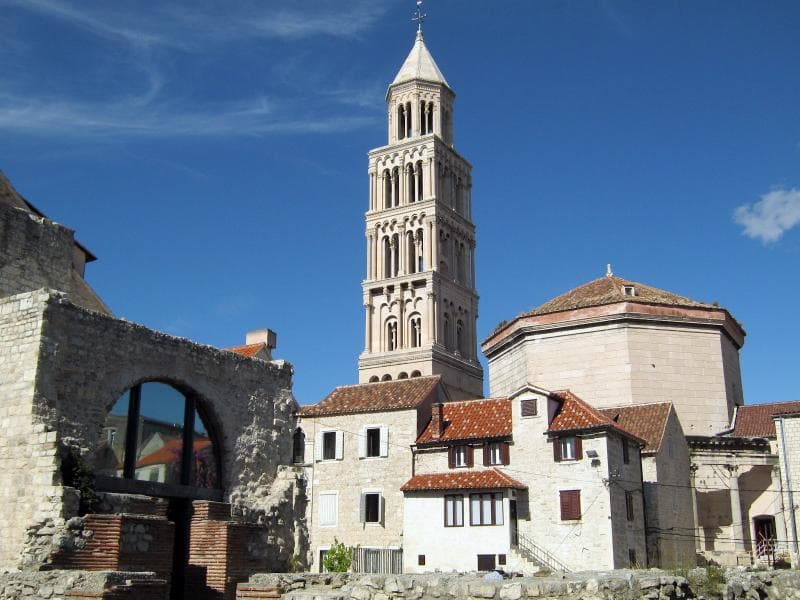
Explore the Crypt of Saint Lucy beneath the Cathedral of Saint Domnius in Split, Croatia. Uncover centuries of Roman and Christian history.
Overview
Deep within the ancient walls of Diocletian's Palace in Split, Croatia, lies a place of profound historical and spiritual significance: the Crypt of Saint Lucy. Tucked beneath the majestic Cathedral of Saint Domnius, this serene underground chamber offers a unique journey through time, bridging the gap between Roman imperial power and early Christian devotion. Originally an integral part of Emperor Diocletian's grand mausoleum, this space was later transformed into a chapel dedicated to Saint Lucy, a Christian martyr who suffered during the very persecutions orchestrated by the emperor himself. Today, it stands as a testament to faith, resilience, and the enduring layers of history that define Split's heart. Visiting the crypt is a quiet, contemplative experience, often included with a ticket to the main cathedral complex, inviting travelers to step away from the bustling city above and reflect on centuries of human stories.
History & Cultural Background
The story of the Crypt of Saint Lucy is inextricably linked to the dramatic transformation of Diocletian's Mausoleum. Built in AD 305 as the final resting place for the Roman Emperor Diocletian, a fierce persecutor of Christians, the octagonal structure was an imposing symbol of imperial might. However, by the 7th century, as Christianity gained prominence, the mausoleum underwent a remarkable conversion. It became a Christian cathedral, dedicated to the Virgin Mary, while its bell tower was later dedicated to Saint Domnius.
It is in this context that the crypt beneath the cathedral found its new purpose. What might have originally been part of the mausoleum's foundations or even a shrine to Mithras, a Persian deity popular among Roman soldiers, was reconsecrated as the Chapel of Saint Lucy. Saint Lucy of Syracuse was a young Christian noblewoman who, according to tradition, was martyred around 304 AD during Diocletian's Great Persecution. Her dedication to God and refusal of a marriage proposal led to her denouncement and eventual execution. This re-dedication embodies a profound historical irony: the persecutor's tomb became a sanctuary honoring one of his victims.
What Makes It Special
What makes the Crypt of Saint Lucy truly special is its palpable sense of layered history and its deeply symbolic significance. It represents a victory of faith over persecution, a quiet declaration of Christian enduring belief within the very monument of an emperor who sought to suppress it. Architecturally, the crypt remarkably retains the circular plan of the church above, echoing the original layout of Diocletian's Mausoleum. This subterranean space provides a unique perspective on the ancient Roman construction, showcasing the foundational elements of what became one of the oldest continually used cathedrals in the world.
Beyond its historical context, the crypt offers a rare moment of tranquility. The cool, quiet atmosphere underground provides a stark contrast to the lively Peristyle and the grandeur of the cathedral above. It is a place where one can feel intimately connected to the early Christian community that sought refuge and established its spiritual roots within these ancient walls. The crypt is not merely an architectural relic; it is a spiritual haven, particularly revered on Saint Lucy's Day.
Stories, Fun Facts & Local Details
One of the most poignant stories associated with the Crypt of Saint Lucy centers around its namesake. Saint Lucy is revered as the patron saint of the blind, a patronage that stems from the legend that her eyes were gouged out during her martyrdom. Another version of the legend suggests that she removed her own eyes to deter an unwanted suitor, only for the Virgin Mary to miraculously restore them, even more beautiful than before. This tragic yet inspiring tale has led to a local tradition where, on December 13th, Saint Lucy's Day, a special mass is held in the crypt. On this day, a source of water within the crypt is blessed, and visitors may take some 'holy water' for their eyes, seeking protection or healing. Some visitors even throw coins into the crypt for good luck, particularly for eye health.
The transformation of Diocletian's personal mausoleum into a Christian place of worship is a powerful 'fun fact' in itself, highlighting the dramatic shifts in religious and political power over centuries. The fact that the crypt, a chapel dedicated to a Christian martyr, exists within the very structure built for the emperor who persecuted her, creates a compelling narrative that is central to Split's identity. This layered history offers a rich tapestry of human experience, making the crypt a place of both historical intrigue and spiritual reflection.
Visitor Perspective
For the curious traveler, descending into the Crypt of Saint Lucy offers a peaceful respite and a profound historical encounter. The transition from the sunlit Peristyle, through the cathedral, and down into the cool, dimly lit crypt is like stepping into a different world. It's a journey into the foundational layers of Split's history, providing a tangible connection to the Roman Empire and the dawn of Christianity in the region. The quiet ambiance encourages contemplation, allowing visitors to imagine the lives of those who walked these ancient stones, from imperial guards to early Christian worshipers. While not as outwardly grand as the cathedral above, the crypt's understated power lies in its deep historical resonance and the human stories it silently holds. It is a place that invites reflection on faith, sacrifice, and the relentless march of time, leaving a lasting impression on those who venture into its depths.
Coordinates: 16.4392, 43.5089
View on Google Maps💬 How Travelers Describe This Place
Based on community votes
Must See
569Unique
476Interesting
465Photogenic
276Beautiful
128
Traveler Stories
Discover memorable experiences shared by travelers who have visited this place.
No traveler stories yet.
Be the first traveler to share what made this place memorable.

Tour
By
Spot
Discover amazing places around the world. Your journey starts here.
Explore
© 2026 TourBySpot. All rights reserved.