Crypt Area
Manila, Philippines
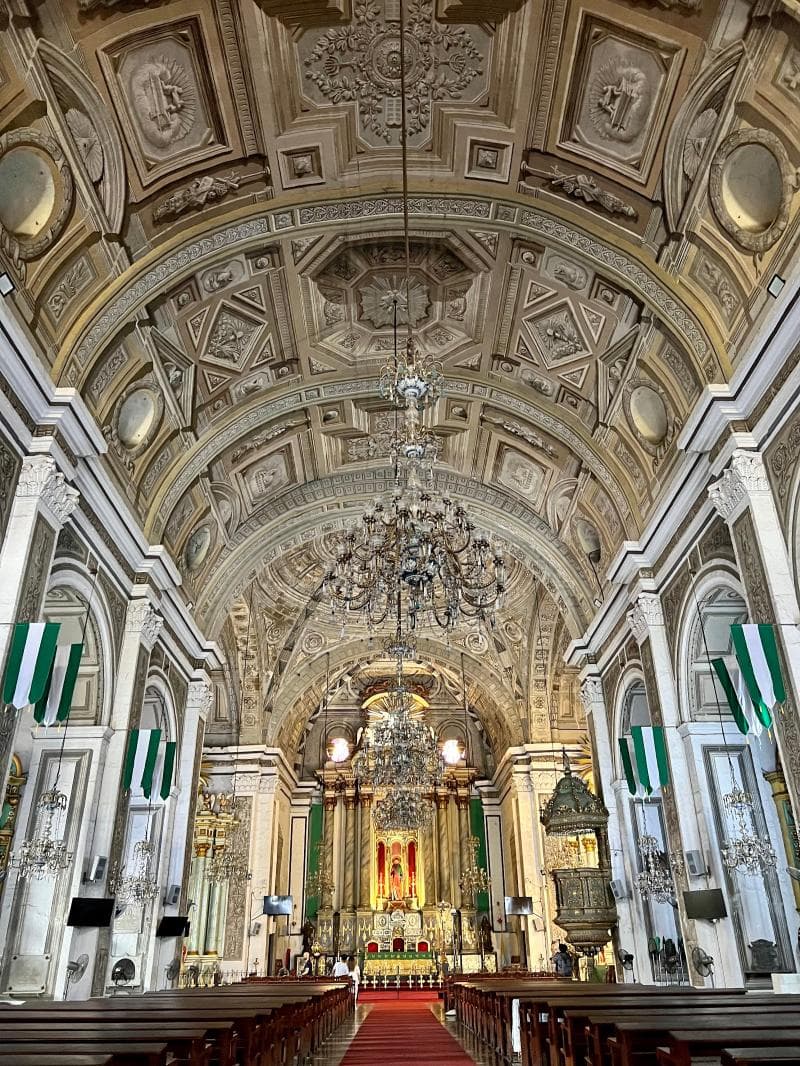
Explore the solemn Crypt Area within San Agustin Church in Manila, Philippines, resting place of historical figures and national heroes.
Overview
Deep within the ancient walls of San Agustin Church in Intramuros, Manila, lies a profound and historically significant space: the Crypt Area. More than just a burial ground, this solemn chamber offers a tangible connection to centuries of Philippine history, culture, and faith. Often referred to as the San Agustin Crypt or the church's columbarium, it serves as the final resting place for a remarkable collection of individuals who shaped the nation, from Spanish conquistadors to Filipino national heroes and prominent families.
The Crypt Area is an integral part of the larger San Agustin Church complex, itself a UNESCO World Heritage Site, recognized as one of the four Baroque Churches of the Philippines. Stepping into this subterranean realm, visitors are enveloped by an atmosphere of quiet reverence, where intricately carved stone, ancient epitaphs, and the enduring weight of history tell stories of resilience, sacrifice, and heritage. It's a place that transcends simple sightseeing, inviting contemplation on the lives interred within and their profound impact on the Philippines.
History & Cultural Background
The history of the Crypt Area is intertwined with that of San Agustin Church, the oldest stone church in the Philippines, completed in 1607. The church itself was built after two earlier structures, made of less durable materials like bamboo and nipa, were destroyed by fire. The Augustinian friars, recognizing the need for resilience, opted for a robust stone construction, a style often termed 'earthquake Baroque' due to its ability to withstand seismic activity.
Originally, the Crypt Area was known as the 'De Profundis Hall,' a sacred space where friars would recite psalms for their departed brothers and the church's benefactors. Over the centuries, it evolved into a significant burial site. Its solemn purpose, however, was tragically interrupted during the British occupation of Manila (1762-1764), when some gravesites, including that of Miguel López de Legazpi, were desecrated and ransacked. More recently, during the brutal Battle of Manila in 1945, the crypt endured further devastation, serving as a grim prison and execution ground, with a monument marking the burial of 141 prisoners of war executed by the Japanese.
What Makes It Special
What sets the Crypt Area apart is its dual role as both a sacred necropolis and a powerful repository of Philippine history. Unlike many other historical sites, it directly houses the physical remnants and memorials of figures central to the nation's narrative. Visitors can find the resting places of Spanish conquistadors like Miguel López de Legazpi and Martin de Goiti, as well as celebrated Filipino personalities. Among the most notable Filipino interred here is the renowned painter Juan Luna.
The intricate details of the crypt, from the markers to the overall atmospheric design, offer a unique glimpse into colonial-era funerary practices and the social hierarchies of the time. It is a testament to the church's enduring significance that even after centuries of natural disasters and wartime destruction, this crypt, along with the main church building, largely remained intact, providing an unparalleled continuity of history.
Stories, Fun Facts & Local Details
The San Agustin Crypt is rich with stories. One compelling narrative centers around Miguel López de Legazpi, the founder of Manila. Although his remains were reportedly disturbed by the British in the 18th century, a plaque still marks his traditional resting place, underscoring his pivotal role in the city's origins. Another fascinating aspect is the presence of individuals like Pedro Paterno and Trinidad Pardo de Tavera, prominent figures during the late Spanish colonial and early American periods, whose lives were deeply intertwined with calls for reform and national identity.
A more somber but equally powerful detail is the monument commemorating the 141 prisoners of war executed here during World War II. This serves as a stark reminder of the church's unexpected role as a witness to some of the darkest moments in Manila's history, transforming a place of eternal rest into a site of profound human tragedy and remembrance. The crypt today is part of the San Agustin Museum, allowing careful preservation and interpretation of these precious historical artifacts and human stories.
Visitor Perspective
Visiting the Crypt Area offers a uniquely contemplative experience. It encourages visitors to slow down and reflect on the lives of those buried there and the broader sweep of history they represent. The quiet, cool atmosphere beneath the main church provides a welcome respite from the bustling streets of Intramuros, fostering an environment for introspection. As you walk among the various tombs and plaques, you're not just observing history; you're immersed in a space where history breathes through stone and silence. It's a profound journey into the past, offering a deeper appreciation for the legacies that continue to shape the Philippines. Many find the experience both educational and deeply moving, a poignant reminder of the nation's complex and layered past.
Coordinates: 120.97528, 14.58889
View on Google Maps💬 How Travelers Describe This Place
Based on community votes
Unique
981Interesting
617Must See
565Photogenic
357Beautiful
28
Traveler Stories
Discover memorable experiences shared by travelers who have visited this place.
No traveler stories yet.
Be the first traveler to share what made this place memorable.

Tour
By
Spot
Discover amazing places around the world. Your journey starts here.
Explore
© 2026 TourBySpot. All rights reserved.