Crown Jewels Chamber
Prague, Czech Republic
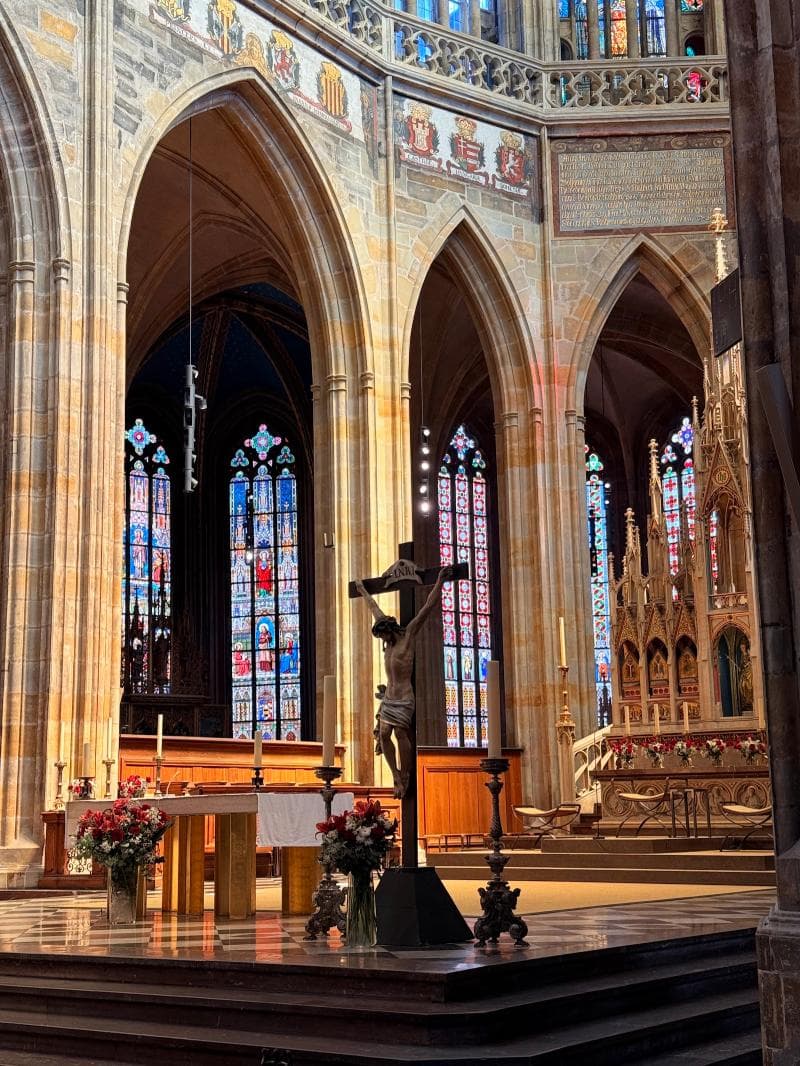
Discover the Crown Jewels Chamber in St. Vitus Cathedral, Prague, Czech Republic. Explore the history, legends, and significance of the Bohemian Crown Jewels.
Overview
Deep within the ancient walls of St. Vitus Cathedral, nestled within Prague Castle in the Czech Republic, lies one of the nation's most sacred and inaccessible treasures: the Crown Jewels Chamber. This highly secured vault is the ceremonial resting place of the Bohemian Crown Jewels, emblems of Czech statehood and history that command immense reverence. Unlike typical museum exhibits, the chamber itself is not accessible to the public, and the precious regalia it houses are displayed only on rare and significant national occasions, making any viewing a truly extraordinary event.
The chamber's mystique is amplified by its legendary security. Access requires the simultaneous presence of seven distinct key holders, a tradition symbolizing the collective responsibility of the nation's highest representatives for its most cherished symbols. This unique arrangement underscores the profound cultural and historical weight carried by these jewels, particularly the iconic St. Wenceslas Crown, the centerpiece of the collection.
History & Cultural Background
The story of the Bohemian Crown Jewels begins in the 14th century, primarily with Charles IV, Holy Roman Emperor and King of Bohemia. In 1347, he commissioned the St. Wenceslas Crown for his coronation, dedicating it to Bohemia's patron saint, St. Wenceslas. Charles IV decreed that the crown should be permanently deposited in St. Vitus Cathedral, safeguarding it as a symbol belonging to the land of Bohemia rather than any individual monarch.
The collection evolved over centuries to include the royal orb, sceptre, coronation vestments, a gold reliquary cross, and St. Wenceslas' sword. While the crown dates back to Charles IV's time, the present orb and sceptre are 16th-century additions, commissioned by Ferdinand I, replacing earlier, less ornate pieces.
Throughout history, the jewels were moved for safekeeping during turbulent times, including periods at Karlštejn Castle and even Vienna. However, they were always returned to Prague for royal coronations. The tradition of the seven keys was formally established in 1791 by King Leopold II, solidifying the system that protects this national treasure today. After 1918, with the establishment of the Czechoslovak Republic, the Crown Jewels transitioned from royal insignia to potent symbols of national independence and statehood.
What Makes It Special
What truly sets the Crown Jewels Chamber and its contents apart is not merely their age or material value, but their profound symbolism and the extraordinary measures taken to protect them. The chamber's entrance, secreted away from the St. Wenceslas Chapel, features an iron door and safe, both secured by seven locks. The keys to these locks are entrusted to seven specific high-ranking officials of the Czech Republic: the President, the Prime Minister, the Prague Archbishop, the Chairman of the House of Deputies, the Chairman of the Senate, the Dean of the Metropolitan Chapter of St. Vitus Cathedral, and the Lord Mayor of Prague. All seven must convene to unlock the chamber, a rare and ceremonial event.
The St. Wenceslas Crown itself is a masterpiece of Gothic craftsmanship, made of 22-carat gold and weighing approximately 2.475 kilograms. It is adorned with a dazzling array of precious stones, including 19 sapphires, 44 spinels (long thought to be rubies), 1 ruby, 30 emeralds, and 20 pearls. At its apex, a golden cross is said to have once contained a thorn from Christ's Crown of Thorns, adding another layer of sacred significance.
Beyond its dazzling appearance, the collection holds priceless historical value, embodying the continuity of Czech history and sovereignty. The sheer inaccessibility and infrequent display of these jewels elevate their status beyond mere artifacts, making them a living testament to the nation's enduring spirit.
Stories, Fun Facts & Local Details
Perhaps the most famous legend surrounding the Bohemian Crown Jewels is the curse associated with the St. Wenceslas Crown. Lore dictates that any usurper who places the crown upon their head, without being the rightful King of Bohemia, is doomed to die within a year. This chilling tale gained notoriety during World War II, when rumors spread that Reich Protector Reinhard Heydrich, who had made Prague Castle his headquarters, secretly tried on the crown. He was assassinated less than a year later by the Czech resistance, a coincidence that many attributed to the curse, though historians often categorize this as a persistent legend rather than a documented fact.
The Bohemian Crown Jewels are typically displayed to the public only on very special occasions, often once every five years, or for significant national anniversaries, with the President of the Republic having the exclusive right to decide on their exhibition. These rare viewings draw massive crowds, with visitors often waiting hours in long queues to catch a glimpse of this national treasure.
Visitor Perspective
For most travelers, a direct visit to the Crown Jewels Chamber itself is not possible, as it remains closed to the public. However, to allow visitors to appreciate these magnificent symbols, high-quality replicas of the St. Wenceslas Crown, royal orb, and sceptre are permanently exhibited in the historical exposition at the Old Royal Palace, also within Prague Castle.
While the actual jewels are rarely seen, witnessing them on one of their infrequent public displays is considered a profound and unforgettable experience. Those planning a visit to Prague Castle should check official sources for any announcements regarding special exhibitions of the Bohemian Crown Jewels. Otherwise, the opportunity to see the meticulously crafted copies offers a valuable insight into their grandeur and historical significance. A visit to St. Vitus Cathedral itself provides a rich experience, offering a glimpse into the spiritual heart of the Czech Republic and the setting for these legendary artifacts.
Coordinates: 14.42069, 50.08744
View on Google Maps💬 How Travelers Describe This Place
Based on community votes
Photogenic
623Must See
363Interesting
302Beautiful
250Unique
88
Traveler Stories
Discover memorable experiences shared by travelers who have visited this place.
No traveler stories yet.
Be the first traveler to share what made this place memorable.

Tour
By
Spot
Discover amazing places around the world. Your journey starts here.
Explore
© 2026 TourBySpot. All rights reserved.