Courtyard
Geneva, Switzerland
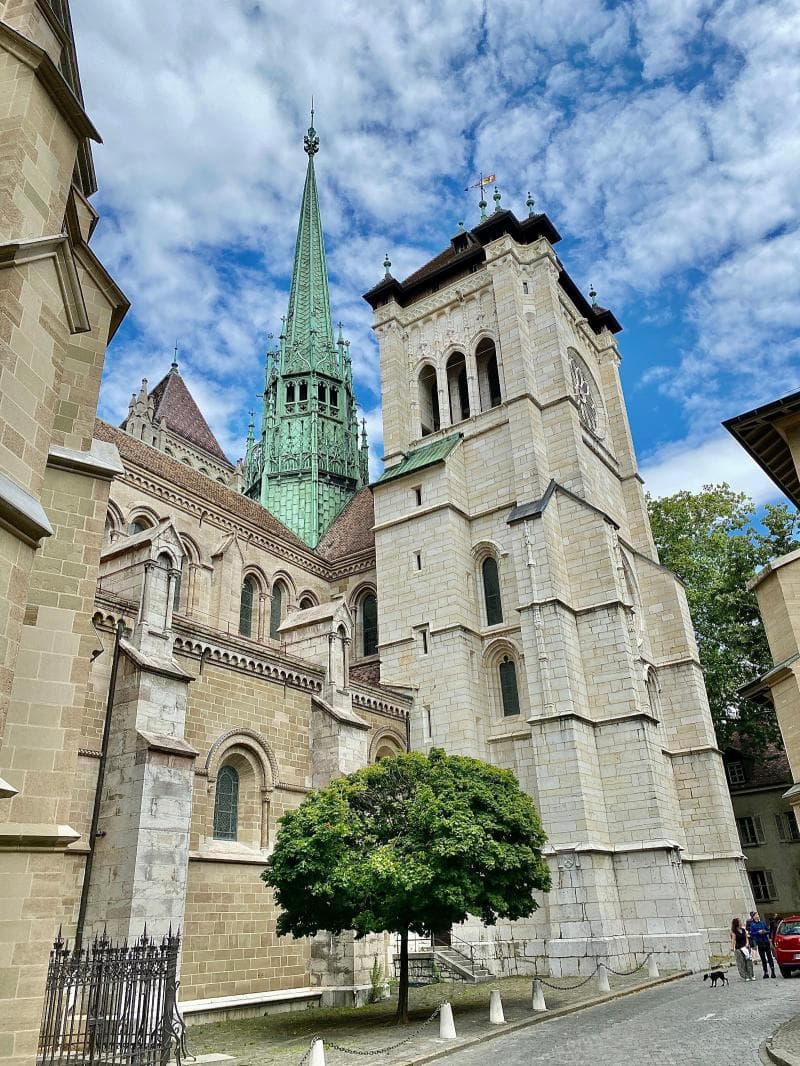
Discover the ancient Courtyard, an archaeological treasure beneath St. Pierre Cathedral in Geneva, Switzerland. Explore 2000 years of history, from Roman ruins to early Christian churches.
Overview
Nestled beneath the majestic St. Pierre Cathedral in Geneva, Switzerland, lies a sub-spot often metaphorically described as its historical 'courtyard': a sprawling archaeological site. This subterranean world offers a remarkable journey through over 2000 years of urban development, revealing the ancient foundations upon which modern Geneva was built. It is considered one of the largest and most significant archaeological sites in Switzerland, if not the entire North Alpine region.
While the contemporary Cour Saint-Pierre is the charming plaza surrounding the cathedral, historically a place of gathering and pivotal events, the true depths of Geneva's past are unveiled in the accessible underground excavations. This extensive site became public in 2006, after three decades of meticulous research and preservation work between 1976 and 2006.
History & Cultural Background
The history embedded within this archaeological 'courtyard' traces back much further than the grandeur of the current Gothic cathedral. Evidence suggests continuous human activity on this strategic hill since the Neolithic period. Among the earliest discoveries is the 1st-century BC tomb of an Allobrogian chieftain, a testament to the region's pre-Roman inhabitants.
As the Roman Empire expanded, a city began to flourish on this site, with remnants of Roman buildings and infrastructure still visible. By the 4th century AD, the area transformed into a significant episcopal center. Excavations have uncovered the foundations of not one, but two early Christian cathedrals, along with two baptisteries, dating between 350 and 375 AD, hinting at a complex religious urban landscape.
Fires and subsequent reconstructions marked the evolving footprint of early Christian worship, including rebuilding efforts by King Sigismund of Burgundy around 500 AD. The construction of the present-day Gothic cathedral, which visitors see today, began around 1160 AD.
Outside, the external Cour Saint-Pierre has its own historical resonance. It was here, in 1536, that the General Council gathered to vote for the adoption of the Reformation, a defining moment that transformed Geneva into a central hub of Protestantism, often referred to as 'Protestant Rome'.
What Makes It Special
What truly sets the archaeological site of St. Pierre Cathedral apart is its extraordinary ability to present an unbroken timeline of human occupation and architectural evolution. It is a living lesson in stratigraphy, where layers from distinct historical periods—Celtic, Roman, and early Christian—intersect and coexist.
Visitors can marvel at well-preserved Roman mosaics from the 5th century, walk amongst the foundations of early Christian churches, and observe the burial sites that predate the cathedral itself. The sheer scale of the accessible parts, covering nearly the full length and exceeding the width of the current cathedral, allows for a comprehensive understanding of how the site transformed over millennia from a Roman settlement to a bustling episcopal and later, Protestant center.
The meticulous excavation and sensitive adaptation of the site for public viewing earned it a European Heritage Award, recognizing its importance as an urban archaeological treasure.
Stories, Fun Facts & Local Details
The discovery of this extensive underground world was quite serendipitous. In the 1970s, plans to install a new heating system in the cathedral led to initial excavations, which quickly revealed the profound historical layers beneath. This accidental discovery blossomed into a monumental 30-year archaeological project that fundamentally reshaped our understanding of Geneva's past.
To help visitors navigate the intricate timeline, the site employs informative displays and provides audio guides in multiple languages. These guides bring the ancient stones to life, explaining the function of each discovered structure, from wells and grain processing areas to religious buildings and funerary sites. A detailed model at the entrance visually depicts the transformation of the site from its Roman origins through its various ecclesiastical phases to the existing Gothic cathedral.
The contrast between the stark, Reformed interior of the cathedral above and the rich, multi-layered history beneath offers a powerful reflection on change and continuity. The external Cour Saint-Pierre, though seemingly simple, served as a stage for critical civic moments, adding another layer to the site's historical narrative.
Visitor Perspective
A visit to the archaeological site beneath St. Pierre Cathedral is an immersive experience that transports travelers back in time. Entry to the archaeological site is separate from the main cathedral, usually located down a flight of stairs next to the cathedral. It is advisable to wear comfortable shoes, as the exploration involves walking through ancient ruins and possibly uneven surfaces.
Allow approximately one hour to explore the site thoroughly, perhaps more if you wish to delve deeply into the information provided by the audio guides. For a comprehensive experience, visitors often opt for a combo ticket, which includes access to the archaeological site, the cathedral towers for panoramic views of Geneva, and sometimes the International Museum of the Reformation. It is a journey that offers profound insights into the origins of Geneva and the enduring human spirit that shaped this iconic Swiss city.
Coordinates: 6.14861, 46.20111
View on Google Maps💬 How Travelers Describe This Place
Based on community votes
Unique
791Interesting
514Beautiful
457Must See
252Photogenic
207
Traveler Stories
Discover memorable experiences shared by travelers who have visited this place.
No traveler stories yet.
Be the first traveler to share what made this place memorable.

Tour
By
Spot
Discover amazing places around the world. Your journey starts here.
Explore
© 2026 TourBySpot. All rights reserved.