Courtyard
Manila, Philippines
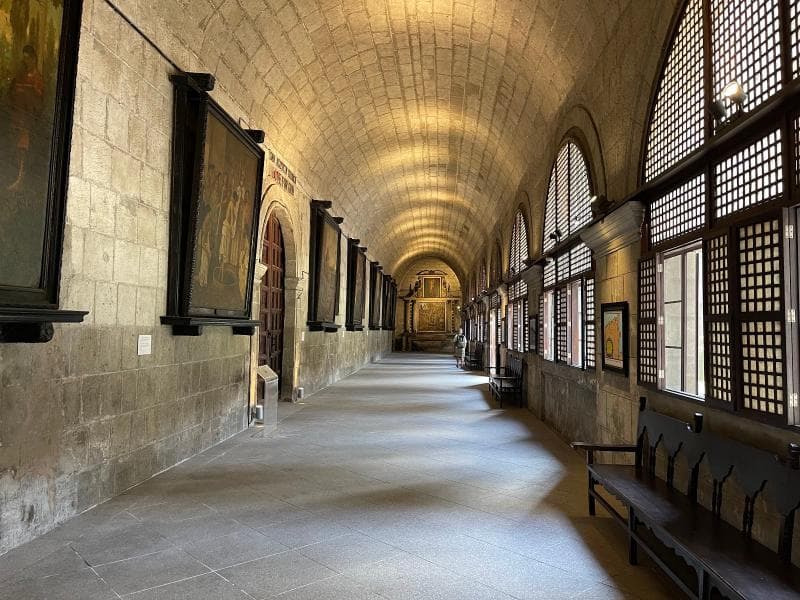
Discover the tranquil Courtyard of San Agustin Church in Manila, Philippines – a UNESCO World Heritage site rich in history and serene beauty.
Overview
Nestled within the historic walls of Intramuros in Manila, Philippines, the Courtyard of San Agustin Church offers a serene escape and a profound journey into the country's colonial past. This tranquil space is an integral part of the San Agustin Church complex, a designated UNESCO World Heritage Site recognized for its exceptional 'Baroque Churches of the Philippines' status. Completed in 1607, the San Agustin Church holds the distinction of being the oldest stone church in the Philippines, a testament to enduring Spanish colonial architecture and faith. The courtyard, often referred to as the cloister garden, serves as the heart of the former Augustinian monastery, now largely converted into a museum. It provides a peaceful sanctuary, inviting visitors to pause, reflect, and appreciate the rich tapestry of history and culture that permeates its ancient stone walls.
History & Cultural Background
The story of the San Agustin Church and its courtyard is deeply intertwined with the arrival of the Augustinian Order, the first religious order to set foot in the Philippines in 1565. The current stone edifice, which began construction in 1587 and was formally completed in 1607, stands as the third iteration on this site. Its predecessors, made of bamboo and nipa, succumbed to fires in 1574 during a Chinese pirate invasion and again in 1583 during a funeral service. The decision to rebuild with stone proved prescient, as the San Agustin Church has remarkably withstood numerous devastating earthquakes and even the widespread destruction of Manila during World War II, emerging as the only building left standing in Intramuros after the Battle of Manila in 1945. The courtyard itself was central to the Augustinian monastic life, designed to foster a sense of community and connection with nature, reflecting Saint Augustine's theological perspective that saw divine order in the natural world.
What Makes It Special
What truly sets the San Agustin Courtyard apart is its unique blend of historical resilience, spiritual tranquility, and architectural significance. As part of a UNESCO World Heritage Site, it stands as a symbol of a Spanish golden era in the Philippines, with its monastic architecture radiating majesty and equilibrium. The cloister garden provides a welcome 'piece of nature at the heart of monastic life,' offering a serene atmosphere for meditation and soul-searching amidst the bustling city. Its ability to endure centuries of natural disasters and conflicts speaks volumes about its sturdy construction and the unwavering faith it represents. Furthermore, the courtyard features distinctive granite sculptures of Chinese lions, a fascinating detail gifted by Chinese converts to Catholicism, highlighting the early cultural synthesis in the Philippines.
Stories, Fun Facts & Local Details
The courtyard holds countless untold stories within its ancient confines. It was here, within the larger monastery complex, that the terms for Spain's surrender to the United States after the Spanish-American War were prepared in 1898. During the Japanese occupation in World War II, the church briefly served as a concentration camp, adding another layer of solemn history. A fun fact for visitors is that Saint Augustine himself found profound moments in gardens, from his misguided youth to his conversion and visions; thus, the cloister garden embodies a deep, personal connection to the order's founder. Culturally, the courtyard has embraced contemporary significance, becoming a popular, albeit atmospheric, venue for wedding receptions. It has also been utilized by pilgrims during holy seasons, hosting the Stations of the Cross during Visita Iglesia, transforming it into an active space for devotional practices.
Visitor Perspective
For the curious traveler, visiting the San Agustin Courtyard offers a deeply immersive experience. It provides a quiet respite from the vibrant energy of Manila, allowing one to step back in time. The courtyard is accessed as part of the San Agustin Museum, which occupies the former monastery. The museum requires an admission fee, typically around PHP 200 for adults, and the entire complex, including the church and museum, is recommended for a 1.5 to 2.5-hour visit. Located conveniently on General Luna Street in Intramuros, the courtyard's partially covered areas provide shade and a comfortable environment for reflection. Travelers can sit on benches, absorb the historical ambiance, and appreciate the enduring legacy of faith and resilience embodied by this remarkable site in Manila, Philippines.
Coordinates: 120.97528, 14.58889
View on Google Maps💬 How Travelers Describe This Place
Based on community votes
Unique
958Beautiful
794Must See
571Photogenic
565Interesting
157
Traveler Stories
Discover memorable experiences shared by travelers who have visited this place.
No traveler stories yet.
Be the first traveler to share what made this place memorable.

Tour
By
Spot
Discover amazing places around the world. Your journey starts here.
Explore
© 2026 TourBySpot. All rights reserved.