Courtyard Gardens
Podgorica, Montenegro
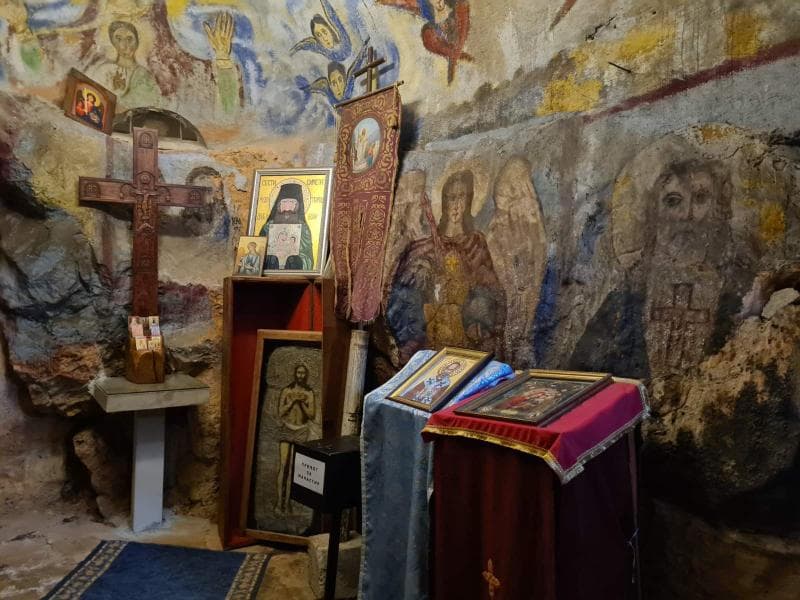
Explore Dajbabe Monastery, a unique cave church in Podgorica, Montenegro. Discover its fascinating history, stunning frescoes, and tranquil grounds.
Overview
Nestled just outside Podgorica, Montenegro, the Dajbabe Monastery is a profound testament to both spiritual devotion and natural wonder. This unique Orthodox Christian monastery, dedicated to the Assumption of Mary, is unlike any other, with much of its sacred space carved directly into the natural rock of Dajbabe hill, overlooking the scenic Zeta Valley. Established in 1897, it offers visitors a tranquil retreat and a rare glimpse into a faith tradition deeply intertwined with the earth itself. The monastery's external appearance, characterized by a spacious entrance porch and two belfries, gives way to an extraordinary interior, where ancient caves have been transformed into a spiritual sanctuary.
History & Cultural Background
The story of Dajbabe Monastery begins in the late 19th century, specifically in 1897, when Archimandrite Simeon Popovic, later known as Saint Simeon Dajbabe, founded this remarkable institution. Its creation was inspired by a miraculous vision experienced by a local shepherd named Petko Ivezic. According to legend, the shepherd was divinely guided to an ancient cult place hidden within Dajbabe hill, a site that had miraculously escaped Turkish devastation. Monk Simeon, a highly educated figure who studied at the spiritual Academy of Kiev and the Sorbonne, recognized the profound significance of this discovery. He spearheaded the excavation and transformation of the natural cave system into a monastery. The dedication of the monastery to the Assumption of Mary (Uspenje Bogorodice) reflects its deep Orthodox roots and devotion to the Mother of God. This blend of providential discovery and dedicated craftsmanship laid the foundation for a spiritual haven that continues to draw pilgrims and visitors today.
What Makes It Special
The true marvel of Dajbabe Monastery lies in its architecture, an exceptional fusion of human design and natural landscape. The church itself is largely subterranean, ingeniously expanding the natural cave into a cross-shaped design with additional chapels. What sets it apart are the breathtaking frescoes painted by the founder, Father Simeon, directly onto the uneven, organic surfaces of the cave walls. These paintings adapt to the natural contours of the rock, creating an immersive and ethereal artistic experience that feels both ancient and alive. Outside the main cave church, the monastery presents a more conventional facade with its distinctive spacious entrance porch and two belfries. However, the real heart of Dajbabe is found within the cool, hushed depths of the earth. Moreover, the monastery holds immense religious significance as it houses the reliquary containing the relics of Saint Simeon Dajbabe, making it a sacred pilgrimage destination. Surrounding the monastery, one finds a serene environment complemented by lovely and fragrant vegetation, including cypresses, pines, and olives, which contribute to the tranquil atmosphere of the grounds.
Stories, Fun Facts & Local Details
The origin story of Dajbabe Monastery is itself a compelling narrative that has been passed down through generations. The vision of the shepherd Petko Ivezic, which led to the rediscovery of this ancient sacred site, speaks to a deep connection between the land and spiritual revelations. Father Simeon's dedication was so profound that he personally undertook the intricate task of painting the frescoes inside the cave, meticulously adjusting the holy scenes to the unique, irregular shapes of the rock. He continued this artistic and spiritual work until his death in 1941, and his remains are now interred within the very cave he helped transform. This personal touch makes the monastery not just a place of worship, but a canvas imbued with the founder's spirit and devotion. For many, Dajbabe is considered a place of miraculous healing and spiritual solace, attracting faithful from various backgrounds seeking blessing and comfort. The cave's small size and irregular shape, measuring approximately 21.5 meters long and 2.5 meters wide, only enhance the feeling of intimacy and sacred enclosure.
Visitor Perspective
Visiting Dajbabe Monastery offers a profoundly tranquil and introspective experience. The journey itself, leading to a site 'off the beaten path,' enhances the sense of discovery and peace. Upon entering the cave church, visitors are immediately struck by the cool air and the quiet reverence that fills the space, a stark contrast to the outside world. The flickering candlelight within the cave church illuminates the unique frescoes, creating an otherworldly ambiance that encourages contemplation. The interplay between the natural rock formations and the sacred artistry is truly captivating, inviting a moment of quiet reflection. Beyond the spiritual interior, the monastery grounds, with their picturesque setting on Dajbabe hill, offer panoramic views of the Zeta Valley, providing a beautiful backdrop for reflection and connection with nature. It's a place where the grandeur of the landscape and the depth of faith converge, leaving visitors with a lasting impression of peace and wonder. Many find the experience of exploring the cave's sanctuary and admiring its details to be a unique blend of history, spirituality, and natural beauty.
Coordinates: 19.232456, 42.403852
View on Google Maps💬 How Travelers Describe This Place
Based on community votes
Unique
539Photogenic
517Must See
424Interesting
251Beautiful
234
Traveler Stories
Discover memorable experiences shared by travelers who have visited this place.
No traveler stories yet.
Be the first traveler to share what made this place memorable.

Tour
By
Spot
Discover amazing places around the world. Your journey starts here.
Explore
© 2026 TourBySpot. All rights reserved.