Courtyard Fountains
Ashgabat, Turkmenistan
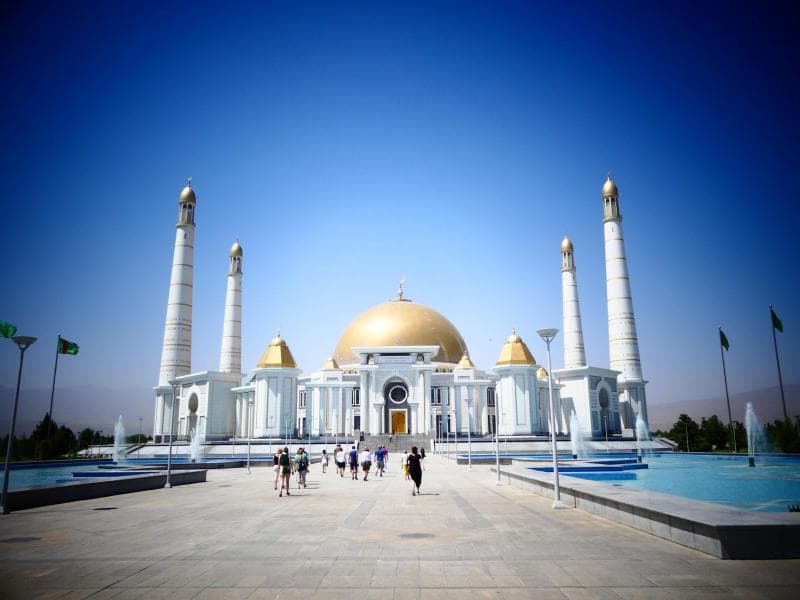
Discover the Courtyard Fountains at Türkmenbaşy Ruhy Mosque in Ashgabat, Turkmenistan. Witness how these water features enhance the mosque's grandeur.
Overview
Nestled in the desert landscape just outside Ashgabat, Turkmenistan, the Türkmenbaşy Ruhy Mosque stands as a testament to grand architectural vision, and an integral part of its majestic presence are the exquisite Courtyard Fountains. These numerous water features are not merely decorative; they are fundamental to the mosque's striking aesthetic, creating an ethereal illusion that the colossal white marble structure gracefully floats upon the water's surface. Situated within the expansive grounds of the mosque complex, these fountains offer visitors a captivating first impression, setting a tone of tranquility and grandeur before one even steps inside this remarkable Central Asian landmark.
History & Cultural Background
The Türkmenbaşy Ruhy Mosque, also known as the Gypjak Mosque, was commissioned by Saparmurat Niyazov, Turkmenistan's first president, who adopted the title Türkmenbaşy, meaning 'Leader of all Turkmens'. Completed in 2004 at a staggering cost of over 100 million dollars, the mosque was constructed in his native village of Gypjak, approximately 7 to 15 kilometers west of Ashgabat. Its design harmoniously blends classical Islamic architectural elements with distinctive Turkmen motifs, characterized by a gleaming white marble facade, gilded domes, and four towering minarets, each standing 91 meters high to symbolize Turkmenistan's independence in 1991.
In Islamic architectural tradition, water features often symbolize purity, paradise, and life, offering both aesthetic beauty and practical cooling in arid climates. The Courtyard Fountains at Türkmenbaşy Ruhy Mosque embody this rich tradition, enhancing the spiritual atmosphere of the sacred space. A notable, albeit controversial, aspect of the mosque's interior is the presence of inscriptions from both the Quran and Niyazov's spiritual guidebook, the Ruhnama, an inclusion that has sparked debate among some Muslims.
What Makes It Special
The Courtyard Fountains are a defining feature that elevates the Türkmenbaşy Ruhy Mosque from a mere place of worship to a breathtaking architectural spectacle. Strategically placed around the mosque, they create a mesmerizing reflective surface that mirrors the mosque's pristine white marble, colossal dome, and towering minarets, particularly under the clear Central Asian sky. This thoughtful placement gives the impression that the entire complex is suspended weightlessly above water, adding a sense of serenity and majesty to the colossal structure.
Visitors approaching the mosque are greeted by these 'cascades of fountains' broken in front of each of its eight arched entrances, guiding the eye and enhancing the sense of arrival. The interplay of light on the water's surface, reflecting the mosque's grandeur, transforms the courtyard into a dynamic visual experience that shifts with the time of day. The sheer scale of these water installations complements the mosque's capacity to host 10,000 worshippers, further emphasizing the monumental ambition behind its creation.
Stories, Fun Facts & Local Details
While specific ancient stories about these modern fountains are not prevalent, their design evokes a sense of timelessness, drawing on a rich heritage of water use in desert architecture. It's a striking 'fun fact' that these meticulously maintained water features exist in a region known for its arid climate, showcasing the nation's commitment to grandeur and the availability of resources. The serene sound of flowing water provides a calming counterpoint to the visual scale of the mosque, inviting contemplation and peace. The fountains are a contemporary expression of historical Islamic garden design, where water symbolizes purity and life, bringing a refreshing element to the vast, open spaces of the courtyard. The surrounding grounds are immaculately maintained, and the approach across the wide forecourt with its fountains is one of the more dramatic architectural arrivals in Ashgabat.
Visitor Perspective
For any traveler exploring Ashgabat, experiencing the Courtyard Fountains at the Türkmenbaşy Ruhy Mosque is an essential part of the visit. As you walk through the expansive courtyard, the shimmering water provides a tranquil foreground to the mosque's dazzling white facade. The reflections create stunning photographic opportunities, capturing the mosque's immense beauty from unique perspectives. It's a place where you can pause, absorb the architectural details, and appreciate the thoughtful integration of nature and design. The fountains contribute significantly to the overall atmosphere, making the approach to the mosque a memorable journey, deeply embedding the image of this grand structure within its watery embrace in your memory. Visiting in the early morning or late afternoon allows the golden sunlight to cast a warm glow, further enhancing the visual splendor of the fountains and the mosque.
Coordinates: 58.2517, 38.0173
View on Google Maps💬 How Travelers Describe This Place
Based on community votes
Beautiful
910Must See
755Interesting
658Photogenic
589Unique
374
Traveler Stories
Discover memorable experiences shared by travelers who have visited this place.
No traveler stories yet.
Be the first traveler to share what made this place memorable.

Tour
By
Spot
Discover amazing places around the world. Your journey starts here.
Explore
© 2026 TourBySpot. All rights reserved.