Courtyard Fountain
Sarajevo, Bosnia and Herzegovina
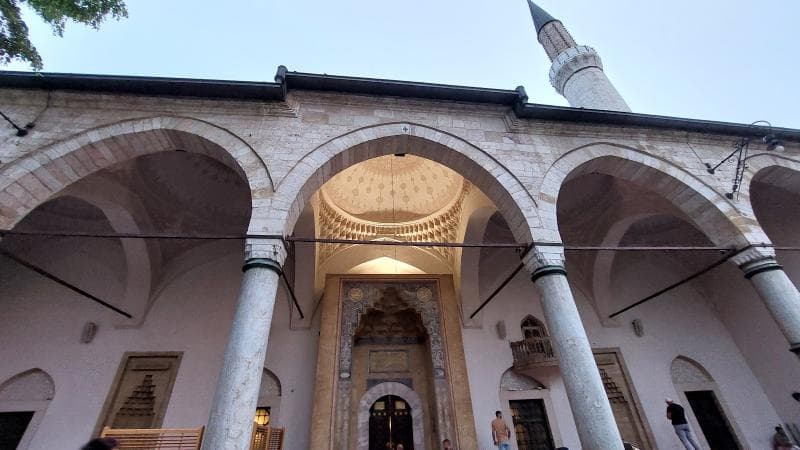
Explore the serene Courtyard Fountain (Sadrvan) of Gazi Husrev-beg Mosque in Sarajevo, Bosnia and Herzegovina. A historical Ottoman gem for ritual ablution and peaceful reflection.
Overview
Nestled within the heart of Sarajevo's historic Baščaršija district, the Courtyard Fountain, or 'Sadrvan', of the Gazi Husrev-beg Mosque stands as a timeless emblem of Ottoman heritage and Islamic tradition. This elegant stone fountain is more than just a decorative feature; it is an integral part of the mosque complex, serving a profound spiritual and practical purpose for worshippers and offering a serene focal point for visitors. Its waters have flowed continuously since its inception, reflecting centuries of history and prayer in Bosnia and Herzegovina's vibrant capital.
The Gazi Husrev-beg Mosque itself, completed in 1531, is the largest historical mosque in the country and a masterpiece of Ottoman architecture. The sadrvan, with its distinctive design and peaceful ambiance, is a central element of the mosque's courtyard, inviting contemplation and providing a vital function within the sacred space.
History & Cultural Background
The story of the Courtyard Fountain is inextricably linked to Gazi Husrev-beg, the influential Ottoman governor who commissioned the mosque and many other significant structures in Sarajevo during the 16th century. His extensive *waqf* (religious endowment) was crucial in transforming Sarajevo from a town into a thriving urban center, and the mosque complex, including its fountain, was central to this vision.
Traditional Ottoman mosques always featured a sadrvan, as ritual ablution (wudu) with clean, flowing water is a prerequisite for prayer in Islam. The presence of the fountain underscored the mosque's role as a complete religious and social institution, providing essential facilities for the community. While the original mosque complex dates to 1531, the current form of the fountain with its dome was rebuilt in 1893, utilizing beautiful marble from the island of Brač in Dalmatia.
What Makes It Special
The Courtyard Fountain's distinctive design is immediately captivating. It features an irregular courtyard plan with a striking twelve-sided structure at its center, each side equipped with a spout for water discharge. This functional elegance is crowned by a domed top, which mirrors the larger domes of the mosque itself, creating a harmonious architectural dialogue. The dome and its extended, lead-covered roof are supported by eight elliptical wooden arches resting on wooden pillars, adding a touch of ornamental grace.
Beyond its aesthetic appeal, the fountain's true significance lies in its continuous provision of fresh water for ablution, a spiritual cleansing ritual performed by Muslims before prayer. The steady flow of water not only serves this practical purpose but also enhances the courtyard's ambiance, offering a refreshing and cooling presence, especially during warmer months. A particularly meaningful detail is the inscription on the fountain's ceiling, which features a quote from the Qur'an: 'And from water We have created all living things!'
Stories, Fun Facts & Local Details
The Sadrvan has witnessed centuries of Sarajevo's tumultuous yet resilient history. Like the Gazi Husrev-beg Mosque itself, it endured the ravages of the 1992-1995 Siege of Sarajevo, though the mosque suffered significant damage which was meticulously restored afterwards. Its continued presence, providing water and tranquility, symbolizes the enduring spirit of the city and its people. The continuous flow of water from the fountain is considered a symbol of life, purity, and renewal in Islamic tradition, offering a profound connection to the divine.
For many Sarajevans, the courtyard, with its fountain, is a cherished space for quiet contemplation, a place to gather thoughts before entering the main prayer hall, or simply to find a moment of peace away from the bustling Baščaršija outside. It's a reminder of the historical layers of the city, where Ottoman influence is still vividly felt in daily life and architectural grandeur. The fountain's refreshing waters have quenched the thirst and cleansed the hands of countless generations, making it a living piece of Sarajevo's heritage.
Visitor Perspective
Visiting the Courtyard Fountain of the Gazi Husrev-beg Mosque offers a unique opportunity to immerse oneself in Sarajevo's rich cultural and religious tapestry. As you step into the mosque's spacious courtyard, the sounds of the busy bazaar gently recede, replaced by the calming murmur of water from the sadrvan. It is an active place of worship, so visitors are kindly requested to observe respectful etiquette. This includes dressing modestly, with shoulders and knees covered, and women may be asked to cover their heads (scarves are often available at the entrance).
While entry to the mosque's interior usually requires a small fee and adherence to specific visiting hours outside of prayer times, the courtyard and its beautiful fountain are generally accessible. Photography is welcome in the courtyard, allowing you to capture the architectural beauty and serene atmosphere. Observing the fountain provides insight into a centuries-old tradition and the central role of water in Islamic practice and daily life, making it a truly meaningful stop on any journey through Sarajevo.
Coordinates: 18.42903, 43.85917
View on Google Maps💬 How Travelers Describe This Place
Based on community votes
Photogenic
912Beautiful
875Interesting
820Unique
718Must See
648
Traveler Stories
Discover memorable experiences shared by travelers who have visited this place.
No traveler stories yet.
Be the first traveler to share what made this place memorable.

Tour
By
Spot
Discover amazing places around the world. Your journey starts here.
Explore
© 2026 TourBySpot. All rights reserved.