Courtyard Displays
Phnom Penh, Cambodia
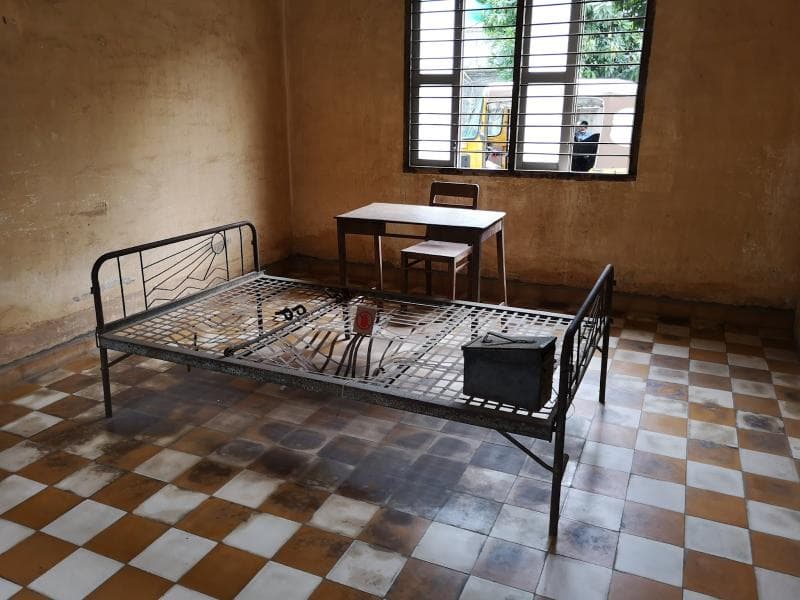
Explore the Courtyard Displays at Tuol Sleng Genocide Museum, Phnom Penh, Cambodia, a solemn space honoring victims of the Khmer Rouge regime.
Overview
Stepping into the Tuol Sleng Genocide Museum in Phnom Penh, Cambodia, visitors encounter a profound and somber journey through a dark chapter of human history. While the buildings themselves, former classrooms turned interrogation cells, hold harrowing tales, the 'Courtyard Displays' offer a unique, open-air dimension to this historical site. These courtyards, once central to the operational layout of the notorious Security Prison 21 (S-21) under the Khmer Rouge regime, now serve as vital spaces for reflection, remembrance, and bearing witness to the atrocities committed there.
These outdoor areas feature stark memorials, including the graves of the last victims discovered at the site, and a poignant stupa dedicated to those who perished. Surrounded by the former school buildings, now silent witnesses to immense suffering, the courtyards present a powerful contrast between the natural world and the man-made horrors that unfolded within these walls. They invite contemplation on the scale of loss and the enduring spirit of memory.
History & Cultural Background
The site of the Tuol Sleng Genocide Museum was originally the Tuol Svay Prey High School, a place of learning and aspiration. In 1975, with the Khmer Rouge’s ascent to power, it was transformed into S-21, a secret prison, interrogation, and execution center. During its operation from 1975 to 1979, an estimated 20,000 individuals were imprisoned here, with only a handful surviving.
The prison compound comprised four main buildings arranged around central courtyards, which were integral to its function as a detention facility. After the liberation of Phnom Penh in 1979 by Vietnamese forces, the prison was uncovered, revealing the extent of the atrocities. The decision was made to preserve S-21 as a museum, opening in 1980, to ensure that the memory of the Cambodian genocide would never be forgotten. The courtyards, therefore, transitioned from functional prison spaces to consecrated ground, part of a memorial dedicated to honoring the victims and educating future generations about the regime's brutality.
What Makes It Special
What truly sets the Courtyard Displays apart is their raw authenticity and the profound silence they command. Unlike traditional museum exhibits that might be behind glass, these displays are an integral part of the very ground where history unfolded. The most prominent feature is the series of graves housing the last 14 victims found at S-21 upon its discovery. These simple, stark graves serve as a direct, tangible link to the human cost of the regime, a powerful reminder of individual lives brutally cut short.
Complementing these graves is the stupa, a Buddhist architectural monument, which acts as a focal point for remembrance. Initially built in 1987, a new stupa was inaugurated in 2015, symbolizing ongoing national and international efforts to honor the victims. Surrounding it are plaques bearing the names of those imprisoned at S-21, transforming the courtyard into a collective memorial where each name represents a life and a story. The exterior of the museum's buildings, with their former classrooms and balconies, also form part of these 'displays', showing visitors the preserved state of the prison as it was found.
Stories, Meaningful Details & Local Context
The Courtyard Displays are steeped in stories of loss and the enduring Cambodian tradition of remembrance. Visitors often bring flowers, placing them respectfully at the graves and around the stupa, a poignant gesture reflecting local customs of honoring the deceased and seeking peace for their souls. This act of bringing offerings transforms the physical space into a living memorial, where personal grief and collective memory converge.
The choice to include the actual graves of the victims in the museum's outdoor space underscores a powerful commitment to historical truth and transparency. It avoids abstraction, presenting the direct consequences of the regime's actions. The redesign and inauguration of the new stupa in 2015, with government officials present, highlights the continued national recognition of the importance of this site for collective healing and historical preservation. These elements are not 'fun facts' but rather 'meaningful facts' that provide deeper cultural and historical insights into how Cambodia grapples with its painful past.
Visitor Perspective
For many visitors, the Courtyard Displays offer a necessary moment of pause and introspection amidst the intense emotional weight of the indoor exhibits. The open-air setting, often with the soft rustle of palm trees, provides a slight reprieve, yet the solemnity is ever-present. Walking through these courtyards, visitors are encouraged to reflect on the stories of the victims, the mechanisms of oppression, and the universal importance of human rights.
The green spaces within the courtyards, including a garden area, allow for quiet contemplation. It's a place where one can sit, process the information, and absorb the profound atmosphere of a site where so much suffering occurred. This tangible connection to the physical environment of S-21 fosters a deeper understanding and empathy, making the Courtyard Displays an essential, albeit emotionally challenging, part of the Tuol Sleng Genocide Museum experience. The experience emphasizes the museum's role not just as a historical record, but as a space for education, reflection, and the promotion of peace.
Coordinates: 104.91778, 11.54944
View on Google Maps💬 How Travelers Describe This Place
Based on community votes
Interesting
896Must See
102Beautiful
102Unique
95Photogenic
28
Traveler Stories
Discover memorable experiences shared by travelers who have visited this place.
No traveler stories yet.
Be the first traveler to share what made this place memorable.

Tour
By
Spot
Discover amazing places around the world. Your journey starts here.
Explore
© 2026 TourBySpot. All rights reserved.