Courtyard
Minsk, Belarus
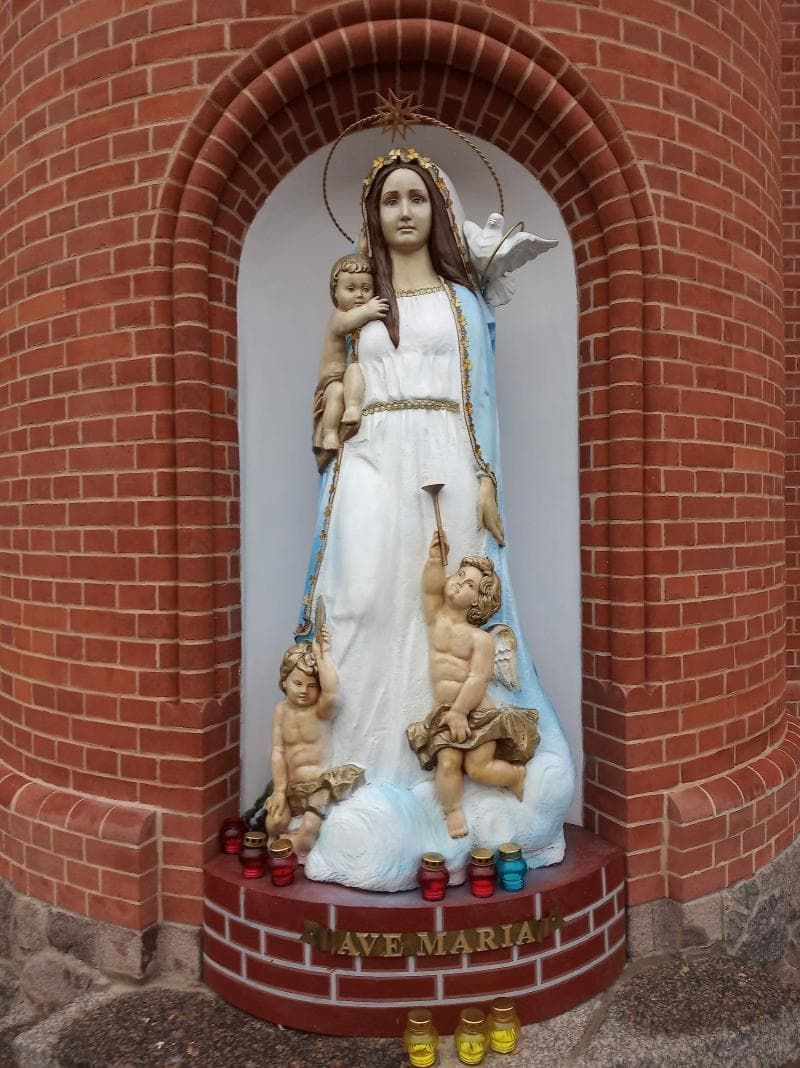
Explore the solemn courtyard of the Church of Saints Simon and Helena, the iconic Red Church in Minsk, Belarus. Discover its rich history and powerful memorials.
Overview
Nestled amidst the bustling Independence Square in Minsk, Belarus, stands the striking Church of Saints Simon and Helena, more affectionately known as the Red Church. While its crimson brick facade immediately captures the eye, the true depth of its story extends to the solemn and significant grounds that encircle it, often perceived as its poignant courtyard. This exterior space serves as an open-air testament to history, memory, and spiritual resilience, inviting contemplation before one even steps inside its hallowed halls. It's a place where architectural grandeur meets heartfelt remembrance, offering visitors a unique blend of visual beauty and profound cultural narrative.
History & Cultural Background
The origins of the Church of Saints Simon and Helena are rooted in a personal tragedy that blossomed into a profound act of faith and community building. In the early 20th century, a prominent Belarusian-Polish landowner and civic activist, Edward Woyniłłowicz, lost his two young children, Simon and Helena, to illness. Devastated, he vowed to build a church in their memory, dedicating it to their patron saints. Construction began in 1905 and was completed by 1910, with Polish architects Tomasz Pajzderski and Władysław Marconi bringing Woyniłłowicz's vision to life.
The church's history, and by extension its surrounding grounds, mirrors the tumultuous 20th century history of Belarus. After its consecration, the Red Church quickly became a vibrant center for Minsk's Catholic community. However, the Soviet era brought severe repression; the church was closed in 1932, stripped of its religious function, and repurposed as a Polish theater, then a cinema, and later a film studio. Its sacred space was secularized and even faced threats of demolition. It wasn't until 1990, amidst a period of national awakening, that the building was finally returned to the Roman Catholic Church, undergoing extensive restoration to reclaim its original splendor. This challenging past imbues the church and its exterior with a palpable sense of endurance and rebirth.
What Makes It Special
The Red Church is a masterpiece of Neo-Romanesque architecture, incorporating elements of Neo-Gothic and Art Nouveau styles. Its distinctive red brick, sourced from Częstochowa, Poland, gives the church its popular nickname and creates a striking visual presence against the Minsk skyline. Beyond the church building itself, what truly distinguishes this site are the significant memorials located within its immediate exterior grounds.
Dominating a section of this exterior space is the powerful sculpture of Archangel Michael, installed in 1996. Depicting the archangel piercing a serpent, it symbolizes the triumph of good over evil and is revered as a representation of Belarus's patron saint. Further enhancing the contemplative atmosphere is 'The Bell of Nagasaki,' a poignant memorial erected in 2000. This replica of a bell that miraculously survived the atomic bombing serves as a stark reminder of the devastating consequences of war and nuclear catastrophe, presented as a gift from the Japanese people to Belarus. These external monuments transform the church's surroundings from mere open space into a powerful narrative landscape, rich with historical and spiritual meaning.
Stories, Fun Facts & Local Details
The story of the Red Church is deeply personal. Edward Woyniłłowicz's enduring grief for his children, Simon and Helena, fueled his determination to build this magnificent edifice. It is said that the two smaller, hipped towers on the church's facade symbolize his lost children, while the towering, 50-meter main tower represents the family's profound sorrow. The reburial of Edward Woyniłłowicz and his wife within the church in 2006 further solidified the intimate connection between the family's legacy and the sacred space they created.
The exterior grounds, with their symbolic installations, have become an integral part of the church's narrative. The Archangel Michael sculpture not only represents spiritual protection but also recalls the deep-rooted faith of the Belarusian people. 'The Bell of Nagasaki' serves a dual purpose: it memorializes victims of conflict while also fostering a message of peace and global solidarity. The ringing of this bell on significant dates echoes a universal call for remembrance and the prevention of future tragedies. These elements collectively transform the church's immediate exterior into a place not just of worship, but of national memory and humanitarian reflection.
Visitor Perspective
Visiting the exterior of the Red Church offers a unique and accessible experience for any traveler in Minsk. Situated conveniently on Independence Square, it's easily reached and often included in city walking tours. As you approach, the vibrant red brick and intricate architectural details, a blend of Neo-Romanesque and Gothic styles, are truly captivating. The exterior space, with its thoughtful memorials, provides a peaceful respite from the city's hustle. Travelers often find themselves drawn to the Archangel Michael sculpture, reflecting on its symbolism, or pausing at 'The Bell of Nagasaki' in quiet contemplation.
This area serves as a natural entry point to understanding the church's deeper significance. While the interior offers its own beauty with stained glass and detailed artwork, the external grounds provide the immediate historical and emotional context, setting the stage for a richer appreciation of this enduring landmark. Whether you're a history enthusiast, an architecture admirer, or simply a curious traveler, the courtyard and its memorials offer a meaningful introduction to one of Minsk's most cherished and resilient symbols. The church is generally open to visitors, allowing for both external exploration and internal reflection.
Coordinates: 27.5474778, 53.8965194
View on Google Maps💬 How Travelers Describe This Place
Based on community votes
Unique
897Must See
695Beautiful
605Interesting
498Photogenic
481
Traveler Stories
Discover memorable experiences shared by travelers who have visited this place.
No traveler stories yet.
Be the first traveler to share what made this place memorable.

Tour
By
Spot
Discover amazing places around the world. Your journey starts here.
Explore
© 2026 TourBySpot. All rights reserved.