Courtyard
Milan, Italy
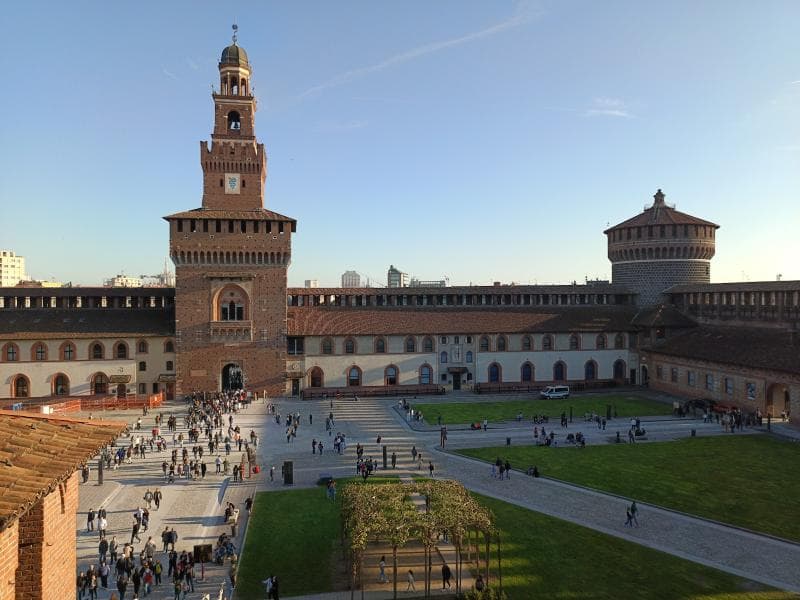
Explore the historic courtyards of Castello Sforzesco in Milan, Italy. Discover the Piazza d'Armi, Corte Ducale, and Rocchetta, rich in history, art, and Renaissance tales.
Overview
The Castello Sforzesco in Milan, Italy, a formidable fortress turned magnificent ducal residence, is not merely a collection of museums but a journey through centuries of Milanese history, deeply embodied within its impressive courtyards. These vital spaces, including the expansive Piazza d'Armi, the elegant Corte Ducale, and the resilient Rocchetta, offer a multifaceted view into the castle's evolution from a defensive stronghold to a vibrant cultural center. Each courtyard tells a distinct part of the castle's story, inviting visitors to explore its architectural grandeur and rich past.
History & Cultural Background
The origins of Castello Sforzesco trace back to the 14th century, when Galeazzo II Visconti initiated its construction as a fortress. Following the collapse of the Visconti dynasty and the Ambrosian Republic, the original structure faced demolition in 1447. However, the castle was swiftly rebuilt and significantly transformed by Francesco Sforza, who became the Duke of Milan in 1450. Under the Sforza family, particularly during the reign of Ludovico il Moro in the late 15th century, the castle transcended its military function to become a lavish Renaissance court. Artists of the caliber of Leonardo da Vinci and Donato Bramante were commissioned to embellish its interiors and design its defenses, turning the once austere fortress into a symbol of ducal power and artistic patronage.
What Makes It Special
The courtyards of Castello Sforzesco are particularly special due to their varied character and the layers of history they represent. The Piazza d'Armi, originally a vast parade ground, served as the primary space for soldiers and military exercises, now offering an imposing entrance and a connection to the sprawling Sempione Park. The Corte Ducale, or Ducal Courtyard, stands out with its elegant Renaissance design, featuring beautiful loggias and once adorned with frescoes that speak to the luxurious lifestyle of the Sforza dukes. This courtyard was the heart of the ducal residence and now provides access to various museums, including the Museum of Ancient Art. Finally, the Rocchetta Courtyard represents the castle's ultimate defensive core. Designed as a stronghold and the last refuge during a siege, it was here that the ducal treasure was safeguarded. Its portico with 15th-century arcades offers a glimpse into its secure yet stately past. Together, these spaces showcase a remarkable blend of military architecture and refined Renaissance artistry.
Stories, Fun Facts & Local Details
The Castello Sforzesco is steeped in fascinating stories. During Ludovico il Moro's rule, Leonardo da Vinci not only designed defensive aspects for the castle's moats but also contributed significantly to its artistic grandeur. He famously decorated the Sala delle Asse, envisioning a pergola of interwoven mulberry trees, a tribute to 'Il Moro' (the Moor) and a nod to the thriving silk industry. This period was a golden age, transforming the castle into one of Europe's most brilliant courts, attracting scholars, artists, and innovators. Interestingly, despite its later status as a cultural icon, there were moments in history, particularly after the unification of Italy, when the castle was in such disrepair that citizens considered demolishing it. It was architect Luca Beltrami who, in the late 19th century, championed its restoration, ultimately saving it and transforming it into the cultural institution we know today. The castle's enduring presence, rising like a phoenix after periods of destruction, is a testament to Milan's resilience and its commitment to preserving its rich heritage.
Visitor Perspective
A visit to the courtyards of Castello Sforzesco offers a truly immersive historical experience. As a traveler, stepping through the main entrance and into the vast Piazza d'Armi provides an immediate sense of scale and history, setting the stage for the architectural wonders within. Moving into the more intimate Corte Ducale, one can almost hear the echoes of Renaissance court life, while the refined design invites contemplation. The stoic Rocchetta, with its protective aura, transports visitors to a time of strategic defense and hidden treasures. Wandering through these spaces, one can appreciate the meticulous restoration efforts that have preserved their original splendor. The courtyards serve not just as historical relics, but as living public spaces, freely accessible and seamlessly connecting the castle's numerous civic museums, making them an ideal starting point for exploring Milan's artistic and cultural treasures. They provide a tangible link to the powerful figures and artistic geniuses who shaped Milan.
Coordinates: 9.17861, 45.47
View on Google Maps💬 How Travelers Describe This Place
Based on community votes
Beautiful
670Must See
655Interesting
594Unique
166Photogenic
83
Traveler Stories
Discover memorable experiences shared by travelers who have visited this place.
No traveler stories yet.
Be the first traveler to share what made this place memorable.

Tour
By
Spot
Discover amazing places around the world. Your journey starts here.
Explore
© 2026 TourBySpot. All rights reserved.