Court Chapel
Munich, Germany
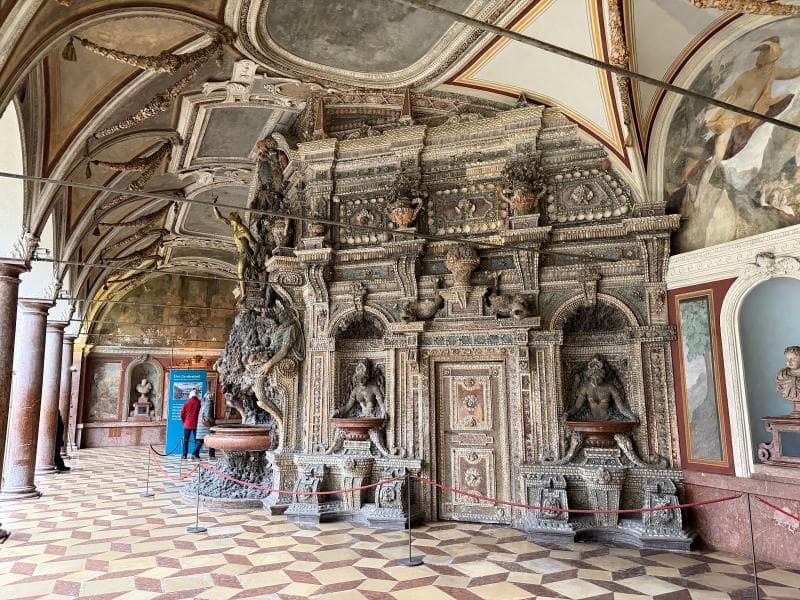
Explore the Court Chapel (Hofkapelle) within Munich's Residenz, a sacred historical site where Bavarian rulers worshipped and Mozart performed.
Overview
Nestled within the vast and historic Munich Residenz, the Court Chapel, known locally as the Hofkapelle, offers a profound glimpse into centuries of Bavarian royal piety and artistic expression. This sacred space, dedicated to the Virgin of the Immaculate Conception, stands as a testament to the Wittelsbach dynasty's deep devotion. While the larger Munich Residenz functions as one of Europe's most significant palace museums, the Hofkapelle provides an intimate, spiritual counterpoint to the opulent state rooms. Visitors to the Residence Museum can access its gallery, experiencing the chapel from the same elevated vantage point once used by the ruling family. Today, its historical atmosphere is periodically re-enlivened by classical music concerts, carrying forward a tradition of musical performance that dates back centuries.
History & Cultural Background
The origins of the Court Chapel trace back to the early 17th century when Duke Maximilian I, a pivotal figure in Bavarian history, commissioned its construction between 1601 and 1603. It was designed to replace older devotional spaces within the Neuveste, the original core of the Residenz. Maximilian I, who would later become an Elector, held a particular reverence for the Virgin Mary, adopting her as the patron saint of both the Wittelsbach dynasty and the entire region of Bavaria. This personal devotion is reflected in the chapel's dedication. The chapel's semicircular choir was a later addition, completed in 1630. Further artistic enhancements followed in the mid-18th century, when prominent South German Rococo masters, Johann Baptist and Franz Zimmermann, crafted the two exquisite side altars. This rich history places the Court Chapel as a central point of religious life for the Bavarian rulers for generations, reflecting architectural and artistic trends across several centuries.
What Makes It Special
What truly distinguishes the Court Chapel is its unique blend of dynastic devotion, artistic excellence, and historical resonance. Its dedication to the Virgin Mary by Maximilian I wasn't merely a religious act but a powerful political and cultural statement, solidifying the Virgin's role as Bavaria's protector. The chapel's architectural design, particularly the distinction between the ground floor for court members and the elevated galleries for the ruling family, offers a fascinating insight into court hierarchy and private worship. The high altar painting by Hans Werl, dating from 1600, powerfully depicts the Virgin Mary in glory beneath the Trinity, serving as a focal point of the chapel's spiritual purpose. Moreover, the Hofkapelle holds a special place in musical history. It is known as a venue where Wolfgang Amadeus Mozart himself performed early piano concerts and a Missa Brevis, imbuing the space with an intangible connection to one of history's greatest composers. This makes it not just a visual delight but a place where echoes of classical genius can still be imagined.
Stories, Fun Facts & Local Details
Imagine Duke Maximilian I, a fervent Catholic, ascending from his private apartments directly into the gallery of his newly built chapel, seeking solace and guidance during tumultuous times. This direct access highlights the deeply personal connection the Wittelsbach rulers had to this sacred space. A fun fact for music enthusiasts is the chapel's enduring legacy as a concert venue. The 'Residenz Serenades' continue to be held here, allowing contemporary visitors to experience the chapel's 'charming atmosphere' and exceptional acoustics, much as audiences might have centuries ago. For those attending concerts, a practical tip passed down through generations is to 'wear warm clothes' during winter visits, a quirky detail that speaks to the chapel's authentic, unmodernized charm. The chapel is also the namesake of the Chapel Courtyard, one of the ten courtyards found within the extensive Munich Residenz, underscoring its significance within the broader palace complex.
Visitor Perspective
Today, visitors exploring the Munich Residenz Museum can experience the Court Chapel, albeit primarily from the perspective of the gallery. This offers a unique opportunity to view the altar and the main body of the chapel from the royal family's traditional vantage point, providing a sense of historical immersion. The entrance to the Residence Museum, which includes access to the Hofkapelle, is typically covered by a single ticket, often with an audio guide available to enrich the experience with detailed historical and artistic context. The Munich Residenz is open daily, though hours vary seasonally, making it accessible throughout the year. As you walk through this hallowed space, you're not just observing art and architecture; you're stepping into a profound chapter of Bavarian history and experiencing a place that has witnessed centuries of devotion and cultural events.
Coordinates: 11.578587398015591, 48.141163282601696
View on Google Maps💬 How Travelers Describe This Place
Based on community votes
Beautiful
836Unique
797Photogenic
396Interesting
286Must See
255
Traveler Stories
Discover memorable experiences shared by travelers who have visited this place.
No traveler stories yet.
Be the first traveler to share what made this place memorable.

Tour
By
Spot
Discover amazing places around the world. Your journey starts here.
Explore
© 2026 TourBySpot. All rights reserved.