Council Chamber
Geneva, Switzerland
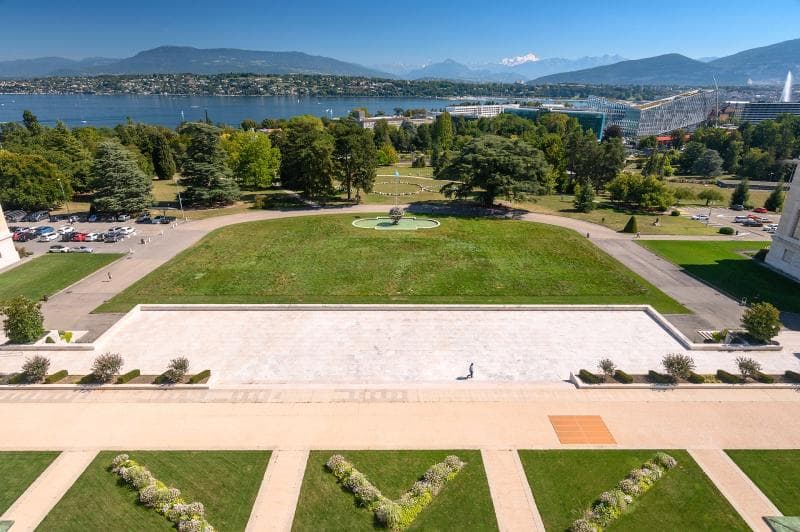
Explore the historic Council Chamber inside Geneva's Palais des Nations, a site of global diplomacy, stunning art, and pivotal peace negotiations.
Overview
Nestled within the stately Palais des Nations in Geneva, Switzerland, the Council Chamber stands as a powerful testament to over a century of international diplomacy. This historic room, originally conceived for the League of Nations, has been a silent witness to pivotal moments in global history, from the early aspirations of collective security to contemporary disarmament efforts. It is more than just a meeting space; it is a meticulously crafted environment where art, architecture, and political will converge, reflecting humanity's continuous quest for peace and cooperation. While the broader Palais des Nations serves as the European headquarters for the United Nations, housing countless vital agencies and hosting thousands of meetings annually, the Council Chamber holds a special place, distinguished by its profound historical legacy and unique artistic treasures.
Visitors to the Palais des Nations on a guided tour often find themselves drawn into the solemn grandeur of this chamber, appreciating its dual role as both a functional forum for debate and a museum of international relations. Its intricate details, from the vast murals to the imposing bronze doors, tell a story of idealism, challenge, and persistent effort in shaping a more harmonious world.
History & Cultural Background
The construction of the Council Chamber began late in 1936, designed specifically to accommodate the delegates of the League of Nations, the precursor to the United Nations. The Palais des Nations itself was built between 1929 and 1938, during a period marked by both grand architectural ambition and looming global conflict. The League of Nations officially inaugurated the room on October 2, 1936.
The initial design of the chamber deviated from typical conference rooms of its time. Instead of a podium, it featured a large, semi-circular table for 21 persons, strategically placed in front of five windows that offered sweeping views of the surrounding Ariana Park. The celebrated Parisian decorator René Prou was entrusted with the room's setting and furnishings, contributing to its distinct atmosphere. Following the dissolution of the League of Nations and the establishment of the United Nations, the Palais des Nations became the UN's European headquarters in 1946.
Between 1951 and 1968, the Council Chamber underwent significant transformations under the guidance of architect Jacques Carlu. These changes were necessary to meet the evolving needs of the expanded United Nations, particularly the Economic and Social Council and the Security Council. Improvements included the addition of climatized interpreters' booths, modern technical equipment, and new furnishings, with the main table being reconfigured into a horseshoe shape to accommodate 23 individuals.
What Makes It Special
What truly sets the Council Chamber apart are its extraordinary artistic elements, particularly the captivating murals by Catalan artist José Maria Sert. Painted between March 1935 and May 1936, these gold and sepia frescoes adorn the walls and ceiling, depicting the inspiring narrative of 'The Progress of Humankind'. They illustrate themes of health, technology, freedom, and peace, culminating in five colossal Dantesque figures, symbolizing the world's five continents, grasping hands in a powerful triumph across the ceiling's dome. This monumental artwork was a generous gift from the Government of Spain and has been compared to the frescoes of Michelangelo's Sistine Chapel for its grandeur and intensity.
Further enhancing the room's majesty are the two monumental bronze doors, intricately inscribed with Latin phrases, crafted by the renowned French artist Raymond Subes. These doors, works of art in themselves, open into adjacent private rooms. The chamber's lobby also houses a significant marble bas-relief titled 'The Creation of Man' by English sculptor Eric Gill, donated by the United Kingdom in 1938. This triptych draws inspiration from Michelangelo's Sistine Chapel and adds another layer of artistic depth to the overall experience.
Stories, Fun Facts & Local Details
The Council Chamber, also known as the Francisco de Vitoria Room, honors the 16th-century Spanish theologian and philosopher, often regarded as the 'founder of modern international law.' This name serves as a subtle yet powerful reminder of the room's enduring connection to the principles of international justice and human rights.
Beyond its artistic splendor, the chamber has served as the backdrop for critical diplomatic events. It famously hosted the negotiations that led to the end of the 1991 Gulf War and continues to be the primary meeting place for the Conference on Disarmament. This underscores its ongoing relevance in contemporary global affairs, acting as a crucible where challenging international issues are addressed. It is said that some nations preferred to use this room for sensitive negotiations, as it provided a degree of detachment from the more intense media spotlight often focused on the UN Headquarters in New York.
On October 2, 1986, to commemorate the room's 50th anniversary, the Government of Spain once again demonstrated its dedication by presenting a commemorative plaque, now permanently installed within the chamber.
Visitor Perspective
For any traveler exploring Geneva, a visit to the Palais des Nations, and especially the Council Chamber, offers a uniquely profound experience. Guided tours provide an unparalleled opportunity to step inside this historically charged environment. As you enter, the sheer scale of Sert's murals can be overwhelming, their sepia and gold tones creating an atmosphere of deep reflection and historical gravitas. Standing where world leaders have deliberated on peace and conflict provides a tangible connection to the past and the ongoing efforts to shape the future.
While tours are subject to change due to ongoing conferences, the chance to witness this space firsthand offers a vivid illustration of the complexities and hopes of international diplomacy. It's a place where you can feel the weight of history and the persistent, often challenging, pursuit of global understanding and cooperation. The Palais des Nations, including the Council Chamber, is not merely a collection of buildings but a living monument to humanity's collective aspiration for a more peaceful world.
Coordinates: 6.14056, 46.22667
View on Google Maps💬 How Travelers Describe This Place
Based on community votes
Interesting
921Must See
617Beautiful
357Photogenic
232Unique
147
Traveler Stories
Discover memorable experiences shared by travelers who have visited this place.
No traveler stories yet.
Be the first traveler to share what made this place memorable.

Tour
By
Spot
Discover amazing places around the world. Your journey starts here.
Explore
© 2026 TourBySpot. All rights reserved.