Core Exhibition Galleries
Warsaw, Poland
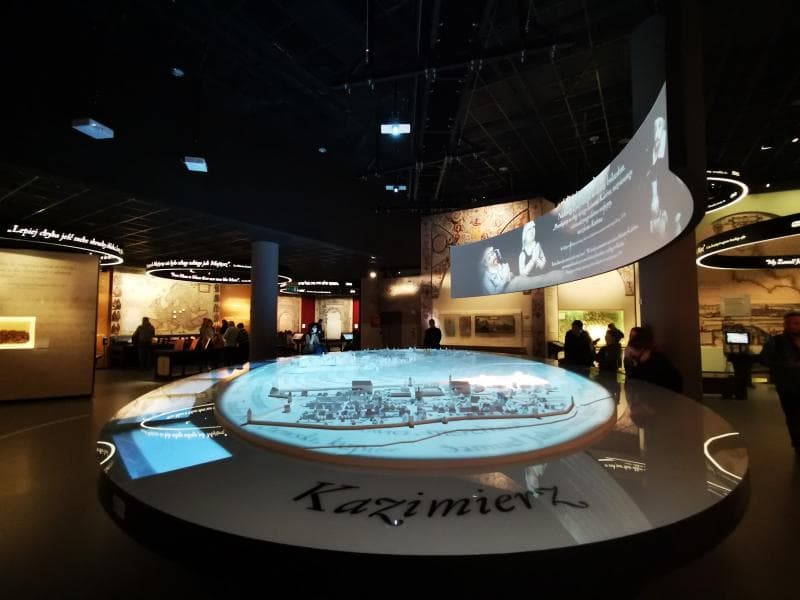
Explore the Core Exhibition Galleries at POLIN Museum in Warsaw, Poland, uncovering a rich, thousand-year history of Polish Jews.
Overview
The Core Exhibition Galleries, nestled within the striking POLIN Museum Of The History Of Polish Jews in Warsaw, Poland, offer an unparalleled journey through a millennium of Jewish life in the region. This award-winning permanent exhibition serves as the heart of the museum, spanning over 4,000 square meters and inviting visitors to explore the rich, complex, and often poignant history of Polish Jews from their earliest arrival to the present day. It is situated in the historic Muranów district, the very area that once formed the pre-war Jewish quarter and later the Warsaw Ghetto, giving it a profound sense of place.
Far from a conventional collection of artifacts, the Core Exhibition is conceived as a 'theater of history', utilizing cutting-edge multimedia, interactive installations, and meticulously reconstructed environments to tell a compelling narrative. Its aim is not merely to display history, but to immerse visitors in it, fostering a deep understanding of the interwoven destinies of Polish and Jewish communities.
History & Cultural Background
The story presented in the Core Exhibition begins with a space of historical imagination called 'Forest,' where visitors encounter the legend of how Jews first came to Poland. The Hebrew word 'Polin' itself, meaning either 'Poland' or 'rest here,' symbolizes this initial welcome and the beginning of a thousand-year presence. From these 'First Encounters' in the 10th century, the exhibition chronologically unfolds through eight distinct galleries.
It delves into a period known as 'Paradisus Iudaeorum' (Jewish Paradise) during the Polish-Lithuanian Commonwealth, where Jewish culture flourished, highlighting the era's religious tolerance. The galleries then navigate through the challenges and transformations of the Enlightenment and the partitions of Poland, depicting Jewish life in the 'Jewish Town' and 'On the Jewish Street.' Crucially, the exhibition does not shy away from the darkest chapters, dedicating significant sections to the 'Holocaust' and the 'Postwar Years,' but it always frames these within the broader context of a vibrant and resilient community.
What Makes It Special
What truly sets the Core Exhibition apart is its innovative and immersive approach to historical storytelling. Instead of simply presenting historical facts, it engages all senses through interactive exhibits, video projections, soundscapes, and even scent. A breathtaking highlight is the magnificent, painstaking reconstruction of the roof and ceiling of the 17th-century Gwoździec wooden synagogue, a central piece in 'The Jewish Town' gallery, which showcases the artistic brilliance of Polish Jewish craftsmanship.
The museum focuses on 'life'—presenting a narrative enriched by the voices of Jewish merchants, scholars, artists, rabbis, and ordinary people, allowing their experiences to resonate with contemporary visitors. This emphasis on a comprehensive cultural history, rather than solely a narrative of tragedy, distinguishes it from many other Jewish museums globally.
Stories, Fun Facts & Local Details
- The Oldest Artifact: Among the countless stories, look out for the exhibition's oldest object: a 13th-century bracteate, a rare coin featuring Hebrew letters, a tangible link to the earliest Jewish presence in Poland.
- A Stroll Through Time: One of the most engaging galleries, 'On the Jewish Street,' authentically recreates a pre-war Jewish streetscape, complete with a café and cinema, offering a glimpse into daily life and culture before World War II.
- Architectural Symbolism: The museum building itself is an architectural marvel. Designed by Finnish architects Rainer Mahlamäki and Ilmari Lahdelma, its undulating glass facade symbolizes the parting of the Red Sea, an abstract yet powerful metaphor for the fractured history it recounts.
- International Recognition: The POLIN Museum's Core Exhibition has received widespread acclaim, including the prestigious European Museum of the Year Award, recognizing its innovative curatorial approach and profound impact.
Visitor Perspective
A visit to the Core Exhibition is a deeply moving and educational experience, designed to be accessible and thought-provoking for all. Plan to spend approximately two to three hours to fully appreciate the depth and breadth of the exhibition. Audio guides are readily available in multiple languages, enhancing the narrative journey. While some sections, particularly the 'Holocaust' gallery, are inherently somber, the overall message is one of endurance, cultural contribution, and the enduring legacy of Polish Jews. The museum's interactive elements and clear narrative flow ensure that curious travelers, from history enthusiasts to those new to the subject, can engage meaningfully with this pivotal aspect of European heritage.
Coordinates: 20.99306, 52.24944
View on Google Maps💬 How Travelers Describe This Place
Based on community votes
Beautiful
853Interesting
639Photogenic
569Must See
190Unique
93
Traveler Stories
Discover memorable experiences shared by travelers who have visited this place.
No traveler stories yet.
Be the first traveler to share what made this place memorable.

Tour
By
Spot
Discover amazing places around the world. Your journey starts here.
Explore
© 2026 TourBySpot. All rights reserved.