Confluence Terrace
Lyon, France
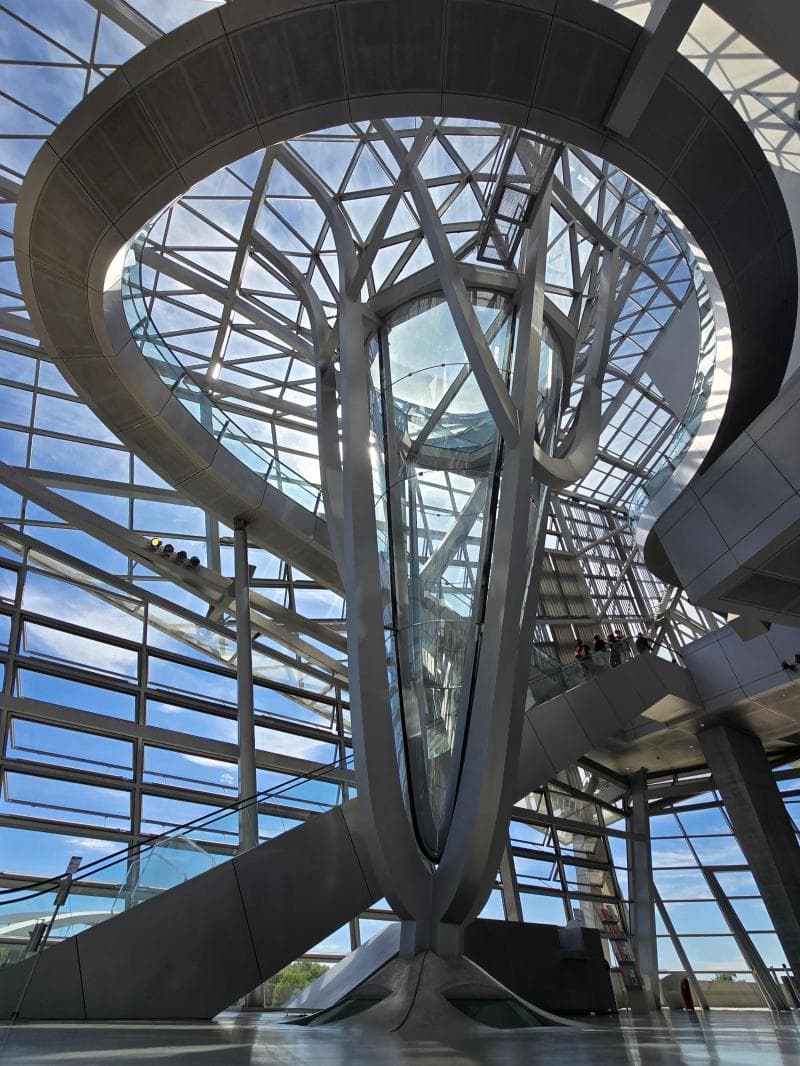
Discover Confluence Terrace at Musée des Confluences in Lyon, France. Enjoy panoramic views where the Rhône and Saône rivers meet, with stunning cityscapes.
Overview
Perched atop the striking Musée des Confluences in Lyon, France, the Confluence Terrace offers a uniquely captivating experience. This open-air space provides visitors with an unparalleled vantage point where the two great rivers of Lyon, the Rhône and the Saône, converge. More than just a viewing platform, it is an integral part of the museum's futuristic design, extending the visitor's journey beyond the exhibition halls and into the heart of the city's dynamic landscape. It serves as a natural extension of the museum's philosophical intent: to connect humanity with its environment and history. The terrace provides a serene escape, inviting contemplation of both the natural spectacle of the rivers' meeting and the urban tapestry of Lyon unfolding below.
History & Cultural Background
The name 'Confluence' itself is deeply rooted in the geography and history of Lyon. This area, at the southernmost tip of the Presqu'île, has for millennia been the literal meeting point, or 'confluence,' of the Rhône and Saône rivers. Historically, this convergence has shaped Lyon's identity as a hub for trade, culture, and innovation. The Musée des Confluences, inaugurated in 2014, was designed by the Austrian firm Coop Himmelb(l)au as a modern architectural marvel to embody this concept. The building's deconstructivist style, often likened to a 'floating crystal cloud' or a 'spaceship,' symbolically represents the dynamic interplay of knowledge and the natural world, a 'building-landscape' that merges the built environment with its natural surroundings. The Confluence Terrace thus stands on a site of profound geographical and cultural significance, where ancient natural forces meet cutting-edge architectural vision.
What Makes It Special
The Confluence Terrace is distinguished by its panoramic views and its seamless integration with the museum's audacious architecture. From this elevated position, visitors are treated to breathtaking vistas of Lyon's skyline, stretching across the city and encompassing the dramatic meeting point of the Rhône and Saône. On clear days, the distant peaks of Mont Blanc in the Alps can even be seen, adding another layer of wonder to the expansive panorama. The terrace itself is a triumph of design, reflecting the museum's overall aesthetic of glass and steel, which allows light and reflections to play across its surfaces. It is not merely a static viewpoint but a dynamic space that transforms with the changing light and seasons, offering different perspectives on the city, the rivers, and the surrounding landscape. The architectural decision to create accessible outdoor spaces, including a 'freely accessible terrace café' on the top floor, underscores the desire to make this unique geographical and architectural experience available to a wider audience.
Stories, Fun Facts & Local Details
The Musée des Confluences, and by extension its terrace, is a testament to architectural ambition and engineering prowess. The museum's design by Coop Himmelb(l)au was the result of an international competition, aiming to create a structure that defied conventional museum typology. The building's components, often referred to as 'the Crystal' (the transparent entrance hall) and 'the Cloud' (the steel-clad exhibition spaces), symbolize clarity and uncertainty, knowledge and discovery. The terrace, sitting atop this complex structure, benefits from this symbolic depth. A fun fact is that visitors can access certain parts of the building, including views from the terrace, without needing an admission ticket to the exhibitions, fostering a sense of public ownership and engagement with the space. This openness allows even a curious passerby to experience the unique architectural vision and the stunning river views, making it a truly democratic vantage point in the city.
Visitor Perspective
For a visitor, the Confluence Terrace offers a moment of tranquility and reflection amidst the bustling city of Lyon. Ascending to the terrace, one feels a sense of elevation, not just physically but also in perspective. The atmosphere is typically one of serene enjoyment, as people take in the expansive views, capture photographs, or simply relax. Whether one chooses to grab a drink at a potential terrace café or simply lean against the railing, the experience is designed to be immersive. The confluence of the Rhône and Saône is a powerful visual, showcasing the distinct colors and currents of each river before they merge. It's a prime spot for understanding Lyon's geography and appreciating the scale of the new Confluence district's urban development. The terrace is a must-visit for anyone seeking a unique perspective on Lyon's blend of natural beauty, historical significance, and contemporary architectural flair.
Coordinates: 4.818333, 45.732778
View on Google Maps💬 How Travelers Describe This Place
Based on community votes
Must See
996Unique
673Photogenic
186Beautiful
143Interesting
80
Traveler Stories
Discover memorable experiences shared by travelers who have visited this place.
No traveler stories yet.
Be the first traveler to share what made this place memorable.

Tour
By
Spot
Discover amazing places around the world. Your journey starts here.
Explore
© 2026 TourBySpot. All rights reserved.