Collection De L’Art Brut
Lausanne, Switzerland
Explore Collection De L’Art Brut in Lausanne, Switzerland, a unique museum dedicated to 'raw art' by self-taught creators. Discover unconventional masterpieces.
Overview
The Collection De L’Art Brut, nestled within the elegant 18th-century Château de Beaulieu in Lausanne, Switzerland, offers a captivating journey into the world of 'Art Brut' or 'raw art'. This unique museum showcases works created by self-taught individuals who operated entirely outside the traditional art establishment. It is recognized internationally as the foremost institution for preserving, studying, and disseminating this extraordinary form of artistic expression.
Far from conventional galleries, the museum presents a diverse array of creations that challenge preconceived notions of art. Visitors encounter spontaneous, rule-free works by artists often from marginalized social backgrounds, including those in psychiatric settings or living in isolation.
History & Cultural Background
The concept of Art Brut was coined by the French painter Jean Dubuffet in 1945. Driven by a desire to find art free from cultural conditioning and conventions, he began assembling a collection of works by creators who were untrained and uninfluenced by academic traditions or artistic trends. Dubuffet saw in these creations an 'artistic operation that is entirely pure, raw, reinvented in all its phases by its author, based solely on his own impulses'.
Dubuffet’s search led him to psychiatric hospitals and other institutions, particularly in Switzerland, where he discovered artists like Aloïse Corbaz, Adolf Wölfli, and Heinrich Anton Müller. These encounters profoundly influenced his research. In 1971, Dubuffet generously donated his entire collection of nearly 5,000 works by 133 creators, along with his archives, to the City of Lausanne. The museum officially opened its doors in 1976 within the Château de Beaulieu, solidifying Lausanne's role as the symbolic birthplace of Art Brut.
What Makes It Special
What sets Collection De L’Art Brut apart is its unwavering focus on 'outsider art' – a testament to human creativity unfettered by societal expectations. The works on display are not born from a desire for recognition or public approval, but rather from an intense inner necessity. These artists often employed unconventional methods and materials, resulting in singular forms of representation that are deeply personal and powerful.
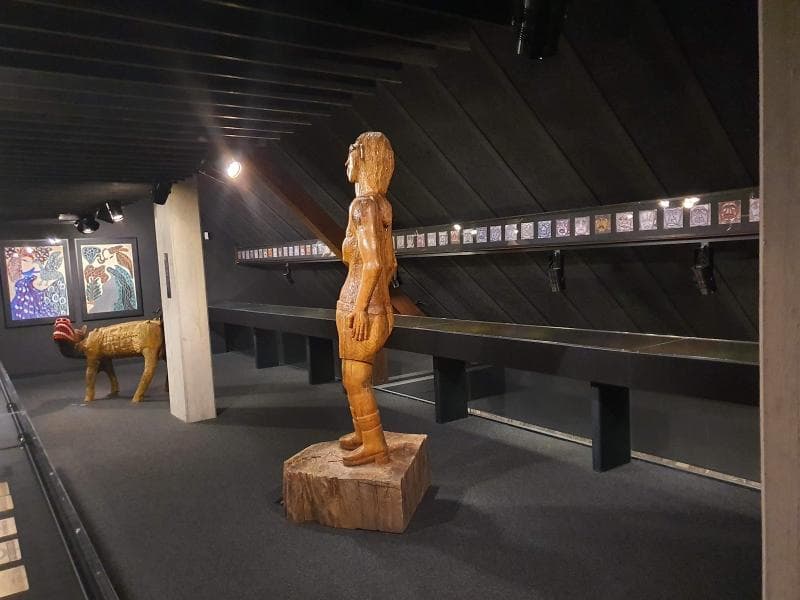
The museum's presentation itself is distinctive. Unlike the 'white cube' aesthetic common in many art spaces, the Collection De L’Art Brut utilizes dark, often black, walls. This deliberate choice creates an intimate, cave-like atmosphere that encourages contemplation and subverts traditional viewing expectations, allowing the art to speak for itself with raw intensity.
The collection, which has grown from Dubuffet’s initial donation to over 60,000 pieces, is a living entity, constantly enriched through acquisitions and research, making it the world's largest and most comprehensive repository of Art Brut.
Stories, Fun Facts & Local Details
One of the most celebrated artists featured in the collection is Aloïse Corbaz, a Lausanne native whose intricate collages and drawings, often depicting 'lovely ladies with large blue eyes', have captivated many visitors. Her work, like many others, tells a story of intense inner worlds and unrestrained imagination.
The Château de Beaulieu, housing the museum, is an 18th-century neo-classical monument with its own rich history, having welcomed distinguished guests like Jacques Necker and Jules Michelet. This historic setting provides a fascinating contrast to the rebellious and unconventional art it contains. The museum regularly participates in cultural events and offers free admission on the first Saturday of every month.
Visiting the Collection De L’Art Brut is often described as an experience that will 'not leave you unchanged'. The biographies of the artists, often marked by challenging life events, add profound meaning to their creations, inviting visitors to reflect on the nature of art and human expression beyond the mainstream.
Visitor Perspective
The Collection De L’Art Brut is readily accessible, situated conveniently in the heart of Lausanne. It can be reached by public transport, with several bus lines stopping directly at 'Beaulieu-Jomini'. The museum aims for full accessibility, offering facilities and information for visitors with specific needs.
Stepping inside, you are invited to explore imaginary worlds and delve into the fascinating authenticity of human expression. The experience is designed to be thought-provoking, encouraging a reassessment of what constitutes 'art'. Whether you are an art enthusiast or simply a curious traveler, the museum promises a stimulating, intriguing, and sometimes disturbing encounter with creativity in its purest form.
Coordinates: 6.624743, 46.527485
View on Google Maps💬 How Travelers Describe This Place
Based on community votes
Interesting
618Unique
449Must See
335Photogenic
308Beautiful
22
Traveler Stories
Discover memorable experiences shared by travelers who have visited this place.
No traveler stories yet.
Be the first traveler to share what made this place memorable.
Things to see at Collection De L’Art Brut



Tour
By
Spot
Discover amazing places around the world. Your journey starts here.
Explore
© 2026 TourBySpot. All rights reserved.