Cloisters
Salzburg, Austria
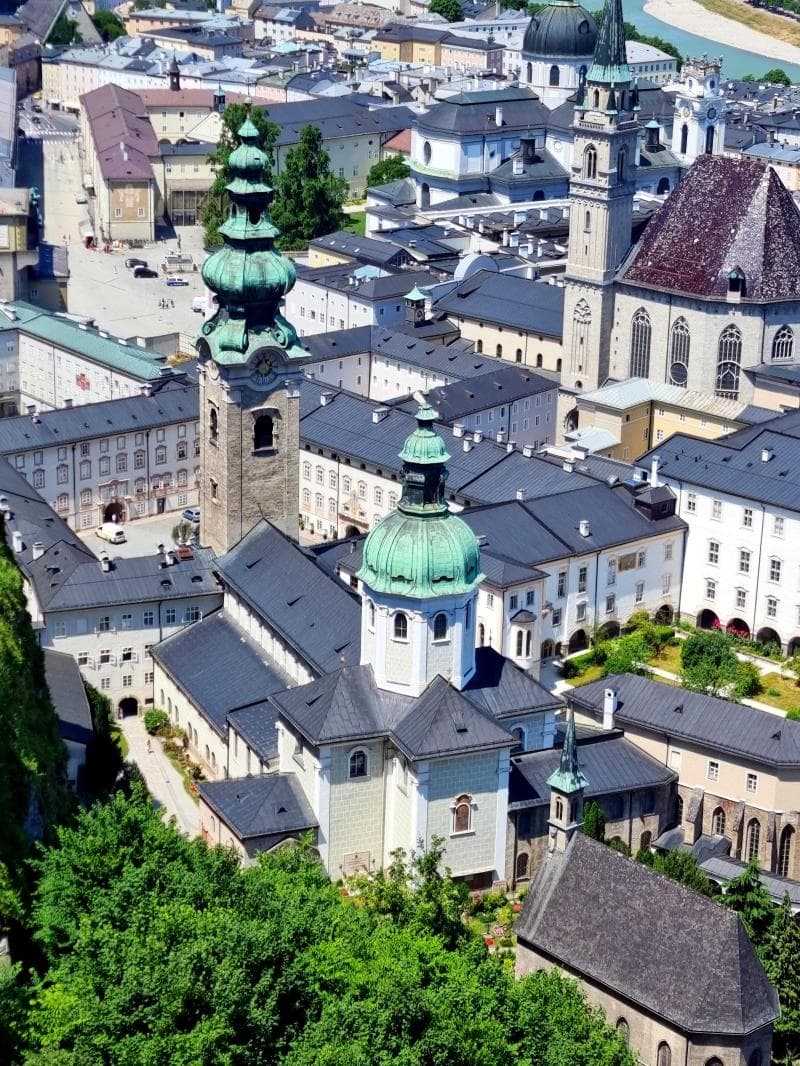
Discover the tranquil Cloisters of St. Peter's Abbey in Salzburg, Austria. Explore centuries of monastic history and serene architecture.
Overview
Tucked away within the ancient walls of St. Peter's Abbey in Salzburg, Austria, lies the serene and historically rich Cloisters. This sacred space, known in German as the 'Kreuzgang', represents the contemplative heart of one of the oldest and most continuously active Benedictine monasteries in the German-speaking world. For centuries, these arcaded walkways have offered monks a place for quiet reflection, prayer, and daily duties, connecting various parts of the monastic complex. To step into the Cloisters is to enter an oasis of calm, a preserved testament to over a thousand years of spiritual devotion and architectural evolution in the heart of Salzburg.
History & Cultural Background
The history of the Cloisters is inextricably linked with that of St. Peter's Abbey itself, founded by Saint Rupert around 696 AD. The Abbey's initial construction, which would have included its first cloisters, dates back to the Romanesque period. Over the centuries, as the Abbey endured fires and underwent reconstruction, various architectural styles, including Romanesque, Gothic, Renaissance, Baroque, and Rococo, have left their mark on the larger complex. The Cloisters, traditionally forming a quadrilateral around a central garden, served as the monks' primary circulatory path, shielding them from the elements and facilitating their monastic rhythm. Here, following the Benedictine rule of 'ora et labora' (prayer and work), monks would process, meditate, and find solace. These arcades have witnessed countless generations of monks living lives dedicated to God, scholarship, and community, contributing significantly to Salzburg's cultural and intellectual heritage, particularly through its renowned scriptorium in the Middle Ages.
What Makes It Special
What makes the Cloisters of St. Peter's Abbey truly special is their enduring atmosphere of peace and historical authenticity. While the Abbey church itself boasts sumptuous Baroque and Rococo embellishments, the Cloisters often retain more austere, older elements, reflecting their foundational Romanesque origins. The interplay of light and shadow through the arched colonnades, the quiet rustle of leaves in the enclosed garden (traditionally a 'Paradise Garden'), and the echoes of centuries past create a profound sense of tranquility. It is a space designed for introspection, a physical manifestation of the monastic vow of stability and contemplation. The ancient walls, crafted from stone, whisper tales of daily life, scholarly pursuits, and spiritual journeys undertaken by monks who walked these very paths. The architecture provides a protective shell, separating the sacred inner life of the monastery from the bustling city outside, yet it remains intrinsically woven into Salzburg's urban fabric.
Stories, Fun Facts & Local Details
While specific 'fun facts' directly attributed to the Cloisters are often intertwined with the broader history of St. Peter's Abbey, their role as a focal point for monastic life offers many fascinating insights. Imagine the Benedictine monks, clad in their habits, pacing these very arcades, their minds immersed in scripture or prayer. The Cloisters traditionally housed the doors to key monastic areas, such as the chapter house, refectory, and dormitory, making them the central hub of daily conventual life. Although not always fully accessible to the public, glimpses into the Cloisters, sometimes through guided tours or virtual experiences, reveal its beauty and spiritual significance. It's a reminder that beneath the grandeur of Salzburg's Baroque facades lies a deeper, older history, where faith and scholarly endeavor flourished in quiet corners like these. The presence of the Cloisters underlines the Abbey's commitment to its founding principles, allowing a modern visitor to connect with a living tradition that spans over 1300 years.
Visitor Perspective
For the curious traveler, encountering the Cloisters of St. Peter's Abbey offers a deeply moving experience. Even if full access is limited, the very presence of this ancient and secluded space within the bustling city center evokes a powerful sense of awe. You might catch a glimpse of the arcades from an adjoining courtyard or through a dedicated exhibit, allowing your imagination to fill in the rest. The peaceful ambiance acts as a counterpoint to the more ornate sections of the Abbey, encouraging a moment of quiet reflection away from the crowds. It's an opportunity to appreciate the architectural ingenuity and the spiritual devotion that shaped such spaces. Visiting, even partially, allows one to grasp the historical continuity and the profound sense of monastic tradition that has been preserved at St. Peter's Abbey for over a millennium, making it a truly unique encounter with Salzburg's spiritual past.
Coordinates: 13.0448, 47.797
View on Google Maps💬 How Travelers Describe This Place
Based on community votes
Beautiful
951Unique
491Must See
427Interesting
414Photogenic
277
Traveler Stories
Discover memorable experiences shared by travelers who have visited this place.
No traveler stories yet.
Be the first traveler to share what made this place memorable.

Tour
By
Spot
Discover amazing places around the world. Your journey starts here.
Explore
© 2026 TourBySpot. All rights reserved.